
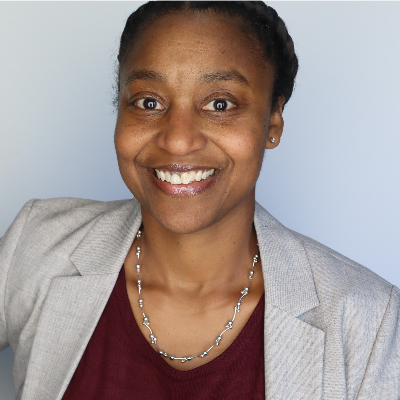
Keva Suitte
Simulation Lab Coordinator / Faculty Instructor
Durham, North Carolina, United States
Actions
Keva M. Suitte, MSN, RN, is the Simulation Lab Coordinator and Faculty Instructor in the Department of Nursing at North Carolina Central University. With more than 25 years of nursing experience and expertise in healthcare simulation and nursing education, she is dedicated to creating innovative and engaging learning experiences that prepare students for professional practice. Ms. Suitte serves as a Co-Principal Investigator for NCCU's Reverse Mentoring Program, where she collaborates on initiatives that promote reciprocal learning, leadership development, and intergenerational engagement. Her professional interests include simulation-based education, mentorship, faculty development, and interprofessional collaboration.
Area of Expertise
Reciprocity Over Hierarchy: Reverse Mentoring for Post-Pandemic Faculty and Student Wellness
Since the COVID-19 pandemic, faculty-student connectedness and emotional well-being have continued a downward trajectory, even as reliance on digital communication has grown. Generational and technological divides, particularly around comfort with artificial intelligence (AI) ,have widened the gap further, leaving many campuses without a structured way to rebuild engagement.
This session addresses that gap directly, by introducing a reverse mentoring model built specifically to respond to post-pandemic disconnection. For HBCUs and MSIs , where relatedness between faculty and students is closely tied to retention, belonging, and student success , a structured, low-cost model for rebuilding trust and communication carries particular value.
Presenters will share the design of an AI-supported reverse mentoring application-NCCU ENGAGE that pairs students and junior faculty as mentors with senior faculty and administrators as mentees. The session covers the structured mentor-matching approach, guided conversation prompts, and reflection tools used to support the pairing, along with preliminary pilot data on participant readiness, awareness, and emotional intelligence baselines. Presenters will also share what participants exchanged across the mentoring relationship , students contributing digital fluency and generational perspective, faculty contributing leadership frameworks and disciplinary expertise ,and how that exchange rebuilt a sense of connection eroded by pandemic-era isolation.
Participants will engage through guided reflection on their own campus's post-pandemic engagement challenges and small-group discussion of which elements of the model (structured matching, reflection journaling, communication norms) could transfer to their own context.
Attendees will leave with a replicable framework for launching a reverse mentoring pilot on their own campus, including practical guidance on structuring the mentor-mentee pairing, building in reflection and evaluation, and using the model to directly counter post-pandemic disengagement between faculty and students.
Building Communication Norms Through Reverse Mentoring: A Faculty Development Workshop
Faculty development initiatives often teach communication, leadership, and mentoring as isolated competencies rather than within authentic professional relationships where those skills matter most. This workshop addresses that gap by positioning reverse mentoring as a faculty development strategy that intentionally pairs junior and senior faculty in reciprocal learning relationships.
Rather than replacing traditional mentoring, reverse mentoring complements it by recognizing that faculty at every career stage possess valuable expertise. Senior faculty contribute institutional knowledge, leadership experience, and scholarly wisdom, while junior faculty bring emerging pedagogy, AI and digital fluency, and new perspectives on student engagement. This reciprocal exchange strengthens collegial relationships while promoting continuous learning across academic ranks.
Aligned with the Educational/Faculty Development and Administration track, this session supports faculty mentoring, leadership development, and organizational culture by equipping participants with practical communication tools they can immediately apply within mentoring relationships. Institutions committed to faculty success can use this approach to strengthen retention, collaboration, innovation, and organizational resilience.
Participants will experience a communication framework grounded in Crucial Conversations, Growth Mindset, and Emotional Intelligence. Through realistic faculty scenarios, they will practice navigating discussions about AI integration, balancing innovation with tradition, giving and receiving feedback across career stages, and addressing resistance to change.
Interactive activities include scenario-based role-play, co-creating mentoring and communication norms, a strength-spotting exercise that reframes differences as organizational assets, and AI-supported reflection prompts that encourage feedback, accountability, and professional growth.
Participants will engage in paired discussions, collaborative exercises, and
HBCU-FDN 33rd Annual Conference Sessionize Event Upcoming
Keva Suitte
Simulation Lab Coordinator / Faculty Instructor
Durham, North Carolina, United States
Actions
Please note that Sessionize is not responsible for the accuracy or validity of the data provided by speakers. If you suspect this profile to be fake or spam, please let us know.
Jump to top