
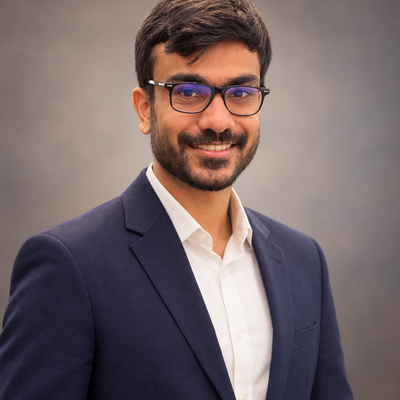
Abhinav Agarwal
Security researcher focused on AI platform security, vulnerability discovery, and secure-by-default engineering.
Santa Clara, California, United States
Actions
Abhinav Agarwal is an independent security researcher, software engineer at Rubrik, and open-source maintainer. His work focuses on vulnerability discovery, secure-by-default engineering, and the security maturity of widely deployed software. He has reported vulnerabilities across AI infrastructure, cloud platforms, cryptography, Linux/open-source components, and ICS/OT software, including issues coordinated through CISA and major vendors. He is a maintainer of sshfs and a collaborator in the libfuse ecosystem.
His current research examines the security posture of self-hosted AI platforms that enterprises are rapidly adopting under pressure. The work focuses on recurring vulnerability patterns, engineering-maturity signals, and practical review rubrics that security teams can apply before deploying the next AI tool.
Links
Area of Expertise
Topics
When Vulnerability Discovery Outpaces Patching: AI-Assisted Research in ICS Protocol Libraries
The timeline for finding vulnerabilities in C/C++ protocol software is compressing. The timeline for safely remediating them in industrial environments is not.
This session examines that discovery–remediation gap through human-led, AI-assisted vulnerability research in open-source ICS and critical-infrastructure libraries. It draws on 2026 CERT/CC-coordinated disclosures covering 18 CVEs across o6 Automation open62541, MZ Automation libIEC61850, OFFIS DCMTK, and GDCM. The core ICS case studies focus on OPC UA and IEC 61850/MMS software; the DICOM cases are used as adjacent examples of the same supply-chain pattern in safety- and availability-sensitive environments.
The practical issue for asset owners is not that “AI can hack ICS.” It is that AI can accelerate the front end of vulnerability research while the back end remains constrained by vendor triage, safety validation, maintenance windows, incomplete asset inventories, and hidden third-party dependencies inside commercial products, gateways, engineering tools, and test systems.
This session will explain the human-led review process behind the findings, including Refute-or-Promote — an adversarial validation workflow that filters candidate findings before disclosure. The methodology is documented in arXiv:2604.19049 and is designed to separate plausible-looking defects from reproducible, operator-relevant vulnerabilities before reports reach vendors, maintainers, or CERTs. That distinction matters in OT: the cost of being wrong is wasted triage, but the cost of being slow is prolonged exposure in environments where patching may depend on safety validation and outage windows.
Attendees will leave with a practical framework for reducing time to understand exposure when patching cannot happen in time: demanding protocol-library coverage in vendor SBOMs, prioritizing compensating controls for protocol-facing attack surfaces, and building faster coordination among researchers, CERTs, vendors, and asset owners.
S4 Upcoming
2026 ICS Cybersecurity Conference | Nashville Sessionize Event
Abhinav Agarwal
Security researcher focused on AI platform security, vulnerability discovery, and secure-by-default engineering.
Santa Clara, California, United States
Links
Actions
Please note that Sessionize is not responsible for the accuracy or validity of the data provided by speakers. If you suspect this profile to be fake or spam, please let us know.
Jump to top