
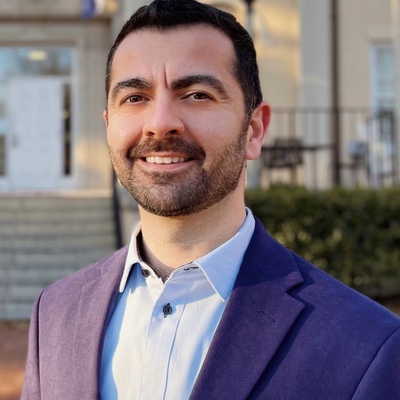
Armen Shaomian
Preston Residential College for Leadership, University of South Carolina
Actions
Armen Shaomian, DMA, is a Professor in the David and Nicole Tepper Department of Sport and Entertainment Management at the University of South Carolina, where he also serves as Faculty Director of Preston Residential College for Leadership. In this role, he collaborates with student affairs professionals to foster a residential learning community centered on leadership development, student engagement, academic success, and holistic student growth.
Dr. Shaomian brings an interdisciplinary background spanning higher education, leadership, performing arts, and organizational development. His work focuses on creating meaningful learning experiences that extend beyond the classroom through intentional residential programming, faculty engagement, and collaborative partnerships between academic and student affairs.
In addition to his academic work, he maintains an active career as a collaborative pianist and concert artist specializing in contemporary classical music, premiering works by leading contemporary composers. His artistic scholarship includes a book on Swedish National-Romantic music, and his recordings of composer Hugo Alfvén appear on Vax Records' Vaxholm: Ett Dubbelnöje.
Area of Expertise
Multidisciplinary Expertise, Shared Purpose: Faculty Engagement Models in Residential Learning
Amid national debates about the relevance and value of higher education, Residential Learning Communities continue to emerge as powerful structures for strengthening student engagement, belonging, and academic identity. This presentation examines the central role of faculty involvement in the development and ongoing direction of two distinct residential models: Baylor University’s humanistic learning-focused Baylor & Beyond and the University of South Carolina’s Preston Residential College for Leadership. Drawing on literature that identifies significant faculty engagement as a defining feature of effective living-learning communities (Blimling; Inkelas and Soldner), the session highlights how intentional faculty leadership actively shapes the academic presence of residential communities. This includes structures such as faculty advisory boards, live-in faculty leadership, and co-curricular experiences that integrate academic inquiry with residential life.
At Baylor & Beyond Living-Learning Center, our Neighborhood Leader structure matches about thirty faculty partners from disciplines including languages, classics, history, religion, philosophy, and political science with student leaders. Together they plan events that help shape the hall’s identity, creating a robust academic culture within a 375-student residential environment.
A comparable model can be seen at the University of South Carolina’s Preston Residential College for Leadership, which houses approximately 220 undergraduate students and features a live-in faculty director who plays a central role in mentoring, programming, and daily residential life. At Preston, faculty engagement is structured around this central live-in faculty director, whose daily presence anchors mentoring, programming, and community life, and is supported by a faculty associates program that brings additional instructors into the residential environment through targeted events and interactions. Together, these elements demonstrate how a coordinated, relationship-driven model of faculty involvement can shape residential learning.
At Baylor & Beyond, this approach is extended into a broader, more distributed faculty ecosystem, with about forty faculty and professional staff contributing through an advisory board and Neighborhood Leader framework that embeds academic inquiry throughout the residential experience. Rather than relying on a single point of leadership, Baylor & Beyond distributes faculty engagement across disciplines and roles, cultivating a sustained, community-wide intellectual presence. These practices support first-year students’ transition to college and foster reflective thinking and civic awareness.
Looking ahead, the session addresses ongoing challenges such as sustaining partnerships, adapting to emerging fields, and navigating shifting political landscapes while responding to evolving student needs. Ultimately, this comparative case study demonstrates how faculty-driven residence halls can serve as transformative spaces that integrate academic and residential life, promote holistic student development, and reaffirm the enduring value of humanistic learning within higher education.
Please note that Sessionize is not responsible for the accuracy or validity of the data provided by speakers. If you suspect this profile to be fake or spam, please let us know.
Jump to top