
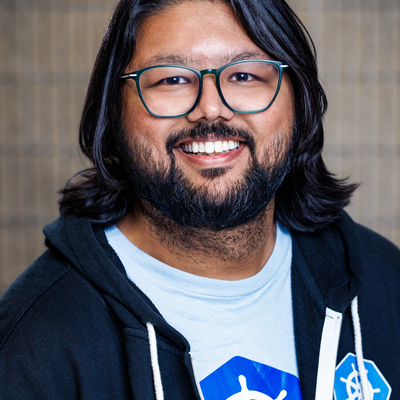
Atulpriya Sharma
Principal Developer Advocate @ Improving | CNCF Ambassador
Hyderābād, India
Actions
Known across the cloud-native community as Maharaj, I make complex technology accessible - from KubeCon stages to community meetups to client boardrooms. What started as a manual QA engineering career over a decade ago has evolved into leading developer relations at scale as a Principal Developer Advocate.
With a B.Tech in Computer Science Engineering and a PGDM in Marketing, I combine engineering depth with narrative instinct - debugging a Kubernetes operator in the morning and crafting a developer content strategy by afternoon.
Speaker at every KubeCon since Chicago 2023, Co-Chair of KubeCon India 2025, Co-Chair of the CNCF Platform Engineering Technical Community Group, and organiser of Cloud Native Hyderabad.
Badges

Area of Expertise
Topics
Your Most Privileged User Isn't Human: The Agent Security Blindspot
Your security team locked down Kubernetes. Then developers deployed AI agents needing kubectl, cloud APIs, observability access. You created service accounts with broad permissions.
Now your most privileged identity makes decisions you can't audit, executes actions you can't attribute, invokes tools you can't scope.
Traditional security assumes predictable workloads. Agents are autonomous - your controls don't apply.
Three security gaps:
- Lost Attribution: Audit logs show service account, not which user or why. No accountability.
- Permission Escalation: Agents need broad capability, so they run elevated. Static RBAC can't express context-aware authorization.
- Invisible Tool Chains: Agents invoke MCP servers dynamically. Security sees one identity; attackers see an attack path.
As agents move to production, these become active vulnerabilities.
Learn what to add to security reviews before this becomes your incident.
Your MCP Server Answers Every Call. Should It?
Your MCP server works. Every tool call executes. But do you know who made that call, whether they were allowed to, and whether it should have required a human to approve it first?
Most MCP servers today operate on implicit trust. If an agent can connect, it can run anything - usually without any identity checks, boundaries, or logs. That works in dev. In production, a misconfigured agent or a prompt injection can trigger your most sensitive tools with nothing to stop it.
This session makes the path from 'working' to 'governed' concrete: authenticating agents via OAuth, enforcing per-tool authorisation, and adding human-in-the-loop approvals for high-stakes actions. Live demo: we’ll take an unauthenticated agent, lock down the server, and hold a sensitive call for approval with a full trace on exit.
MCP connects agents to your most important systems; it’s time we started checking their IDs at the door.
Rab Ne Bana Di Jodi - Why Platforms & AI Need Each Other
A match made in heaven, or one hell of a couple? Platform teams spent 2 years perfecting golden paths for cloud-native infrastructure. 5 engineers managing 100 services.
Last week, a new AI agent generated the same config in 30 seconds. This week they're managing 5 LLM models across 200 services. The future seems one-sided. This couple needs counselling.
This is escalating abstraction: Platforms reduce k8s chaos. AI automates those paths at breakneck speed. But AI-generated configs violate platform policies. Platforms enforce governance via admission controllers. Governance needs observability. Observability reveals the gap: no model lifecycle management, no agent audit trails, no cost control APIs.
This talk traces real interdependencies: deprecating models, managing sprawl, isolating agents, controlling budgets. You'll learn what exists - CNCF AI Conformance, tools, working groups & the critical gaps.
Right now, there's no greater agony than rationalising AI without platforms.
Platform Engineering: Adoption, UX & Governance
Internal developer platforms only work if people actually use them.
This discussion focuses on how platform teams drive adoption through better UX, golden paths, and feedback loops—and how those same platforms enforce policy across infrastructure. We’ll explore where platforms succeed, where they’re bypassed, and how they evolve into effective control planes.
Economics of Platforms: Building Bazaars Beyond Golden Path
Golden paths have paved the way. Now it's time to build a bazaar. This talk takes a fresh view on how mature organisations can evolve from paved paths to internal developer marketplaces that transform platform economics, enabling teams to 'buy' and 'sell' capabilities.
An economy where engineering capabilities become currency, teams become market participants, and value flows in multiple directions.
We'll examine architectural patterns and transition challenges: capability registries built on service catalogs, contribution workflows using GitOps principles, and governance models with automated quality gates.
Think capability APIs with semantic versioning, dependency management, and economic metrics tracking contribution credits, adoption rates, and team platform 'balance sheets' showing value exchanges.
We'll explore contribution templates and governance models managing cultural/technical complexities in platform engineering's shift from centralised to community-driven practice.
Build Your Golden Path Construction Playbook: A Maturity-First Implementation Approach
Everyone talks about golden paths, but most teams struggle with: how do you actually build them?
You've seen architecture diagrams, attended talks, but when you return to work, you're staring at scattered scripts, wondering where to start.
This talk introduces the Maturity-First Construction Framework - a progressive methodology that draws from the Platform Maturity Model.
Through a live demo, we'll focus on three critical transitions: evolving scripts into validation frameworks, implementing GitOps integration, and enabling self-service using ArgoCD and Backstage.
You'll witness functional code being built, illustrating how teams can begin with simple scripts and systematically enhance their developer experience. We'll explore battle-tested patterns for validation, templating, and GitOps integration.
You'll walk away with a proven construction playbook for building golden paths that scale with organizational maturity and deliver measurable developer productivity improvements.
AI on Kubernetes: A Community Roundtable on What's Working, What's Not
We're seeing this massive wave where everyone's trying to run AI workloads on Kubernetes, but honestly, most teams are figuring this out as they go.
Between the three of us, we've had conversations with dozens of teams at KubeCons, through OpenSSF, and across the platform engineering community. This panel is basically us connecting those dots and having an honest conversation about what patterns are actually emerging versus what's still a mess.
We'll talk through the technical challenges teams are hitting, how to not blow your cloud budget on GPUs, why ML engineers and Kubernetes don't naturally get along, and what the new standards like Kubernetes AI Conformance actually mean for people building platforms.
It's not a "here's how we solved everything" talk—it's more like "here's what we're seeing work, here's where people are still struggling, and here's the stuff nobody's figured out yet."
Shaping Platform Engineering's Future: From Community to Industry Standard Certification
Is Platform engineering the hottest trend in tech, or just a fancy name for DevOps?
While teams everywhere chase developer self-service and golden paths, the skills gap is massive. What started as conference chatter has exploded into dedicated KubeCon tracks, drawing record crowds and companies desperately hiring platform engineers.
But how do you prove you know what you're doing?
Meet some of the platform engineering practitioners who saw this chaos and built the Cloud Native Platform Engineering Associate certification - the first vendor-neutral certification to validate real expertise.
Discover why they felt certification was essential, how it distinguishes genuine skills from resume buzzwords, and why it opens doors to leadership roles like Platform Architect and Manager.
Walk away with a clear understanding of platform engineering's trajectory, practical next steps for your career growth, and insider knowledge from people building tomorrow's developer experiences today.
Don't Ask Murali to Open: Platform Team Positioning That Works
The talk focuses on platform engineering team dynamics and helps understand the various roles that are required within the team to build a successful platform.
Economics of Platforms: Building Marketplaces Beyond Golden Paths
You've built golden paths, achieved adoption, but now face the scaling bottleneck: every new capability requires your team to build, maintain, and support it. What if instead of being the sole provider, you became the marketplace operator?
This talk introduces the Internal Developer Marketplace model, which transforms platforms from centralised services into economic ecosystems where any team contributes capabilities. We'll explore how organisations can evolve from paved paths to community-driven platforms where engineering capabilities become tradeable assets.
Through practical examples, we'll learn about contribution frameworks that turn domain expertise into platform capabilities, governance models that maintain quality without gatekeeping, and recognition systems that incentivise meaningful contributions.
The result? Platform engineering that scales beyond your team's capacity, leverages distributed expertise, and creates sustainable growth through network effects.
Let's Understand MCP: The USB Type-C Plug For Your AI Apps
Remember when you used to carry different charging cables for your iPhone and Android? The former used the Lightning port, while Androids used USB Type-C.
Today's AI landscape mirrors this fragmentation. Developers working with multiple AI models face a similar headache, needing custom integration code for OpenAI, Anthropic, Cohere, and open-source models—each with its own proprietary "connector".
This fragmentation creates the same problems that plagued the pre-USB-C world: vendor lock-in, limited interchangeability, and increased complexity. For teams deploying AI on Kubernetes, this means maintaining multiple integration codebases and wrestling with incompatible interfaces whenever you want to switch or compare models.
Model Context Protocol (MCP) is the USB-C standard the AI world has been waiting for. It establishes a universal communication interface for AI interactions, standardizing prompts, contexts, and responses across different AI systems.
Just as USB-C works with everything from laptops to smartphones, MCP works with models whether they're running locally or as managed services. It abstracts away provider-specific implementations, allowing developers to write code once that seamlessly connects to multiple AI models.
This lightning talk will demonstrate how MCP's architecture enables truly portable AI applications—preserving each model's unique capabilities while eliminating integration headaches.
I'll show how MCP solves real integration challenges in Kubernetes environments and outline how early adopters can leverage this emerging standard to build more flexible, future-proof AI systems.
Platform Abstractions an Asset or Liability? - Let’s Understand The Abstraction Debt Trap
Developers often spend hours configuring Kubernetes manifests, wrestling with CI/CD pipelines, or implementing the right network policy. Platforms help solve this by providing abstractions—simple interfaces that hide complexity. But here’s the challenge: the more we abstract, the more rigid our platforms become.
When teams need to deploy slightly differently, they either fight the platform or work around it. This is the Abstraction Debt Trap, where yesterday’s simplification becomes today’s bottleneck.
In this talk, I’ll introduce the concept of Abstraction Elasticity, a measurable way to build platform capabilities that bend without breaking. I’ll also show ways to implement composable abstractions, build APIs that adapt to team maturity, and create flexible guardrails.
Using examples and code, I’ll show you how to measure your platform’s abstraction health, implement adaptable interfaces, and build platforms that grow with your teams and not restrict them.
Code, Prompt, or Both? Choices That Matter in Building Cloud Native Applications
As developers we always have this one question “Should I ask AI or code it myself?” From GitHub Copilot to ChatGPT, AI coding assistants have redefined the way we build our applications.
But when working with cloud native technologies, should you prompt AI or write code? AI coding assistants promise faster development, but coding them yourself gives you full control and flexibility. AI excels at templating, troubleshooting, generating boilerplate code, and debugging common issues. However, it falls short where human expertise is crucial - building distributed systems, scalability, security, etc.
In this talk, we'll examine when AI truly accelerates development and when it becomes a bottleneck through real-world scenarios. using AI tools and scenarios. We'll also provide a decision making framework with guidelines that participants can use to maximize productivity while choosing between AI assistants and human expertise.
Are You Really Ready To Adopt A Platform?
Everyone is talking about platforms and why not, they bring in a lot of benefits when it comes to agility and flexibility to your software development process. But are you really ready to adopt a platform?
Implementing a platform isn't just about the tools, tech and integrations. There are people, processes and culture involved too. This talk will focus on organization readiness and present you with a checklist that'll help you check your preparedness to adopt a platform.
Throughout the checklist, we'll focus on all the critical aspects right from identifying key stakeholders, investments, implementation and other critical processes that are linked to the successful adoption of your platform. The checklist will lead you to the Platform maturity model that will further help you evolve and mature your platform over time.
So, are you really ready to adopt a platform? Join in to find the answer.
Mastering Myself Before Mastering Kyverno - Lessons Learned From Authoring My First Course
They say the best way to learn is by teaching. Back in college, I was the go-to guy for my friends, breaking down complex concepts that helped them ace their exams. Little did I know that those late-night dorm sessions were preparing me for a future course author.
Fast-forward to 2024, I co-authored the Mastering Kubernetes Security with Kyverno course for The Linux Foundation. It was my first time creating a cloud native course for students and professionals.
In this talk, I’ll share my experience of grappling with my knowledge gaps and shed light on the process of building a course. I’ll also focus on things that I missed and learned along the way—spending countless hours building real-world hands-on examples and refining the text so that everyone can understand it.
Join me in this talk to learn how to build a course, strategies for content creation, how to manage imposter syndrome, and how to deliver a great learning experience from a first-time course creator.
Is Platform Engineering only about IDPs? Think Again.
IDPs: A step to developer nirvana in platform engineering, but just the tip of the iceberg.
PlatformCon 2026 Sessionize Event
KubeCon + CloudNativeCon India 2026 Sessionize Event
KCD New York 2026 Sessionize Event
MCP Dev Summit Bengaluru 2026 Sessionize Event
CNCF-Hosted Co-located Events Europe 2026 Sessionize Event
KCD New Delhi Sessionize Event
KubeCon + CloudNativeCon North America 2025 Sessionize Event
CNCF-hosted Co-located Events North America 2025 Sessionize Event
KCD Sri Lanka 2025 Sessionize Event
KCD Bengaluru 2025 Sessionize Event
KCD Chennai 2025 Sessionize Event
CNCF-hosted Co-located Events Europe 2025 Sessionize Event
CNCF-hosted Co-located Events North America 2024 Sessionize Event
PlatformCon 2024 Sessionize Event
Atulpriya Sharma
Principal Developer Advocate @ Improving | CNCF Ambassador
Hyderābād, India
Actions
Please note that Sessionize is not responsible for the accuracy or validity of the data provided by speakers. If you suspect this profile to be fake or spam, please let us know.
Jump to top