
Chad Shomura
Associate Professor
Actions
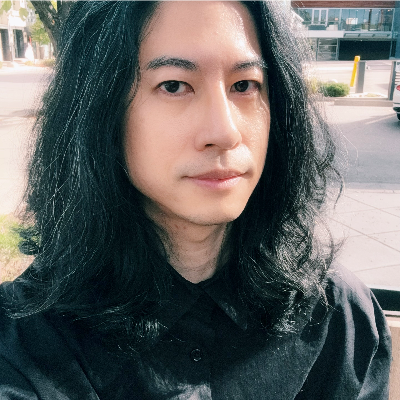
Chad Shomura is Associate Professor of Ethnic Studies at the University of Colorado, Denver. His research interests include political thought, affect, biopolitics, new materialism, and ecology. His recent publications are in Catalyst: Feminism, Theory, Technoscience, Capacities To: Affect Up Against Fascism, Theory & Event, American Quarterly, and Oxford Encyclopedia of Asian American Literature and Culture. Chad's current book project, A Life Otherwise, examines minor assemblies of life that upset the good life. His latest zine, New Model Minorities, is a series of aphorisms about people who destroy community in the name of community. His website is chadshomura.com
Topics
Racial Matters of Asian/America (2)
This linked session panel features three authors from the recently published special issue of Catalyst: feminism, theory, technoscience titled “Racial Matters of Asian/America” (forthcoming spring 2026). The special issue is animated by a growing sub-conversation within Asian American studies invested in what could loosely be described as feminist new materialisms, or perhaps more broadly feminist science and technology studies, that approaches race as unmoored from the human form. The issue is composed of three subsections: racial form, racial infrastructures of technology, and racial environments. The special issue, and subsequent panel and linked roundtable, extends questions of subjectless critique and racial form to ask: How does Asian Americanness materialize beyond and through the human form as it culminates and dissipates across material worlds? How do the material infrastructures of technoculture both rely upon and construct Asian American migrant labor? How have toxic materials associated with war and empire become racialized as Asian American? Moreover, how might an attention to a method of racial materiality forward a theory of racial incommensurability as a site of shared solidarity across difference? Indeed, in these conversations we were interested in the import of Asian American studies for studies of race beyond the explicitly racialized Asian American subject, animating an intrinsic interest in matter in all of its itinerant forms.
Racial Care: A New Book Roundtable
This roundtable gathers participants together for a discussion of James McMaster's new book, Racial Care: On Asian American Suffering and Survival. As a concept, racial care refers to everything we do to sustain racialized people through the suffering they experience as a consequence of their location within the white supremacist, anti-Black, and settler colonial capitalist order of the United States. The author will begin the roundtable by briefly introducing this concept, the book's central arguments, and their relevance to the contemporary moment. Roundtable participants will then take turns offering critical responses to the book from their various vantage points within disability studies, queer studies, affect studies, public health, and political theory. The gathering will conclude with an open discussion, an opportunity to think and strategize toward better, more reciprocal relations of racial care in times of crisis.
Art for the People: Sustaining Community Practices from the 60s to the Future
Living proof of a radical collective imaginary lies within the art and cinema of our social movements. This roundtable explores how contemporary Asian diasporic artists, organizers and filmmakers are using their respective mediums to build communities, resist dominant ideologies, and demand more liveable futures. It is guided by the political lessons of our elders and ancestors in the Asian American and Civil Rights movements, and the parallel Third Cinema and L.A. Rebellion movements of the 60s-80s.
Panelists include contemporary Asian diasporic movement artists, filmmakers, and scholars who will share first-hand accounts of their community arts-organizing in the form of guerilla street art, mobile cinemas, printmaking, and community-based murals. By sharing examples from the U.S. and transnationally in Mexico and the Philippines, our roundtable opens discussion of: what is the role of the Asian diasporic artist or storyteller when liberatory futures demand building coalitions across cultures, generations, ethnicities and continents? How might artists, organizers, and scholars work across borders to collectively create the futures we dream? How can this collaborative work be sustained for generations to come?
Diane Fujino will explore the ways art, music, and culture works to advance movements for liberation and justice with a focus on the 1960s-80s Black Liberation and Asian American movements. By emphasizing the importance of radical imagination and participatory pedagogies, we see how art linked to activism propels not only community-based art making, but art-based community making.
Jess X. Snow will present on how rest, imagination and constellations of care between friends and collaborators sustains the long term work of building coalitions, afro-asian solidarities and abolitionist futures. They will read a poem and share lessons learned from their own filmmaking and art practices—specifically how their process leading a mural project honoring Ruth Wilson Gilmore supported a collective vision for an abolitionist future in New Haven.
A.E. Hunt will present old and new modes of film distribution and exhibition built outside of the Hollywood Studio system, focusing on the four-walling practices of Oscar Mischeaux and Haile Gerima, “Third Cinema” movements, and current radical cinema collectives, both nomadic and brick-and-mortar. He will illustrate how people have been organizing outside of Hollywood and the linear, hierarchical q&as of state-of-the-art cinema in community spaces, often paired with teach-ins, skill-shares, or fundraising.
Kill Joy will present about political posters and social movements with a focus on community-building through mural painting, printmaking and puppet world making. She will share lessons learned on the ground about the power of collaboration, especially with people who do not identify as “artists”, and how such collaborations can bridge transnational communities particularly between the Philippines, Mexico and the US.
Saiyare Refaei will present about their use of community art to work collaboratively within the Pacific Northwest to activate spaces and solidarity for building bridges between movements. They will share how local abolitionist art activations have protested the immigrant detention center and illegal liquid natural gas facility in the port of Tacoma and imagine more liberated futures.
Inscrutable Skin, Opaque Aesthetics: Relating Asian American and African American Illegibility
In Asian American literary, performance, and cultural studies, inscrutability has offered a potent way to rethink the tropes of Asian American subjects as illegible, disaffected, and perpetually foreign. Rather than bury these tropes as forgotten relics of the past, inscrutability takes seriously how these racist configurations continue to structure our present, and more importantly, how it is transformed into an aesthetic that questions the very ideal of nationhood undergirding these stereotypes. Inscrutability, then, illustrates the value of refusing to be read, refusing to perform normative affection, and refusing antiquated notions of assimilation.
This panel recognizes the ways in which African American Studies scholarship on illegibility, fugitivity, and invisibility have influenced theoretical recuperations of illegibility in Asian American Studies and the role aesthetics play in understanding racialization more broadly. We turn to Glissant’s “opacity” as an example, as well as his Black Caribbeanist reformulation of totality which makes possible this juxtaposition. If colonial dominance demands transparency, Glissant's answer to the challenge at hand for racialized and oppressed peoples is the “right to opacity.” A way of reading which does not defer to the lucidity of the self in Glissant resonates with and in Asian American formulations of inscrutability in ways that warrant attention. Glissant does not advance a homogenizing universality, but a mode of Relation that recognizes the complex diversity in/of being. Glissant advances a "poetics of Relation," with regard to the search for depth, which is to say a poetics is what makes possible a recognition of the self as unknowable.
In thinking about inscrutability and opacity together, we do not seek to reinforce rigid categories that essentialize a difference between Asian American and Caribbeanist thought, but to assume an archipelagic mode of thinking that decentralizes a white western intellectual tradition. What are the ways Asian American formulations of inscrutability resonate with and distinguish itself from Édouard Glissant’s opacity. How does that distinction inform our current modes of inquiry? How do Asian American theorists use African American aesthetics of illegibility to conceptualize inscrutability? We consider opacity through K-beauty formulations of glass skin and its connection to chemical warfare and medical violence, literary minimalism as an animation of Asiatic femininity, chronic skin conditions and racialized disability, and the metaphor of disappearing bodies.
Affective Undercurrents: Asian American Nostalgia, Yearning, Joy
Affect has been an increasingly important topic within Asian American studies. Racial melancholia, minor feelings, ugly feelings, shame, and disaffection have been treated as key, if not defining, aspects of Asian America due to profound experiences of exclusion, loss, trauma, and alienation. It is worth critically examining presumptions behind Asian American affect studies about subjectivity, emotional expression, and politics to see how the subfield might continue to develop in the 2020s and beyond.
To undertake that endeavor, this panel focuses on feelings and affective structures that have been under-theorized: nostalgia, yearning, and joy. Yasmin Yoon explores how, in a post-1960s neoliberal racial order, the Asiatic is made and remade through nostalgia in an analysis of Pamela Lu’s novel Ambient Parking Lot and the aesthetic genre of citypop. Annabelle Tseng describes how Asian American yearning makes room for possibilities undefined by the trauma of loss and displacement by examining Ling Ma’s short story collection Bliss Montage and Celine Song’s film Past Lives. Chad Shomura elaborates joy as denied to but persistent in Asian America by engaging the racist, sexist backlash against tidying guru Marie Kondo. The panelists show nostalgia, yearning, and joy to be strange Asian American affects, for they are not grounded in subjectivity, strong emotional display, or expectations of proper feeling. Instead, they work in the key of architecture and mood, the subtle and the subdued, and ethereal, persistent force. In short, the panel traces Asian American affects that are more distributive than centered, more diffuse than grounded.
Rather than calling for nostalgia, yearning, and joy to be centered in the field, the panelists honor their minor status as affective undercurrents. This enables us to see Asian America as too diffuse for the dialectics of exclusion/inclusion, periphery/center, and fragmentation/wholeness that often frame scholarship in the field. The panel contributes fresh starting points to better understand Asian American racial form, literary and cultural production, theory, and politics.
Through the Queer Diasporic Gaze
Film contributes to the exclusionary shape of dominant publics in the United States. The camera is frequently used to police communities and create propaganda for corporations and the state. This can entrain Asian Americans toward assimilation and reproducing US nationalism and cisheteronormativity. How might queer Asian diasporic communities use film to counter-surveil and betray the male and western gaze? How might film generate counterpublics around nonnormative Asian and Asian American narratives?
Spanning documentary, memoir, coming of age family drama, fantasy, and magical realism, these authentic and brave short films from queer emerging directors of the Asian diaspora (Pakistan, China and Vietnam) show how to hold each other and ourselves in ways that nations and institutions cannot. Told with a tender gaze and breathtaking visuals, these films explore healing in the aftermath of immigrant and refugee experiences, domestic and sexual violence, and homophobia. They lovingly and vibrantly unveil landscapes and emotionscapes rarely seen in mainstream Asian American film and unearth possibilities and practices of care, survival, chosen family and alternative futures.
Following the screenings will be a discussion with some of the filmmakers, moderated by Jess X. Snow and Chad Shomura.
Short films:
Retrieval by Fatimah Asghar
Will You Look At Me by Shuli Huang (Queer Palme at Cannes 2022)
Little Sky by Jess X. Snow
In Living Memory by Quyên Nguyen-Le
After Anti-Asian Violence: Art, Affect, and Abolitionist Futures
Anti-Asian violence has long been a pressing but typically overlooked issue. Its appearance as a matter of concern in dominant publics during the COVID-19 pandemic has been partial and fleeting. This limited attention has shaped public feelings toward Asian/Americans. Sympathy and grief, where they have appeared, have been temporary and politically inefficacious. Asian/American lives remain expendable within the dominant US public sphere. Urgent questions are raised by the disconnects between a fleeting, limited dominant public and the kind of sustained counterpublic needed for meaningful sociopolitical change: What historical and sociopolitical conditions enable the ongoing devaluation and destruction of Asian/American lives? What exactly does anti-Asian violence seek to destroy? How have artists responded to the erasure of Asian America in/by dominant publics? What might Asian/American spaces of grief and healing look like?
This panel presents scholarly and artistic projects that develop a sustained engagement with anti-Asian violence. A. Naomi Paik will describe the relations between anti-Asian violence and mass shootings in the US to settler colonialism in the Second Amendment and call for abolitionist responses. Chad Shomura will treat anti-Asian violence as the destruction of what Asian America could be and, in doing so, develop Asian American affect beyond minor feelings, racial melancholia, and disaffection. James McMaster will examine artists and artworks that have sought to make space for Asian American grief in the pandemic era, specifically by seeking recourse to gardens as both actual and metaphorical sites of respite and release. Jess X Snow will share poems and a personal reflection about how a community mural in Manhattan’s Chinatown, a queer Pan-Asian narrative film, futurism and friend intimacy can help us heal from anti-Asian violence and form cross-cultural coalitions that challenge white supremacy and settler colonialism. Collectively, panelists tell a multi-faceted story about anti-Asian violence and creative ways to move through grief and arrive at a place of collective possibility.
Chad Shomura
Associate Professor
Actions
Please note that Sessionize is not responsible for the accuracy or validity of the data provided by speakers. If you suspect this profile to be fake or spam, please let us know.
Jump to top