
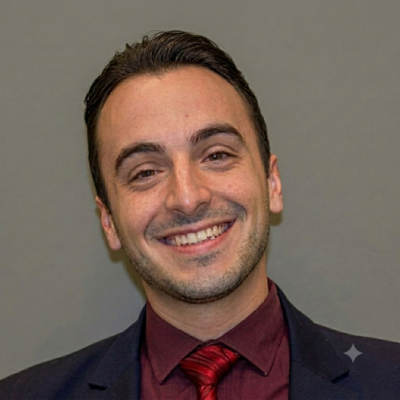
Christopher Braccia
Founder and Director of Research, East West Strategic Research Collective | Founder, The Observatory (16sectors.org) | Fellow, Cybersecurity and Innovation, USTelecom
Catskill, New York, United States
Actions
Christopher Braccia is Co-Founder and Director of Research at East West Strategic Research Collective, where he leads independent research on People’s Republic of China cyber operations against critical infrastructure. He has lived and worked in Asia for more than 15 years. Through the Collective he founded The Observatory (16sectors.org), a free and open record of more than 12,000 cyber incidents across all 16 critical infrastructure sectors, over 5,000 of them verified. The Observatory takes its guiding principle from Japan’s kyojo (共助), the mutual aid between neighbors that carries a community through a disaster, and applies it to cyberspace so that what one defender learns from an intrusion is there for every other defender to use.
***Views expressed are his own***
He is also a Fellow for Cybersecurity and Innovation at USTelecom in Washington, DC. He has advised the White House Office of the National Cyber Director and was lead drafter of the Communications Sector’s AI Sector Risk Assessment for the U.S. Department of Homeland Security. He serves as Chief of Staff of the International Communications CISO Council, which links carrier security chiefs in the United States, Europe and Japan, and co-chairs the Strategy Coordination Committee of the Communications Sector Coordinating Council, the sector’s formal partnership body with DHS.
His study “From Vietnam to Volt Typhoon” was cited by the Chief Technology Officer of the UK National Cyber Security Centre and syndicated by RealClearDefense, the ISEAS-Yusof Ishak Institute in Singapore, the Australian Centre for International Studies, Indian Strategic Studies, and the US Naval Cryptologic Veterans Association. His CODE BLUE session is the second part of a three-part series on nation-state attacks against critical infrastructure that opened in Europe, continues in Tokyo, and will conclude in the United States.
Views expressed are his own.
Area of Expertise
1: Walk Until You Hit Moss
There are no slides for this one. Thoreau went to the woods on purpose and I have found that the same thing works on a smaller scale, so this session describes the practice that keeps me sane in a field built on worst cases. You get up from your desk in the middle of the doom, walk out the door and across the yard, and keep walking into the trees until the ground goes soft and your feet are on moss. Then you lie down on it. You breathe in the cold mineral smell of the earth and everything growing out of it, you become aware of how much is alive around you and aware of you, and you remember that today is a good day and that none of the gloom reached this spot. We will talk about why people who study cascading failure need somewhere the cascade does not follow them, and what the forest floor, which has been running a resilient network for a very long time, has to teach the rest of us. Wear shoes you can take off.
2: Kyojo for Networks
Japan's disaster tradition divides responsibility among self-help, mutual aid between neighbors and public assistance, and the middle layer, kyojo, is the one most cyber policy leaves out. This session applies kyojo to infrastructure defense and describes what mutual aid between operators, and between allied countries with Japan as an anchor partner, would look like in practice.
The Strategic Deception of "Typhoon" Designations
Volt, Salt, Flax and the rest of the Typhoon names were coined to help analysts keep clusters of activity apart, and they have ended up shaping how the public and policymakers understand the threat. I look at what gets lost when one state's long campaign is reported as a series of separately branded incidents, and how defenders can learn to read across the names.
Verified Only: Building an Incident Record You Can Cite
Many incident datasets mix confirmed events with rumor and vendor marketing, which makes any number drawn from them hard to defend. This session explains the sourcing method behind the Observatory, including its verified-only tier and its versioned, citable releases, and offers a checklist for anyone building a dataset that has to hold up under an editor’s or a regulator’s questions.
Viasat Was the Opening Act
The attack on Viasat’s satellite network on the first day of the invasion of Ukraine was, in my reading, the first act of space warfare, and it drew far less attention than it deserved. I revisit what happened and follow the attacks on space systems that have come since, with a view to what commercial operators should expect in the next conflict.
T-Day: A First Look at the Book
The book I am finishing opens in the fictional town of Ashford on an ordinary school morning and follows a handful of residents through the first days of a cascading infrastructure failure, with the research on how each system breaks set alongside the story. In this session I read from the opening chapters and explain how the fiction was built on the real record, including what had to stay accurate for the story to be worth telling.
9: Know the Trigger: Preparedness for Households, Towns and Operators
Most preparedness advice hands people a list of supplies and leaves out the harder question of when to act. This session offers a simple model built around triggers, the observable signs that tell a family or a town clerk or a network operator that an outage has stopped being routine, and the decisions each of them should already have made by that point.
Salt Typhoon's Shadow: Japan and the Staging Grounds Next Door
Japan sits wedged between the staging ground and the flashpoint. For two decades, PRC-linked operators have refined intrusion tradecraft in Southeast Asia before turning it on allies, the incubator that produced Salt Typhoon. Now the rehearsal runs at machine speed against Taiwan, and Japan’s networks are the connective tissue a conflict would contest first. In February 2025, intruders at Japan’s largest carrier group moved laterally before detection; within 28 days the company told the public, and this October the Active Cyber Defense Act made prompt reporting law. Americans learned of Salt Typhoon from the press. This session compares three governance models for allied defense: Japan’s new statute, the US coordinating councils that carried the Salt Typhoon response, and transnational CISO coordination. Attendees leave knowing which doors stand open, including The Observatory at 16sectors.org, free to any defender, and why allies need a Standing Pacific Cyber Council before 2027.
5: Anatomy of a Cascade: How One Outage Becomes Ten
Power, water, communications, healthcare and finance lean on each other in ways that most risk registers never draw. I trace a single failure through those dependencies in plain terms, showing how long each handoff between sectors holds before it gives and which of them an adversary would choose first if the goal were to make a region stop working for a week.
No Single Sector to Blame
After a major incident every sector writes its own review, and each one tends to find that the failure started somewhere else. Drawing on direct work in seven of the sixteen US critical infrastructure sectors, this session makes the case for reviewing incidents across sector lines and shows how the findings change when you do.
T-Day: The Morning the Tap Runs Dry
A mother gets her kids up for school and the kitchen tap gives her nothing. By the time she reaches the first intersection the traffic lights are dark, and by mid-morning the hospital cannot check patients in and the ATM will not give her cash. This session follows that one morning hour by hour to show what a coordinated attack on infrastructure looks like from a kitchen and a car, long before anyone in authority has named it.
The War Already Underway
The grey-zone contest over infrastructure did not wait for a declaration, and the record from Ukraine shows how years of probing and pre-positioning came before the tanks. I set that record beside what has been found inside networks across the Indo-Pacific and North America and ask what an honest reading of it says about where we are on the timeline.
Stop Counting Intrusions, Start Reading Intent
Intrusion counts tell you how busy an adversary has been and very little about what they plan to do. This session lays out four behavioral signals, validation, concentration, boldness and correlation, that I use to read a shift in intent from the incident record, along with a frank account of which of those signals can be seen from public data and which cannot.
7: From Vietnam to Volt Typhoon
Techniques that later appeared inside American infrastructure were worked out years earlier against governments and companies in Southeast Asia. Based on my paper of the same name and on years of living and working in Saigon, this session walks through that lineage and what it tells us about how PRC operators refine their methods close to home before using them abroad.
https://christopherbraccia.com/research/vietnam-to-volt-typhoon
The Case for a Standing Pacific Cyber Council
Word of an intrusion in Manila or Hanoi still reaches the people in Tokyo and Washington who are about to face the same operators slowly, when it reaches them at all. I propose a standing council that bridges East and West and shares what its members see in real time, and I walk through who would need to sit on it and what it would take for them to trust each other.
Severed Above and Below
Subsea cables and the ground stations that serve low-earth-orbit satellites are usually handled by different regulators and different teams, yet an adversary planning to isolate a country would treat them as one target set. This session presents them as a single communications risk domain and looks at what convergent planning would ask of operators and governments.
4: Algorithmic Siege: A Machine-Speed Rehearsal for Taiwan
Automation is shortening the time between an adversary gaining access and an adversary being able to act on it across many targets at once. This session draws on my paper on machine-speed operations to describe what a rehearsal for a Taiwan contingency looks like in the data, and what it means for defenders whose response plans still assume human tempo.
The Bear and the Dragon in the Wires
Handing a rifle to a neighbor you already know is dangerous makes you part of whatever happens next. This session traces how Russian and Chinese support has built up Iran's cyber capability and follows the resulting activity across all sixteen US critical infrastructure sectors, with attention to what that kind of sponsorship means for attribution and deterrence.
3: Admitting the Breach
This session looks at how Japan acknowledged intrusions into its own networks and then changed its law and its institutions in response. I measure that record against how governments and private companies elsewhere handled comparable discoveries, and argue that the willingness to admit and correct is a capability allies should study and copy.
8: Frontier AI Inside the Network
The most capable AI models are moving into the systems that run communications networks, where a mistake or a compromise travels a long way. This session sets out the questions an operator should ask before giving a frontier model access to live infrastructure, including how it is contained and who can stop it once it is running.
One Map for the Supply Chain Maze
Washington now has more than sixty federal actions on technology supply chains spread across well over a dozen lead agencies, and a company trying to comply meets them one at a time with no view of the whole. I show how I track them as a single map and what patterns appear once the overlaps are laid side by side.
Taiwan, Blockade and the Case for an Enforced Freedom of Navigation Treaty
A blockade of Taiwan would be felt in shipping lanes and cable routes far from the strait. Based on my paper, this session argues for an enforced freedom of navigation treaty and examines what enforcement would require from the states that depend most on those waters.
The Observatory: One Free Tool, Sixteen Sectors
The Observatory is a free, public record of cyber incidents across all sixteen US critical infrastructure sectors that I built and maintain on my own. This is a live demonstration, with the audience picking the sectors and countries we look at, showing how to move from a single incident to the pattern it belongs to.
The One-Person Research Shop
A single researcher with local models and well-run research agents can now do work that used to need a team, provided the setup does not leak the material it is working on. I describe how I run my own stack, including what never leaves my own hardware, and the data hygiene habits that let me use AI heavily on sensitive subjects.
6: ***Food Security Is National Security***
A region that cannot feed itself for a week is exposed in the same way as a region that cannot keep its lights on. Drawing on food rescue work in the Hudson Valley and a pantry coalition I co-founded in Greene County, New York, this session treats food distribution as critical infrastructure and looks at what a cyber or logistics disruption would do to the people who rely on it.
3.1 Sixteen Years in Saigon
I left for Vietnam shortly after turning twenty and stayed for almost sixteen years, where I built and sold two companies and lectured at a university before I ever worked in security. This session is a personal account of what living inside the region taught me about how the people and governments there see the contest between the great powers, and why that view deserves more attention from the West.
Southeast Asia Saw It First
Defenders in Southeast Asia were detecting and reporting this activity well before it made headlines in Washington or Tokyo, and most of that reporting went unread in the West. I go through what was known at the time and why it failed to travel, and suggest practical ways to make the region’s early warning count next time.
InCyber Forum Europe 2026 Upcoming
CODE BLUE 2026 Sessionize Event
ITripleC
USTelecom Cyber Leadership Summit
CYDES 2026
NYS Cybersecurity Conference 2026
USTelecom “Mythos & Facts” member webinar
ITripleC
Quantum Working Group launch
Hudson Valley Food Security Coalition
CyberSecVietnam Conference 2025, run by CyberSecAsia
DC Cyber 9/12 Strategy Challenge
CYDES 2025
NYS Cybersecurity Conference 2025
Atlantic Council: DC Cyber 9/12 Strategy Challenge
ITripleC
Hudson Valley Food Security Coalition
Please note that Sessionize is not responsible for the accuracy or validity of the data provided by speakers. If you suspect this profile to be fake or spam, please let us know.
Jump to top