
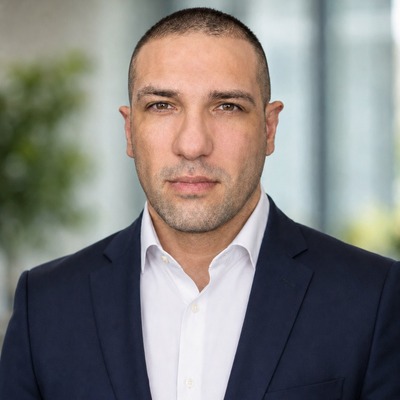
Dionysis Karamitopoulos
Enterprise Security Risk & Resilience Architect
Thessaloníki, Greece
Actions
I am an Enterprise Security Risk & Resilience Architect specializing in cybersecurity risk assessment, risk management, security architecture and cyber resilience. My professional focus is identifying, evaluating and reducing security risks across enterprise environments, combining technical analysis, risk-based methodologies and practical security solutions.
My approach covers the entire security risk lifecycle, from asset identification, threat and vulnerability assessment, and qualitative and quantitative risk analysis to control effectiveness evaluation, risk treatment and remediation planning. This includes both digital security risks and physical threats directly affecting IT infrastructure, critical systems and information assets.
With a technical background in Microsoft 365 Security, Microsoft Entra ID, Identity & Access Management (IAM), Microsoft Intune, Microsoft Defender XDR and enterprise security architecture, I bridge the gap between risk assessment and technical implementation. I focus on translating identified security exposures into actionable controls, secure architectural designs and measurable improvements in organizational security and resilience.
My expertise is supported by information security governance, ISO/IEC 27001:2022 internal auditing, ISO/IEC 27701:2025 privacy auditing, regulatory alignment and structured risk management practices. I apply these disciplines to ensure that security decisions are technically sound, risk-informed and aligned with business objectives.
Currently pursuing an MBA, I am further strengthening the connection between cybersecurity, enterprise risk management, strategic decision-making and business resilience.
My professional objective is to help organizations move beyond compliance-driven security towards a proactive, risk-based approach that identifies real exposure, prioritizes effective controls and builds sustainable cyber resilience.
Badges



Area of Expertise
Topics
From Passive Defence to Adversarial Readiness
Attackers continuously adapt their techniques, infrastructure and decision-making, while many defensive programmes still rely on periodic assessments and static controls.
This session introduces Continuous Adversarial Readiness: a security operating model combining threat intelligence, controlled adversarial emulation, AI-assisted analysis and continuous control validation.
The talk explores where AI can accelerate defensive analysis and adaptation, but also where automation must stop. We will look at human oversight, decision boundaries, risk ownership and the practical governance needed when AI becomes part of security operations.
The goal is not autonomous retaliation or "hack back". It is to continuously understand how an adversary could operate against an organisation, validate whether existing defences would work and adapt before weaknesses become incidents.
Attendees will leave with a practical model for moving from periodic security validation towards continuous, intelligence-driven adversarial readiness.
From Passive Defence to Adversarial Readiness
Attackers continuously adapt their techniques, infrastructure and decision-making, while defensive security often relies on periodic assessments, static controls and lessons learned after incidents.
This session introduces Continuous Adversarial Readiness, an operating model that connects threat intelligence, controlled adversarial emulation, AI-assisted analysis and continuous security control validation.
Rather than using AI as an autonomous decision-maker, the model uses it to accelerate analysis, prioritisation and scenario development while maintaining explicit human oversight and decision boundaries.
We will explore how intelligence can trigger targeted validation, how control effectiveness can be continuously challenged, and how the resulting evidence can feed back into security architecture and risk decisions.
This is not about hack-back. It is about building defensive capabilities that learn and adapt at a pace closer to the adversaries they are designed to withstand.
Attendees will leave with a practical operating model for connecting adversarial thinking, AI-assisted security and governance without sacrificing accountability or control.
From Passive Defence to Adversarial Readiness
Cybersecurity programmes are still largely built around prevention, detection and response, while adversaries continuously adapt their techniques, infrastructure and decision-making.
This session introduces the concept of Continuous Adversarial Readiness - an operating model that connects threat intelligence, controlled adversarial emulation, AI-assisted analysis, continuous security validation and governance oversight.
The objective is not autonomous retaliation or uncontrolled offensive activity. It is to enable organisations to continuously understand how adversaries operate, assess whether existing controls remain effective and adapt security decisions before weaknesses become incidents.
The session will examine how AI can support this operating model while maintaining human oversight, accountability, risk ownership and clearly defined governance boundaries.
Attendees will leave with a practical framework for moving from static cyber defence towards continuously adaptive and governable security operations.
Please note that Sessionize is not responsible for the accuracy or validity of the data provided by speakers. If you suspect this profile to be fake or spam, please let us know.
Jump to top