
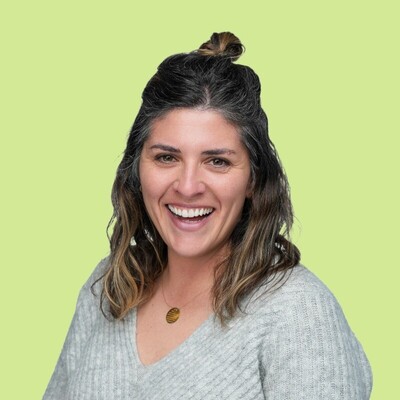
Elisa Cascardi
AI for Science @ Meta FAIR
Actions
Elisa Cascardi leads AI for Science programming at Meta FAIR, driving open source research across the Brain & AI and FAIR Chemistry teams. She has 12+ years expertise bridging AI research, policy, and product, and specializes in scaling complex scientific programs into community-ready AI tools. She holds an MSc from the London School of Economics.
Links
From Neurons to Atoms: How PyTorch Powers Open Science at Scale
AI for Science is fragmented—siloed tools, incompatible formats, and workflows hindering scaling. We faced this in two radically different domains: neuroscience & chemistry. We show how PyTorch became the unifying backbone to build and open source NeuralSet and UMA—a toolkit and model for interoperability and scalability, accelerating discovery worldwide.
We explore three angles: 1) how NeuralSet aligns brain recordings and stimuli into one efficient configurable PyTorch DataLoader that keeps GPUs fed on terabyte-scale datasets to train large models linking brain activity to what people see and hear, 2) how UMA's architecture harnesses PyTorch to train on 500M+ atomic structures and deliver SOTA molecular simulations, and 3) the road to open sourcing AI for Science on PyTorch.
We distill cross-domain challenges and innovations: taming heterogeneous data at scale, designing pipelines with PyTorch primitives, ensuring reproducibility, and converting research into community artifacts. These apply to any team with complex multimodal data looking to open source on PyTorch. Attendees leave with concrete strategies to bridge research and production-quality open source scientific tooling.
How PyTorch Powers Open Foundational Models — From Language to Vision
Training and open sourcing frontier foundational models presents unique challenges—scaling to trillions of tokens across thousands of GPUs, maintaining reproducibility, and enabling a global community to fine-tune and deploy models. In this session, we explore how PyTorch addresses key challenges in building and open sourcing foundational LLMs (Muse Glimmer) and vision models (SAM).
We cover three angles: 1) how PyTorch-native tools like TorchTitan power pre-training through composable parallelism, torch.compile, and Float8—applied to both LLMs and vision architectures, 2) the road to open sourcing foundational models—from internal research to community-ready releases across modalities, and 3) how this foundation enables adopters in healthcare, robotics, and autonomous systems to fine-tune Muse Glimmer for domain NLP and SAM for zero-shot segmentation.
We share hard-won lessons: scaling distributed training without sacrificing code clarity, designing checkpointing for interoperability, and building an open ecosystem where models train on PyTorch and millions customize them. Attendees leave with practical strategies for training, releasing, and sustaining large-scale open models with PyTorch.
PyTorch Conference North America 2026 Sessionize Event
Please note that Sessionize is not responsible for the accuracy or validity of the data provided by speakers. If you suspect this profile to be fake or spam, please let us know.
Jump to top