
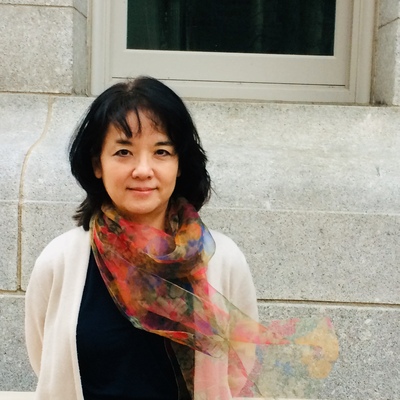
Ellie Hisama
University of Toronto
Actions
Ellie M. Hisama is Distinguished Professor of Music, Society, and Culture at the University of Toronto, past Dean of the Faculty of Music, and Professor Emerita of Music at Columbia University. A social historian and music theorist, she has published widely on gender, sexuality, and race in musical modernity, critical listening in relation to music by Asian American musicians and representations of East Asians in U.S. and British popular music, and sound and culture. She is a member of the Science, Technology, and Social Values Lab at the Institute for Advanced Study and held the Edward T. Cone Membership in Music Studies at IAS. She is writing a book on the composer and musician Julius Eastman.
She has created learning opportunities in digital sound for female-identifying and gender nonconforming youth of color in Toronto and New York, establishing the programs Future Sound 6 and For the Daughters of Harlem. She has worked with numerous international bodies dedicated to anti-racist agendas in the arts and the academy including Atlantic Fellows for Racial Equity. She organized the panel We Have to Reimagine: A Conversation about Anti-Asian Racism and Violence and was named an Honorary Member of the American Musicological Society, a lifetime achievement award that recognizes her contributions to musicology, her distinguished teaching career, and her commitment to creating a more diverse, inclusive, and ethical profession.
Area of Expertise
Listening for Sovereignty, Solidarity, and Resistance
This panel, Listening for Sovereignty, Solidarity, and Resistance in Native Hawaiian, Asian American, and Indigenous musicking, comprises three papers on music—on native Hawaiian activist and musician George Helm, Japanese American hip hop artist Shing02, and the Asian American composer and multi-instrumentalist treya lam and the Indigenous bassist/singer/composer Mali Obomsawin (Odanak First Nation). Listening for sovereignty, solidarity, and resistance across a range of twentieth-century and twenty-first century musicking, we explore political and music engagements in relation to (1) Helm’s articulation of his political idea of aloha ‘āina (love of the land) through his musicking; (2) collaborative networks cultivated by Shing02 in Honolulu that affirm the creative and political significance of community-based production; and (3) sonic expressions of multivocality, solidarity, and freedom in the musics of treya lam and Mali Obomsawin.
Ellie Hisama
University of Toronto
Actions
Please note that Sessionize is not responsible for the accuracy or validity of the data provided by speakers. If you suspect this profile to be fake or spam, please let us know.
Jump to top