
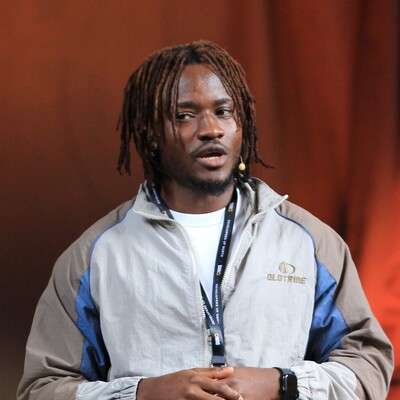
Faith Sodipe
Software Engineer | Speaker | Mentor/Coach | Researcher
Manchester, United Kingdom
Actions
Faith is a software engineer, published researcher, and community builder based in the United Kingdom, with a career spanning fintech, media technology, and enterprise systems across Nigeria and the UK. Currently a Software Engineer at Bauer Media Outdoor UK, he specialises in building technology that is both technically rigorous and deeply human-centred.
Faith's work extends well beyond the codebase. He is a published author whose writing has been featured across international outlets including Vanguard, Independent.ng, Techpression, and Biz Weekly, covering topics from .NET performance engineering to cybersecurity strategy and the future of cross-platform mobile development in Africa. His preprint research on unified multimodal deep learning architectures was accepted for presentation at MultiModal AI '26 in London, which reflects her growing focus on intelligent systems and AI-driven decision support.
On stage, Faith brings the same clarity and conviction he brings to his engineering work. He has spoken at PyData Manchester, the .NET Liverpool Meetup, DevelopersUpNorth Conference, and delivered webinars reaching engineers across the UK and West Africa. He is a recognised Nigeria Tech Global Leader and a 2025 Crest Africa Tech Impact Award recipient, with media appearances on ChannelsTV and TVC.
Faith is also Codebar coach and co-organiser, a long-term mentor in the Women Coding Community (WCC), and a consistent presence in spaces that exist to bring more people, particularly underrepresented voices into the rooms where decisions are made. He has directly coached over 10 students and co-organised 3+ workshops to date.
He holds an MSc in Cybersecurity from the University of Salford and is available for speaking engagements, mentoring conversations, podcast appearances, and collaborative projects.
Area of Expertise
Topics
Building Self Healing Pipelines
This session will introduce the core ideas behind systems that can detect problems and recover automatically, without requiring constant human intervention. Rather than diving into complex implementation details, this session focuses on how to think about self-healing systems and why they matter in modern software.
The talk explores the journey from traditional monitoring and manual fixes to intelligent pipelines that observe system behavior, identify when something is going wrong, and trigger safe recovery actions. Using simple examples and real-world analogies, attendees will learn how concepts like observability, automation, and intelligent decision-making work together to improve reliability and trust in software systems.
This session is designed to help engineers, students, and technology leaders build a strong mental model of self-healing pipelines, understand common misconceptions, and see how these ideas can be introduced gradually as systems grow.
Key takeaways:
1. What “self-healing” means in modern software systems
2. Why designing for failure is essential
3. Core building blocks of a self-healing pipeline
4. How organisations can evolve toward resilience over time
A Unified Multimodal Deep Learning Architecture for Crossmodal Deep Learning Architecture
A Poster presentation focused on the contribution of new architectural framework on how to improve the quality of decisions produced by Multimodal systems. The research was presented at the Multimodal Workshop in London.
The research sparked conversations from researchers, professors and industry professional
4th Multimodal AI Workshop: https://multimodalai.github.io/multimodalai26/accepted-abstracts/
From Reactive to Resilient: Using AI/ML to Build Self-Healing Deployment Pipelines
Modern engineering teams spend too much time reacting, firefighting failed deployments, debugging unstable releases, and managing avoidable incidents. But what if our systems could detect, respond, and recover automatically?
In this talk, we’ll explore how AI/ML can transform traditional CI/CD pipelines into self-healing systems that proactively detect anomalies, predict failures, and trigger intelligent remediation. Rather than adding complexity, we’ll focus on practical, production-ready patterns using cloud-native tooling and ML-driven monitoring to improve reliability without over-engineering.
Beyond the technical architecture, we’ll examine the human impact: reducing operational burnout, improving release confidence, and enabling teams to build sustainably at scale.
Attendees will leave with:
1. A clear mental model of self-healing systems
2. Real-world design patterns for AI/ML-assisted reliability
3. Practical guidance for implementing resilience in modern cloud environments
Because resilience isn’t just about uptime, it’s about building systems that support the people behind them.
Smart Features, Slower Apps: Lessons from Integrating AI in the frontend
AI-powered features are rapidly becoming a standard expectation in modern applications but integrating them into frontend experiences introduces a new class of engineering and UX challenges. From increased latency and streaming complexity to unpredictable responses and overloaded interfaces, many “smart” features quietly make applications feel slower and less enjoyable to use.
In this talk, we’ll explore the real-world lessons learned from shipping AI-powered frontend experiences in production. We’ll examine the hidden trade-offs behind AI integrations, why responsiveness often matters more than intelligence, and how frontend architecture must evolve to support probabilistic, long-running interactions.
The session will cover practical strategies for handling streaming responses, managing UI state, reducing perceived latency, structuring frontend/backend responsibilities, and building resilient user experiences around AI systems.
Attendees will leave with a clearer understanding of how to design AI-powered applications that feel fast, responsive, and reliable without sacrificing user experience in the process.
DevelopersUpNorth 2026: https://www.developersupnorth.co.uk/
Dot Net Liverpool User group Sessionize Event
Please note that Sessionize is not responsible for the accuracy or validity of the data provided by speakers. If you suspect this profile to be fake or spam, please let us know.
Jump to top