

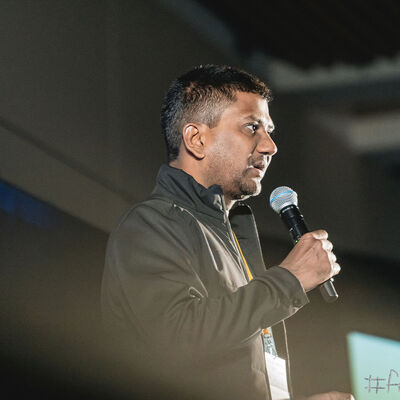
Deepak Gupta
Serial Entrepreneur & Cybersecurity Author | Building GEO Infrastructure
San Francisco, California, United States
Actions
Deepak Gupta founded and scaled LoginRadius (a CIAM platform) to serve 1B+ users, navigating identity architecture and privacy regulations across global markets. He holds 5 patents in DDoS defense, searchable encryption, and AI security, and is the author of Don't Ever Think About Passwords Again and Data Privacy - What Enterprises Need to Know?
He now builds Generative Engine Optimization (GEO) infrastructure for B2B SaaS and cybersecurity companies, helping them get cited by ChatGPT, Perplexity, and Google AI Overviews as buyers shift from search engines to AI assistants.
Deepak also founded startwithidentity.com, a technical community for IAM and security practitioners. More at guptadeepak.com/about
Area of Expertise
Topics
How LLMs Drift: Citation Observability for ChatGPT, Perplexity, Google AI Overviews, and Copilot
Most teams treat LLM output as deterministic. Run the same prompt twice, get roughly the same answer, ship it.
That assumption breaks the moment you start measuring. We've been running production-scale citation tracking across ChatGPT, Perplexity, Google AI Overviews, and Microsoft Copilot for 18 months, watching how the same prompts get different answers across engines, across time, and across model updates that nobody announced. The behavior is messier than the AI engineering community talks about publicly.
This session is what we found. It's not a marketing talk and it's not an evaluation framework pitch. It's the engineering reality of running an observability layer over four LLM systems that change underneath you, why our naive first architecture failed, and what enterprise customers actually need when they ask "am I being cited correctly?"
I'll cover the pipeline architecture (query distribution, citation extraction, storage, drift detection), the surprising patterns we've seen - including "Co-pilot's citation set for cybersecurity queries shifting 30%+ within a 6-hour window after a news event" and why the 11% domain overlap between ChatGPT and Perplexity citations forces a rethink of how you measure AI search visibility.
Useful if you're building eval infrastructure, customer-facing LLM analytics, RAG systems where citation matters, or anything where "did the model say what we expected?" needs to be answered for customers.
How LLMs Drift: Citation Observability for ChatGPT, Perplexity, Google AI Overviews, and Copilot
Most teams treat LLM output as deterministic. Run the same prompt twice, get roughly the same answer, ship it.
That assumption breaks the moment you start measuring. We've been running production-scale citation tracking across ChatGPT, Perplexity, Google AI Overviews, and Microsoft Copilot for 18 months, watching how the same prompts get different answers across engines, across time, and across model updates that nobody announced. The behavior is messier than the AI engineering community talks about publicly.
This session is what we found. It's not a marketing talk and it's not an evaluation framework pitch. It's the engineering reality of running an observability layer over four LLM systems that change underneath you, why our naive first architecture failed, and what enterprise customers actually need when they ask "am I being cited correctly?"
I'll cover the pipeline architecture (query distribution, citation extraction, storage, drift detection), the surprising patterns we've seen - including "Co-pilot's citation set for cybersecurity queries shifting 30%+ within a 6-hour window after a news event" and why the 11% domain overlap between ChatGPT and Perplexity citations forces a rethink of how you measure AI search visibility.
Useful if you're building eval infrastructure, customer-facing LLM analytics, RAG systems where citation matters, or anything where "did the model say what we expected?" needs to be answered for customers.
AI TechWorld 2026 Sessionize Event
Chargebee Beelieve '26
Startup showcase for Generative engine optimization - GrackerAI
Identity North 2020
Next gen Identity and security innovation
Please note that Sessionize is not responsible for the accuracy or validity of the data provided by speakers. If you suspect this profile to be fake or spam, please let us know.
Jump to top