
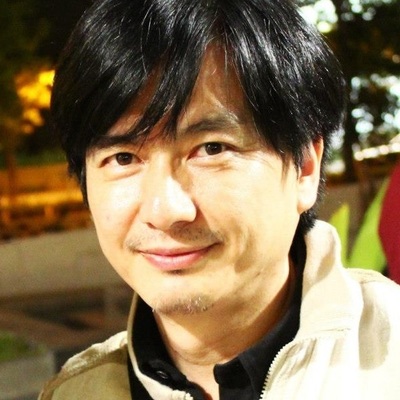
Hiroshi Watanabe
professor, National Yang Ming Chiao Tung University
Hsinchu, Taiwan
Actions
Hiroshi Watanabe, PhD, is a professor teaching quantum physics, semiconductor memories and advanced nanoelectron devices in dept. of Electrical & Computer Engineering, National Yang Ming Chiao Tung University, Taiwan. He has published many journal & conference papers and invented more than 150 granted patents all over the world (including more than 60 US granted). Until 2010, he had worked for Toshiba’s Headquarter RD Center and been engaged in the reliability study of several electron devices including NAND Flash. He received PhD in theoretical physics in 1994 from U. Tsukuba, Japan. He has served as an Advisory Board Member for the Future of Memory and Storage (FMS) (2018–present) and as a TPC member for IEEE EDTM since 2026. In 2023, he founded IEEE Taipei Blockchain Group and has been Co-Chair of it. He is a member of the SEMI MIS (Metrology & Inspection Summit) Initiatives Committee. He is a Senior Member of IEEE.
Area of Expertise
Topics
Physical Cyber Authentication (PCA) and engineless PUF
Physical AI is a hot topic in recent years, wherein AI autonomously operates a physical node having sensors and actuators to collect data for the AI’s learning. Physical node is, generally, hardware such as industrial machines, auto-driving vehicles, autonomous robots and drones, smartphones, any kind of connected computers, etc. A large physical existence is composed of not only those sensors and actuators but also data acquisition systems, processors, communication devices for wireless and/or wired communications inside and outside, etc. These are all regarded as IoT devices or simply say “device”. In other words, physical AI has a small IoT network inside, managed by AI. If a physical AI communicates with another one or a system having many IoT devices such as factory, hospital, transportation system, etc., then the total IoT system is expanded to manage all the IoT devices over huge amounts of physical nodes. There may be some vulnerable IoT devices.
On the other hand, it has been recognized that AI is a strong tool for an attacker so that they can find an easy path to reach an attacking target through devices or accounts with security vulnerabilities. Cyber defender can also use strong AI to find vulnerable devices or accounts in the network that the defender defends before an attacker will find it. But it is a 50-50 match. I want to give a great advantage to a defender.
The worst case to the defenders is that vulnerable account or device has been spoofed but the defender cannot discover impersonation. Such devices or accounts are routinely abused. Indispensable are:
1) to discover spoofing at as early stage of attacking as possible (Stop Spoofing)
2) to build firewall in which we can trust no spoofed devices (Hardware Firewall)
3) to change security codes in all devices in the firewall remotely, easily and securely always as necessary (Resilient IoT)
Carefully consider that both AI of attacker and defender has a common weak point. Since AI is inherently software, AI can trace which account collected, processed and input data to AI, but cannot trace which device collected, processed, and input data to AI with no external support. Though physical AI is the hottest topic recently, AI may expose such essential weaknesses. We propose a method to grant a great advantage to defender by resolving this weak point.
The essence of solution can start with protecting against session spoofing. For this, it is well known that device identification is indispensable using physically unclonable function (PUF). However, it is also well known that PUF implementation is a problem. Because the existing solutions of PUF are all based on specially designed silicon on chip (SoC). The existing problem for device identification is, therefore, the cost and the supply amount of specially designed SoCs. High-end IoT devices can be installed with PUF but the other cannot be. It leaves many vulnerable devices without PUF in the IoT network. Attacker’s AI can discover such vulnerable devices and hence the attacker can use a discovered path to easily reach an attacking target.
Our proposal is a new type of PUF without using specially designed SoC, that is, engineless PUF. Our engineless PUF is pretty stable to environmental change (-40C to 105C) with zero bit error rate for more than 10 years. We call usage model of engineless PUF as Physical Cyber Authentication (PCA). In this, we can resolve the problem of session spoofing and perform automatic client (device) certification and easy replacement of security codes of all devices always as necessary. The last one is indispensable to build a resilient IoT network. We review the existing PUF and engineless PUF and then discuss a method to apply PCA using several examples. We also show proof- of-concept of engineless PUF briefly.
HITCON 2026 Sessionize Event
Future of Memory and Storage
Kidnap of AI / how to rescue it promptly?
AI’s learning exchanges massive data with SSDs and then stores it in NL-HDDs. Ransomware attack on such storage devices is a risk of kidnaping AI. In Japan (2024), 49% couldn’t be recovered within 1 month. Is 1 month termination in business operation acceptable? It might appear easy to recover manipulated data in data systems using timestamp and a supervising list of which data is stored in which storage device. Crackers manipulate not only data but also the supervising list. If we manually fix the manipulated supervising list, term to recovery will get longer as the number of storage devices increases. Device identification in each storage device may protect the supervising list from manipulation. In a hierarchy of device identification, there are device certificates and manufacturing records in OTP, and PUF, from the bottom. Because of a big remuneration from AI’s kidnapping, an easy solution with OTP makes nonsense. Implementation of PUF into each storage device may cost. We propose Physical Cyber Authentication (PCA) to ensure the same security level as PUF with easy and cheapest implementation like software and with no victim of robustness to temperature change.
Please note that Sessionize is not responsible for the accuracy or validity of the data provided by speakers. If you suspect this profile to be fake or spam, please let us know.
Jump to top