

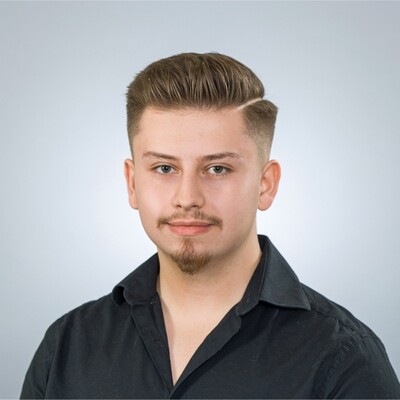
Kaan Turgut
Microsoft AI MVP | Hybrid Cloud Solution Architect | DevOps Gig | AI Engineer | Public Speaker | Technical Content Creator
Toronto, Canada
Actions
I'm a passionate tech professional who loves turning cutting-edge ideas into reality. As a Hybrid Cloud Solution Architect with deep expertise in the Microsoft Azure ecosystem, I thrive on designing scalable cloud solutions, building smart AI-driven applications, and streamlining development workflows. My mission? Helping organizations unlock the full potential of the cloud to drive innovation and growth.
But my impact goes beyond code and infrastructure. I'm a huge believer in the idea that “sharing is caring.” That’s why I'm always trying to share my knowledge with the tech community—whether it’s through mentoring up-and-coming developers, hosting hands-on workshops, or speaking at industry events. I'm even on YouTube, sharing tips, tutorials, and insights to help others grow. For me, it’s all about making a meaningful impact on the ecosystem and the lives of those around me.
Want to explore how cloud and AI can transform your business? Or swap ideas and stories? Reach out to me—I'd love to connect!
Links
Badges
Area of Expertise
Topics
Workshop: From Zero to Production MCP Server: Turn Any API Into an Agent Tool
Most MCP demos stop at hello world. Then you try to wrap a real system at work and hit everything the tutorials skip: authentication, secret handling, deciding which actions an agent may take, and what happens when a tool call fails.
This session closes that gap. Starting from an empty editor, I'll build an MCP server live with FastMCP in Python, wrapping a small FastAPI service that stands in for an internal company API, then harden it into something you'd actually deploy. We'll cover authenticating the server, keeping secrets out of the model's reach, scoping dangerous actions so an agent can read without being able to delete, and handling failures so one broken call doesn't derail the agent. We'll test it live with MCP Inspector.
You'll leave with a clear mental model and a practical checklist for exposing your own systems to agents over MCP. The patterns are shown in Python with FastMCP and portable to any official MCP SDK.
NVIDIA NemoClaw: Zero to Secure AI Agents
Autonomous AI agents can write code, execute commands, and make decisions on their own. That's incredibly useful, and a little terrifying. Without guardrails, a single misconfigured agent can leak sensitive data, run unsafe operations, or go off-script entirely.
This session is a live, hands-on introduction to NVIDIA NemoClaw, an open-source stack purpose-built to solve this problem. NemoClaw adds policy-based security, privacy routing, and behavioral controls to AI agents, giving you real oversight without slowing them down.
I'll deploy NemoClaw twice on stage: once on a Mac Studio to show the local hardware path, and once on NVIDIA Brev to show the cloud path for anyone without a GPU. Every step happens live — from installing the stack to configuring policies to watching an agent hit a guardrail in real time.
Whether you're a platform engineer, a DevOps practitioner, or just someone who wants to run AI agents responsibly, you'll walk away knowing exactly how to get started.
Deploy Your AI Assistant with OpenClaw and Microsoft AI Foundry
What if you could text an AI assistant on Telegram and have it answer questions, run commands, and work autonomously, all running in your own Azure subscription?
In this session, Kaan Turgut will walk you through OpenClaw, the open-source AI assistant with 60,000+ GitHub stars that's taken the developer community by storm. You'll see a full end-to-end deployment: provisioning a hardened Azure VM, installing OpenClaw, connecting it to a model deployed in Microsoft AI Foundry, and sending a live message via Telegram.
This is a demo-driven session. No death by PowerPoint.
What you'll walk away with:
How OpenClaw's Gateway + Agent architecture works
Deploying OpenClaw on an Azure VM
Deploying and configuring models in Microsoft AI Foundry
Wiring OpenClaw to your Foundry endpoint (auth, headers, config)
Real-world use cases for self-hosted AI agents
Who should attend: Developers, DevOps engineers, and cloud practitioners curious about self-hosted AI agents. No prior OpenClaw experience needed. Basic Azure familiarity is helpful.
Build Production Ready AI Agent with Microsoft Agent Framework and AI Foundry
Building an AI agent is easy. Building one that's observable, stateful, secure, and ready for production is a different story. In this hands-on session, we'll use Microsoft Agent Framework (Python) and Azure AI Foundry to build an agent from zero — adding tools, memory, middleware, and multi-agent workflows step by step. You'll leave with a clear mental model of when to use agents vs. workflows, and working code you can take home.
Build a Multi-Agent Automation Engine on Microsoft Azure AI Foundry
What if AI agents could coordinate complex business tasks across departments — automatically? In this session, we'll deploy Microsoft's Multi-Agent Custom Automation Engine Solution Accelerator live, walk through its architecture, and watch specialized AI agents plan, execute, and validate real-world business workflows in real time. You'll leave with a working reference architecture you can fork and customize for your own organization — no theory, just working code.
Operationalizing Azure Cost Management with the Azure FinOps Toolkit
Cost optimization in Azure is often treated as a reporting exercise, with teams relying heavily on dashboards and monthly reviews. In practice, this reactive approach rarely leads to sustainable cost control or meaningful behavioral change across engineering teams.
This article focuses on how the Azure FinOps Toolkit can be used to operationalize cost management as part of day-to-day Azure governance and operations. Rather than introducing the toolkit at a high level, the article shares practical guidance and lessons learned from using it in real Azure environments to improve cost visibility, accountability, and decision-making.
Topics covered include:
- Common cost management anti-patterns seen in Azure tenants
- How the FinOps Toolkit supports ongoing cost hygiene, not just reporting
- Integrating cost insights into platform and DevOps workflows
- Establishing ownership and accountability for Azure spend
- Lessons learned from adopting the toolkit in mature and growing environments
The goal is to help teams move from reactive cost reporting to a more proactive and sustainable FinOps operating model in Azure.
Improving Azure Operational Reliability with SRE Principles and AI-Assisted Analysis
As Azure environments grow, teams often struggle with alert fatigue, noisy monitoring data, and slow incident response. These challenges are rarely caused by a lack of tooling, but rather by unclear operational practices and an overload of low-value signals.
This article explores how Site Reliability Engineering (SRE) principles can be applied to Azure operations to improve reliability and operational clarity, with AI-assisted tools such as Azure SRE Agent used as a supporting capability. The focus is on strengthening operational hygiene first, and then understanding where AI can responsibly reduce cognitive load without replacing engineering judgement.
Topics covered include:
- Common operational anti-patterns in Azure monitoring and alerting
- Applying SRE fundamentals to Azure Monitor and incident response
- Designing actionable alerts and meaningful reliability signals
- Where AI-assisted analysis can help reduce noise and improve understanding
- Guardrails and lessons learned when introducing AI into production operations
The article aims to help teams clean up their Azure operational practices, improve reliability, and adopt AI assistance in a controlled, practical, and sustainable way.
Azure MCP Server: The New Way AI Talks to the Cloud
Discover how Azure's open-source MCP Server is changing the way AI models interact with cloud services.
In this session, we’ll break down Model-Context-Protocol (MCP), show how to deploy and use Azure’s MCP Server, and build a real-world demo where an AI agent interacts with Azure resources — the right way.
Perfect for Cloud, DevOps, and AI engineers who want future-proof integrations and smarter automation.
Build Your Own "Coding AI Agent" with Azure AI Foundry
In this session, you will learn how to leverage the new feature of Azure AI Foundry to build a custom AI agent capable of understanding and enforcing your organization's coding standards. Whether you work with Python, Java, PowerShell, Bash or other programming languages, this AI agent will help your team refactor and improve code quality automatically based on your predefined company standards and best practices.
Through a step-by-step walkthrough, we will demonstrate how to:
- Define and integrate company coding standards into the AI model.
- Build and train an AI agent using Azure AI Foundry.
- Refactor sample code automatically, showcasing how the agent enforces standards in real-time.
- Increase team productivity by automating code reviews and standardization.
By the end of the session, you'll have the tools and knowledge to start building your own coding AI agent that enhances development workflows, reduces technical debt, and ensures high-quality code across your projects.
Join me for this innovative session and take your coding practices to the next level with AI!
Supercharge Developer Productivity with Microsoft Dev Box: Your Cloud-Powered Workstation
Tired of waiting for your IT admins to set up your computer or spending days just to get the necessary software installed? Say goodbye to slow onboarding and local machine limitations.
In this technical session, we’ll dive into Microsoft Dev Box—a fast, preconfigured, and scalable developer workstation in the cloud. You’ll learn what Dev Box is, how it fits into modern development workflows, and how to set up and configure it for your team.
Whether you're managing environments at scale or just want your dev team to hit the ground running, this session will show you how to streamline the developer experience and boost productivity using cloud-first tools.
Malta Microsoft AI User Group Meetup Series 2026 User group Sessionize Event
Global Azure Bootcamp 2026 – Greater Toronto Area Edition Sessionize Event
Kaan Turgut
Microsoft AI MVP | Hybrid Cloud Solution Architect | DevOps Gig | AI Engineer | Public Speaker | Technical Content Creator
Toronto, Canada
Links
Actions
Please note that Sessionize is not responsible for the accuracy or validity of the data provided by speakers. If you suspect this profile to be fake or spam, please let us know.
Jump to top