

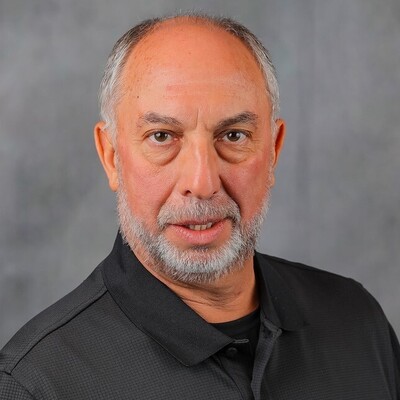
Joel Koenig
Joel
Chicago, Illinois, United States
Actions
Joel is a graduate of the University of Iowa and has been with his current employer, Crawford, Murphy & Tilly for 35 years. He is a registered professional engineer and Envision Sustainability Professional. Joel serves as a Senior Project Manager working with public agencies and private utility organizations in maintaining and upgrading their infrastructure systems. He maintains an active role with several professional organizations. He is a Past President of the Chicago Metro Chapter of APWA and is a founding member of the Illinois Section of ASCE Utility Engineering and Surveying Institute.
Links
Area of Expertise
Topics
Should I say it or should I spray it? A culvert rehabilitation story.
The American Lane culverts in Schaumburg, IL—comprising 1,500 feet of dual 96-inch corrugated metal pipes (CMPs) installed in the 1970s—had deteriorated significantly due to corrosion and deformation, raising concerns about their structural integrity and remaining service life.
The culverts serve a vital role in draining a 2.4-square-mile area within the West Branch of the Salt Creek watershed, supporting stormwater management for a key commercial corridor and the Woodfield Lakes Business Park.
As part of a broader infrastructure initiative, the upstream portion of the drainage system was scheduled for reconstruction under a federally funded roadway project. However, the downstream segment and outfall required local funding, prompting the Village of Schaumburg to evaluate its options.
Faced with the choice between full replacement and rehabilitation, the village opted for a more cost-effective and minimally disruptive solution: lining the existing culverts with a sprayed-in-place geopolymer cementitious material. This approach not only delivered substantial cost savings but also avoided the need for environmental permitting due to its small construction footprint—ultimately helping to keep the project on schedule.
The presentation will discuss the various options considered and the structural rehabilitation these culverts eventually received.
The Public’s Use of the Public Right-of-Way; Potential Conflicts and Avoidance Mitigation
Public rights-of-ways (ROW) are frequently the corridor of choice for the installation of utilities. In evaluating the viability of these corridors, the widths of the right-of-way, the location of pavements and the presence of other utilities are considered. What may not be accounted for is the use of the public ROW by private entities and individuals.
A close review of historical records and aerial photography may reveal that over time, private individuals and privately owned business have taken over the use of a part of the public ROW. How are these situations considered when planning the installation, management or maintenance of water and sewer lines? What rights do these private users have and what can be done to remove or relocate these users?
Owners and engineers frequently come upon these private and at times non-authorized uses of the right-of-way without having a plan to address these situations. Avoiding or removing the non-authorized user’s facilities may cause the project unexpected delays and increased costs along with potential public objections.
This presentation will present examples of the ways ROW is created, examples of legal and permitted uses as well as illicit uses. The presentation aims to assist the participant in identifying these types of uses. Included in the presentation will be a discussion on potential ways to address impacts and mitigate objections to the implementation, management, and maintenance of utility systems.
WATERCON 2026 Sessionize Event
Please note that Sessionize is not responsible for the accuracy or validity of the data provided by speakers. If you suspect this profile to be fake or spam, please let us know.
Jump to top