
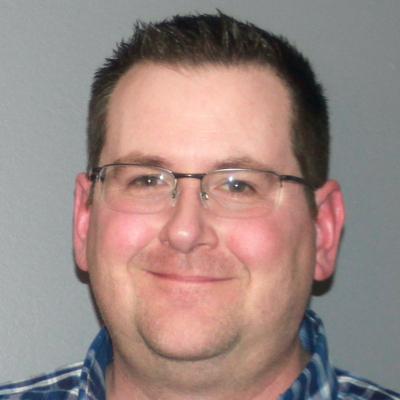
Josh Garverick
Agentic architecture, AI governance, Azure, and beyond
Buffalo, New York, United States
Actions
Josh Garverick is Chief Technical Architect at Xebia and a multi-year Microsoft MVP with 20+ years of enterprise experience across finance, healthcare, transportation, logistics, retail and consumer products, oil and gas, and insurance. His current work centers on agentic transformation: multi-agent architecture built on Microsoft Agent Framework and Semantic Kernel, MCP-based tooling, and the governance and cost controls that keep an AI asset estate manageable at enterprise scale. He is the creator of ARIA (Asset Registry for Intelligent Agents), an open source reference architecture for classifying, governing, and distributing AI assets. Josh authored "Migrating to Azure" and contributed to "The Developer's Guide to Azure," "Implementing Event-Driven Microservices Architecture in .NET 7," and "Azure Integration Guide for Business," along with several online courses.
Links
Badges
Area of Expertise
Topics
Super Agents: Lessons Learned
After working on a centralized orchestration agent (a.k.a Super Agent) for a high-profile client, my team and I found there were several learning opportunities. Operating on the "hemorrhaging edge" is equal parts exciting and unpredictable.
Join us during this panel discussion as we talk through design decisions, demo pressures, changing frameworks, and changing client expectations. We will cover everything from the initial design and PRD, feedback loops, experimentation, testing, demos that span the theater of emotions, mid-project scrambling due to framework changes, destabilizing protocols, and much more.
The Engineering Psyche: A Thought Experiment
I think it's fair to say that the last 12-18 months of constant upheaval in our industry has made a lot of folks uncomfortable and less than optimistic about the role of the engineer moving forward. In this session, I intend on reviewing a few observations I've had about this latest paradigm shift, how it relates to technology shifts from the past, and how we collectively can use this to our advantage to disrupt an already disrupted market. As a result, this session will challenge you to look at how you tell your story and describe what you're capable of in a world where change is almost outpacing itself every couple of months.
Included in this session are two exercises: one is mapping what you've done over the past week into different functional areas we technologists tend to live in, and the other is a larger experiment asking attendees to reimagine their own brand and share reworded summaries or bios that reflect this change in thought.
Cloud Infrastructure for Developers
Developing applications can be challenging enough—and now you have to worry about where it gets deployed as well? In this session, we will cover some basics of cloud infrastructure, how to test against local and cloud based resources, and how to figure out what services will work best for your application. Using a code first approach, you’ll learn how to codify those services and tie it all together with build and release scripts.
Fault Driven Development
Failure IS an option! Developing cloud-first applications can be fundamentally different than building traditional on-prem applications. As a cloud app developer, you need to be prepared for and expect failures in your code as well as in your app environment. This session will arm you with tools to be proactive with fault tolerance and reactive with fault handling.
Clown Migration Plan
This session is geared toward addressing the biggest challenge faced when attempting to successfully cultivate a DevOps culture and undergo a digital transformation: people. From inconsistent communication to lack of vision, from saboteurs to resume builders, we will cover several types of personas who you most likely will run into during the course of your transformation. Identifying common pitfalls (and not-so-common ones too), we will inspect what to look for and how to get all teams working together toward a common goal.
Practical Dev Containers (and Codespaces)
Simplify how your teams work! Using shared configurations and underlying tools makes onboarding new developers easier and removes friction from the development process. In this talk, we examine using GitHub Codespaces for capturing base development environment requirements, integrating tools such as precommit and checkov, integrated custom CodeSpaces image management, OS edge cases, and isolated/confidential uses.
Relevance: The flexibility and power of Codespaces allows individual developers and teams alike to make starting a new project easier as well as collaborating on improvements to shared developer environment configurations. This leads to faster onboarding and lowers the bar to being productive in a software development project.
Case Studies or Examples: The primary example is centered around developer onboarding and time to productivity. Many regulated industries struggle with securing containerized technologies for their developers when their technology is extremely locked down or even air-gapped. Having ways to enable collaborative functionality (Codespaces and consequently DevContainers) makes this more attainable while still giving risk and compliance teams peace of mind. Another example is OS usage. Not everyone uses Ubuntu, Debian, or Alpine. There are segments that work exclusively with CentOS for legacy support but switched to RHEL or a similar Linux flavor, and support for that in the devcontainer features ecosystem is not at parity with Ubuntu/Debian.
Key Takeaways:
- Discover simple, as well as advanced, methods for streamlining configuration to facilitate developer productivity
- Gain insights into off-label or divergent use cases related to custom Codespaces images, configurations, and features
- Understand how to position themselves to have conversations with other teams on how to implement this functionality while still maintaining a secure and compliant posture
ARIA: Governing the AI Asset Estate
Every enterprise is accumulating AI agents, skills, knowledge bases, and orchestration configurations at pace — and almost none of them can tell you what they have, who owns it, how sensitive it is, or what it costs. We solve that with ARIA: Asset Registry for Intelligent Agents.
ARIA is a four-layer reference architecture that brings the same rigor TOGAF applied to enterprise IT to the emerging discipline of AI asset management. The metamodel layer draws on the Open Agentic Schema Framework (OASF) — a community-driven, extensible taxonomy purpose-built for classifying AI primitives. The marketplace layer uses GitHub and OCI registries to version, validate, and publish AI assets through the same pull request workflows developers already know. The governance layer extends Microsoft Purview — sensitivity labels, DLP policies, and data lineage — into the AI asset domain, with inheritance rules that automatically propagate classifications through the full dependency graph. The distribution layer introduces a Catalog API that converts governed OCI artifacts into one-click installs for Claude Desktop, Cowork, and a web portal — making the governed path the easiest path for non-technical users.
In this session you will learn how to model agent-to-skill, agent-to-knowledge, and orchestration-to-agent relationships with governance implications baked in; how to build a GitHub-native AI marketplace with automated OASF schema validation and Purview synchronization on every merge; and how to deliver governed AI capabilities to business users without exposing them to container registries or CLI tooling. We will also cover AI FinOps — extending the OASF governance overlay with cost governance fields, per-asset budget enforcement middleware, and provider billing attribution across GitHub Models, Azure OpenAI, and others.
You will leave with a practical, implementable architecture and a working reference implementation in C# on Microsoft Agent Framework — ready to adapt for your own enterprise.
Audience: Enterprise architects, AI platform engineers, governance and compliance leads, developer platform teams.
Level: Intermediate to Advanced
MS Dev WNY Users Group
Azure DevOps vs. DevOps on Azure
Microsoft Ignite
Fault Driven Development
Microsoft Ignite
Core Azure Solutions - Automation (Ops)
VSLive Chicago
Core Azure Solutions - Automation (Dev)
VSLive Chicago
Fault Driven Development
philly.NET Code Camp 2018.1 Sessionize Event
Josh Garverick
Agentic architecture, AI governance, Azure, and beyond
Buffalo, New York, United States
Links
Actions
Please note that Sessionize is not responsible for the accuracy or validity of the data provided by speakers. If you suspect this profile to be fake or spam, please let us know.
Jump to top