
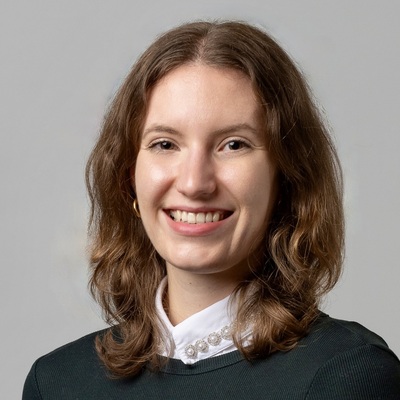
Louise Schmidtgen
Software Engineer @Canonical
Gaggenau, Germany
Actions
Louise is a software engineer at Canonical, working on open-source Kubernetes distributions such as Canonical Kubernetes and MicroK8s. She is passionate about building products that customers love to adopt and sharing lessons learned about distributed systems and Kubernetes.
Her journey began with degrees in Computer Science and International Business, which gave her a unique perspective at the intersection of technology and strategy. Starting her career in DevOps and later moving to backend engineering at RStudio/Posit PBC in the United States, Louise discovered her passion for Kubernetes and open-source ecosystems.
At Canonical she embraces the mission of making open source accessible to everyone. Community building, breaking down barriers, and knowledge sharing are at the heart of her work.
Area of Expertise
Topics
Hardening Kubernetes: Our Journey to FIPS Compliance
Security and regulatory compliance are becoming baseline requirements for running Kubernetes in sensitive environments. FIPS 140-3 defines strict cryptographic standards, shaping which libraries can be used and how binaries are built and tested. But what does it actually mean for a Kubernetes distribution to be “FIPS compliant”?
We break down what FIPS compliance entails in practice: validated crypto modules, consistent toolchain builds, and verification that all components use only approved cryptographic primitives. We’ll share our journey of bringing Canonical Kubernetes into compliance, including challenges, end-to-end validation, and CI integration.
Attendees will walk away with a deep understanding of what compliance actually requires, why it matters, and how it affects the architecture and engineering decisions of a cloud-native project. We'll clarify the difference between being “compliant in principle” versus “in practice,” and highlight the importance of rigorous validation.
When Abstractions Leak: Distributed Systems Lessons from Cluster Membership Failures
Distributed systems promise high availability, reliability, and fault tolerance—often through elegant abstractions like Raft. But what happens when those abstractions leak?
This is a story about how managing cluster membership in our Kubernetes distribution went wrong: diverging cluster membership states across Dqlite (distributed sqlite), etcd, and clients after node failures, joins, and restarts. We will discover why these issues occur- stale state and missing guarantees that are supposed to be hidden behind a simple API.
The key takeaway for this talk is that if you work on distributed systems you need to understand the underlying mechanics to design resilient systems as distributed problems can leak from their abstraction.
I will show you at the hand of this real world example how you can use diagrams to better communicate, understand and argue about distributed system problems.
Cloud Native Rejekts EU 2026 Sessionize Event
AWS Community Day South Africa 2025 Sessionize Event
Please note that Sessionize is not responsible for the accuracy or validity of the data provided by speakers. If you suspect this profile to be fake or spam, please let us know.
Jump to top