
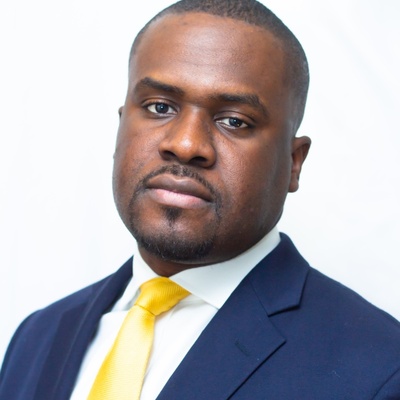
Marc Daniel Registre, MBA
Founder, ArchRails
Miami, Florida, United States
Actions
Marc Daniel Registre is the founder of ArchRails and an Engineering leader focused on architecture governance, AI-assisted review, and developer tooling. He is building PR-time architecture compliance workflows using FINOS CALM to help teams detect drift earlier and create more auditable software delivery practices, especially in regulated environments.
Area of Expertise
Topics
When the Agent Writes the Code: Enforcing Architecture Governance in the Age of AI-Generated PR
For years, architectural conformance in regulated firms was enforced by an unstated control: a human in code review who knew the system and wrote at human speed. AI coding agents remove both halves - they don't know your declared architecture, and they generate change faster than any review board can inspect. The control didn't get weaker; it got bypassed.
This talk argues that telling an agent about your architecture is not the same as enforcing it. Advisory context still drifts; only a deterministic, non-bypassable gate that reconciles code against a declared model holds. Using FINOS CALM as the architectural source of truth, I'll walk through how to reconcile what an agent actually built, across files, through indirection, against what the architecture permits, and why the verdict must be sound, three-valued, and honest about what it can't determine.
Attendees leave with a pattern for making architectural governance enforceable at PR time in an agent-driven SDLC, using open standards, with an audit trail a regulator accepts.
Governing MCP at Scale: Enforcing Agentic Architecture Standards at PR Time
As MCP server adoption accelerates across enterprises, a new class of drift is emerging: teams ship MCP-based agent architectures that look compliant in docs but diverge in code. By the time it’s caught, the blast radius is wide and the audit trail is cold.
This session shows how FINOS CALM — an open standard for machine-readable architecture — can be paired with PR-time enforcement to govern MCP server deployments before they merge. We’ll walk through real validation patterns: detecting undeclared agent interfaces, catching unauthorized node additions, and flagging control violations against architecture policy — all inside a GitHub Actions workflow.
Attendees will leave with a practical framework for treating MCP architecture as enforceable policy, not documentation. Especially relevant for teams operating in regulated environments where auditability isn’t optional.
Using CALM to Enforce Architecture at PR Time in Regulated Environments
Most architecture reviews happen after the code is already written, too late to prevent drift. In regulated industries, governance lives in documents and review boards instead of the pull-request workflow where change actually happens.
This talk shows how CALM can serve as the architectural source of truth for PR-time compliance checks, pairing deterministic structural validation with contextual AI explanations.
I'll walk through an approach where approved architecture definitions are parsed from CALM, normalized into a graph, and used during code review to detect undeclared dependencies, bypassed boundaries, or unexpected interaction patterns, creating an auditable, scalable control point without slowing delivery.
The session covers the practical design of the validator, how deterministic checks and AI explanations complement each other, and why this model is especially relevant for financial services teams that need both control and evidence. Attendees leave with a pattern for using open standards and open source tooling to move architecture governance closer to the software delivery lifecycle.
AGNTCon + MCPCon North America 2026 Sessionize Event
Open Source in Finance Forum London 2026 Sessionize Event
Please note that Sessionize is not responsible for the accuracy or validity of the data provided by speakers. If you suspect this profile to be fake or spam, please let us know.
Jump to top