

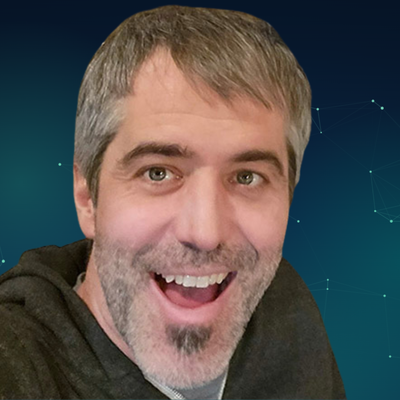
Maxime Beauchemin
Original creator of Agor, Apache Superset™ and Apache Airflow®, Founder & CEO at Preset
Créateur original d'Agor, d'Apache Superset™ et d'Apache Airflow®, fondateur et PDG de Preset
South Lake Tahoe, California, United States
Actions
Original creator of Apache Airflow and Apache Superset, two of the most widely adopted open-source projects in modern data, and the Founder & CEO of Preset. Before Preset, I led data engineering teams at Airbnb, Facebook, and Lyft, working on some of the largest-scale data platforms in the industry. Now, I'm building the same kind of foundational, open-source tooling for the AI era: Agor (agor.live), a collaborative team command center for AI coding teammates. A longtime open-source advocate who builds in the open, I'm betting that the next platform shift is teams of humans and agents working side by side.
Je suis le créateur original d'Apache Airflow et d'Apache Superset, deux des projets open source les plus largement adoptés dans le domaine des données modernes—ainsi que le fondateur et PDG de Preset. Avant de fonder Preset, j'ai dirigé des équipes d'ingénierie des données chez Airbnb, Facebook et Lyft, travaillant sur certaines des plateformes de données les plus vastes du secteur. Aujourd'hui, je développe des outils open source tout aussi fondamentaux, mais adaptés à l'ère de l'IA : Agor (agor.live), un centre de commande collaboratif conçu pour les équipes mêlant humains et agents d'IA pour le développement de code. Défenseur de longue date de l'open source et adepte du développement en toute transparence, je parie que la prochaine grande évolution des plateformes résidera dans la collaboration côte à côte entre humains et agents.
Area of Expertise
Topics
The PDLC Is Changing: From Product Teams to Product + Agent Teams
The product development lifecycle is being reshaped by AI agents. Not just by faster code generation, but by the emergence of persistent, tool-using teammates that can research, implement, review, document, and follow up across a product team's workflow. This changes how teams plan, delegate, review, and maintain context.
In this talk, we'll explore what happens when the PDLC evolves from product teams made only of humans to product + agent teams. Drawing from our experience building and ramping Agor internally at Preset, we'll look at where agents fit naturally, where they create new coordination problems, and what new rituals and infrastructure become necessary: shared visibility, scoped ownership, memory, review loops, and traceable work. We'll also show how Agor makes this practical by giving teams a shared canvas for agent work, branches, sessions, knowledge, and human review.
Target audience: product and engineering leadership, platform and developer-productivity teams, and leaders driving AI transformation / future of work.
Format & length: best as a 25–40 minute talk; adaptable to keynote, breakout, panel, or a longer workshop, and can be tuned more executive, technical, or product-focused per venue.
Attendees leave with:
(1) how the PDLC shifts when agents join across discovery, planning, build, review, docs, and follow-up;
(2) the coordination problems agents create and the rituals/infrastructure that solve them;
(3) a practical model for running product + agent teams, with lessons from Preset.
Agent Modeling: Designing AI Teammates with Scope, Memory, and Ownership
Most teams still treat AI agents as prompts with tools. But as agents become persistent collaborators, we need a richer design discipline: agent modeling. What is this agent responsible for? What should it remember? What tools can it use? What boundaries should it respect? How does it hand work back to humans or other agents?
This talk introduces agent modeling as an emerging practice for designing useful, trustworthy AI teammates. We'll cover the core dimensions of an agent model — purpose, scope, memory, permissions, environment, feedback loops, and ownership — and share lessons from building Agor and using it internally at Preset. The practical side: how Agor helps make agent models real by combining knowledge bases, isolated branches, MCP tools, session genealogy, and shared team visibility, so agents become durable participants in a workflow rather than disposable chat threads.
Target audience: AI engineers, applied-AI and agent-infrastructure builders, devtools and platform teams.
Format & length: best as a 25–40 minute talk; adaptable to a keynote or hands-on workshop; can flex more conceptual or more hands-on (worktrees, MCP tools, context engineering, review loops).
Attendees leave with:
(1) the dimensions of an "agent model" — purpose, scope, memory, permissions, environment, feedback loops, ownership;
(2) how to design agents as durable teammates rather than disposable chat threads;
(3) the mechanics that make it real — knowledge bases, isolated branches, MCP tools, session genealogy.
Beyond AI Enablement: Team-Owned Agents with Shared Visibility
Many AI enablement programs start by giving every employee access to a chatbot or coding assistant. That is useful, but it is only the first step. The next level is team-owned agents: durable assistants that understand a team's domain, operate in shared workflows, use approved tools, and produce work everyone can inspect, review, and improve.
In this talk, we'll argue that AI enablement succeeds when it moves from individual productivity hacks to shared team infrastructure. Based on what we've learned building and adopting Agor at Preset, we'll discuss the ingredients needed to scale agents across an organization: shared visibility, permissioned tools, team knowledge bases, reusable skills, auditability, and clear ownership. We'll show how Agor supports this model in practice, helping teams create agents that live where the work happens instead of disappearing into ephemeral private chat histories.
Target audience: enterprise AI and data/AI leadership, heads of platform and AI enablement, org-transformation and CIO/CTO audiences.
Format & length: best as a 25–40 minute talk or keynote; adaptable to a leadership panel or fireside; can be tuned more strategic (operating model, risk, adoption) or more practical.
Attendees leave with:
(1) why enablement must move from individual chatbots to team-owned agents;
(2) the ingredients to scale agents org-wide — shared visibility, permissioned tools, team knowledge bases, reusable skills, auditability, ownership;
(3) how team-owned agents produce inspectable, reviewable work.
Agor: A Collaborative Orchestration Layer for AI Agents
Agor is an open-source platform for orchestrating AI agents: built for teams, not just individuals. It provides a collaborative, real-time workspace where humans and AI agents collaborate on a spatial canvas. Multiple agents run in parallel across isolated git worktrees, with full visibility into sessions, conversations, and outputs. Teams can inspect, intervene, and steer the work of AI teammates as it happens.
At the core are persistent assistants: long-lived agents with memory and tools that coordinate tasks, spawn sub-agents, and continuously advance workflows.
Agor brings structure to agentic work:
Sessions for execution with observability
A collaborative, spatial layout to organize parallel work visually
Git worktrees for isolation and coordination
Artifacts for durable outputs
Under the hood, it's a full orchestration layer with APIs, WebSockets, and an MCP-based tool system that gives agents awareness of shared state and of each other. Agor acts as a control plane for agent workflows: handling parallelism, state, observability, and handoffs between autonomous units of work.
In this demo-driven talk, Max will show assistants coordinating agents, teams collaborating live, and workflows progressing with minimal human intervention.
Format & length: best as a 25–40 minute talk or keynote; adaptable to a leadership panel or fireside; can be tuned more strategic (operating model, risk, adoption), technical, or more practical.
Please note that Sessionize is not responsible for the accuracy or validity of the data provided by speakers. If you suspect this profile to be fake or spam, please let us know.
Jump to top