
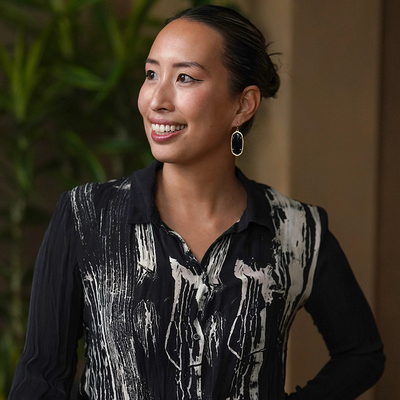
Michelle Huang
Assistant Professor of English and Asian American Studies at Northwestern University
Actions
Michelle N. Huang is assistant professor of English and Asian American Studies at Northwestern University. She is the author of Racial Beings: Experiments in Asian American New Materialisms (Duke, 2026). Her film essay, INHUMAN FIGURES: Robots, Clones, and Aliens, can be viewed online at the Smithsonian Asian Pacific American Center website.
Under Pressure: Crises in Climate and Mental Health
How has Asian American studies approached climate + environmental issues historically, and how does this overlap with the health humanities (as in mood, disability, neurodiversity, and “the cognitive bias” in anthropology (E. Kim Rogers 2020, Wolf-Meyer & Yates-Doerr 2020)? On what planetary, elemental, and bodily scales has bioecological dysregulation been registered in Asian American film, literature, performance, and/or theory?
New Books in the Field
This two-part panel puts authors of new books in Asian American studies in dialogue, focusing on how recent works in the field theorize affective, aesthetic, and technological relations as historical and emergent processes of racial capitalism and empire, and as the conditions for alternative or resistant collectivities. Part 1, “Affective Bonds and Racial Performance,” is a panel conversation between Summer Kim Lee (Spoiled), James McMaster (Racial Care), Christopher Patterson (Domesticating Brown), and Anna Storti (Torn) that considers how Asian/American and transpacific affective linkages and aesthetic practices illuminate the racial traumas of colonial violence, or disorient their assumed narratives. Engaging an assortment of quotidian feelings and performances, including asocial embarrassment, racial care, psychic fragmentation, and embodied difference, the presenters consider the conference’s focus on relations and resistance by engaging Asian/American art work, protest, and transpacific histories of migration. Part 2, “Racial Technologies and Gendered Networks,” puts Michelle N. Huang (Racial Beings), LiLi Johnson (Technologies of Kinship), Lee Ann Wang (The Violence of Protection), and Danielle Wong (Racial Virtuality) in conversation to discuss how various technological systems and their differently registered scales of materiality—from immigration law and police surveillance to ancestry tests, “molecular aesthetics,” and circadian rhythms—are interconnected. The presenters turn to technoscientific language in literature and everyday social media, to photography, and to ethnographic fieldwork, offering theorizations of Asian/American racialization and gender that interrogate conventional categories of kinship, the human individual, the “victim,” and the online prosumer.
I Love the 1990s: Re:turns, Re/mixes, and Retro-Directions for Asian American Cultural Studies”
Sa-i-gu and the L.A. Riots, Real vs the Fake, Joy Luck Club, All American Girl, rescinded book awards, the debate on theory, Culture Wars, Raunchy Asian Woman (R.A.W.), Bush’s inauguration of Asian American and Pacific Islander Heritage Month in May, Charlie Chan is Dead, the Woman Warrior vs. the Chinaman Pacific – The 1990s were a wild time for Asian American culture and its studies. This panel answers the conference theme’s call to reflect on the field’s disciplinary identities by looking back at the 1990s. Each of our panelists returns to a key literary and cultural studies text from the decade to both engage in retrospection but also remap retro-directions. Some are canonical, others esoteric. Rather than offer a teleology of disciplinary progress, the panel instead looks to the remix as a method for looking backward and forward, mindful of juxtapositions, distortions, and alterations as a way of being “sensitive to histories of inclusion, marginalization, exclusion, and elision.” What lines of inquiry did these writers and scholars carve out in the field? Which of these grooves has the field followed since? What of the paths not taken? What conditions did these writers and scholars imagine would come to fruition? Which conditions or imaginings remain deferred? With Douglas Ishii returning to Susan Koshy, Wendy Lee returning to Laura Kang, Christine Mok returning to Dorinne Kondo, Chris Eng returning to Oscar Campomanes, and Michelle Huang returning to Mae Ngai, the panel considers what we can learn by revisiting the 1990s as we contemplate the role and function of AAAS for the 2020s.
Coral, Weeds, Skin, Smartphones: Confronting Techno-Resilience in the Wake of Environmental War
This panel considers human/nonhuman entanglements of ecocide, debilitation, and resilience. Whether praising the resilience of minoritized peoples such as immigrants or refugees, or attending to the promise of innovation emerging out of debilitated environments, the language of resilience can reproduce asymmetrical access to futurity within moments of unevenly experienced environmental catastrophe. In Palestine, 38-48% of the tree cover and farmland of Gaza was destroyed between October 7 and March 21, as estimated by geographer He Yin’s research using remote sensing land-use imagery. Soil, water, and air have been rendered toxic by munitions, waste, and pollution from constant war. According to The Lancet, even counting the number dead is infrastructurally untenable, as the Gaza Health Ministry struggles to account for direct and indirect deaths, for bodies buried under rubble for weeks or months, or for those who succumb to death from starvation or disease from lack of access to basic human needs. Some understand Israel’s approach to its assault on Gaza as paving a path of no viable return to the land without expensive remediation efforts and reliance on the science and technology industries (e.g., telecommunications, biomedicine, military weaponry) that Israel and the U.S. have to offer. It is thus the very same technologies developed in the wake of war’s ruin that represent the state’s promise toward settler futures of innovation predicated on minoritized elimination.
Jasbir Puar’s analysis of debilitation, which “foregrounds the slow wearing down of populations instead of the event of becoming disabled” and Ruth Wilson Gilmore’s formulation of racism as “state-sanctioned or extralegal production and exploitation of group-differentiated vulnerability to premature death” call our attention to how war not only wreaks havoc on human and nonhuman environment but also sets up the occasions for rebuilding, often under the guise of humanitarian aid or environmental remediation. Rather than promoting resilience and its associated characteristics of adaptation, flexibility, and persistence as unqualifiedly good, the papers in this panel interrogate how resilience is used to naturalize eugenic thinking, promote amnesiac approaches to history, and villainize minoritarian life. Who benefits from resilience, and what structures does it serve? If eugenicist thought is at the core of state logics for securing better settler futures, how might unsettling the promise of resilience undermine projects of state sovereignty? The papers in this panel reveal state and capital investments in more-than-human entanglements, and how these intimacies are used to shape the securitization of minoritized bodies, environments, and futures.
The panel will open with Aimee Bahng’s paper challenging the deployment of resilience discourse in coral restoration projects in Hawaiʻi and Florida. Next, Keva X. Bui’s paper tracks the eugenicist logic of the herbicide across the United States, Vietnam, and Palestine to demonstrate how ecocide represents a promise of settler futures made possible through the eradication of racialized more-than-human life. Michelle N. Huang examines recent beauty horror novels to show how cosmeceutical skincare’s promise of protective and restorative enclosure emerges from race’s entanglements with aesthetics, imperialism, and biocapitalism. Then, Min Song calls our attention to the contradictions intrinsic to the smartphone, as exemplified in contemporary refugee narratives, where the lines between extravagance and necessity meet and blur. The panel will conclude with a response by Lisa Fink, weaving together the biological, chemical, and technological deployments of resilience measures that keep precarious laboring environments primed for continued extraction.
Book Roundtable: Michelle N. Huang’s Racial Beings
How does contemporary Asian American literature experiment with the terms of racial representation? What happens when we recalibrate race through the scale of the molecular? How might doing so attune us to the reciprocal relations that unsettle arbitrary boundaries dividing the human and the nonhuman? Following these provocations forwarded by Michelle N. Huang, this proposed roundtable thinks alongside her new monograph Racial Beings: Experiments in Asian American New Materialisms (Duke University Press, March 2025). In Racial Beings, Huang brings a feminist new materialist lens to bear on contemporary Asian American literature’s innovative play with discourses of science and technology. She argues that emerging from these works is a “molecular aesthetics”—formal experimentation that attenuates the boundaries of the human—that challenges the lay perception of racial identity as a trait of an individual human. Instead, molecular aesthetics reveal race to suffuse the matter of the world. Reading these molecular aesthetics through the language of quantum physics, genetic engineering, elemental chemistry, and nuclear testing (among other scientific discourses) in works by authors such as Ruth Ozeki, Larissa Lai, Mei-mei Berssenbrugge, and Julie Otsuka, this book develops a synthetic reading practice that shows not only is the nexus of race and science not reducible to scientific racism, but also, that science can provide an unlikely creative reservoir for Asian American writers and artists that allows them to imagine alternative ways of understanding racial being beyond the tyranny of the human individual. Rather than understanding resistance as individual heroism, Racial Beings reattaches a more physical valence to resistance: the degree of slowing effect exerted by one thing on another. What emerges, Huang proposes, are different ways of racial being in relation.
Thinking alongside Huang’s work in this new book, the invited roundtable participants will each offer 7-8 minutes of prepared, but informal, remarks on the effects and implications of the monograph for the field. In so doing, their remarks will be grounded by animating concepts that have been central to their own scholarly thinking. Huang will then respond before opening to audience Q&A.
Book Roundtable: Leslie Bow's Racist Love
This roundtable discussion engages the theorizations offered in the highly regarded new monograph by Leslie Bow, Racist Love: Asian Abstraction and the Pleasures of Fantasy (Duke UP 2022). In Racist Love, Bow traces how Asian Americans become objects of both anxiety and desire. Taking as her departure point Frank Chin and Jeffery Paul Chan’s famous 1972 proclamation that “each racial stereotype comes in two models…there is racist hate and racist love,” Bow’s book charts innovative approaches to thinking about racial representation beyond straightforward assessments of “good” or “bad” representation, such as the possibilities and perils of objectification as a nexus of racial feeling and aesthetic form. In so doing, Bow probes the ambivalences of Asian American racialization to reveal how race itself is a desiring structure.
Racist Love illuminates inquiries that resonate with the terms of this year’s conference theme, “Sustainable Publics”: how do we, as Asian Americanist academics, transmit our theoretical work to the broader public, especially during a time of heightened perception around anti-Asian violence unaccompanied by a deeper understanding of Asian American history or studies? In what ways might uncritical models of “positive representation” in the public sphere serve to reify race as ornamental or a commodity for consumption? What possibilities for the politics of representation (particularly beyond the ethnographic imperative) are opened by taking seriously Racist Love’s call to interrogate structures of racial feeling? Thinking alongside Bow’s work in this new book, the invited roundtable participants will each offer 7-9 minutes of prepared, but informal, remarks on the effects and implications of the monograph for the field. In so doing, their remarks will be grounded by animating concepts that have been central to their own scholarly thinking. Bow will then respond before opening to audience Q&A.
Chair:
Michelle N. Huang (Northwestern University)
Participants:
Elizabeth J. Chin (Art Center College of Design)
Anna Storti (Duke University)
Henry E. Chen (University of Michigan)
Christine Mok (University of Rhode Island)
Vivian L. Huang (San Francisco State University)
Respondent: Leslie Bow (University of Wisconsin-Madison)
Michelle Huang
Assistant Professor of English and Asian American Studies at Northwestern University
Actions
Please note that Sessionize is not responsible for the accuracy or validity of the data provided by speakers. If you suspect this profile to be fake or spam, please let us know.
Jump to top