
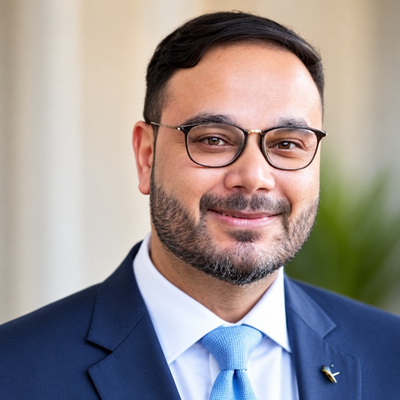
Mohit Bhatnagar
AI Operations & Transformation Consultant
Actions
Mohit Bhatnagar — AI Operations & Transformation Consultant
Mohit helps technology and operations teams design governed AI workflows, with a focus on Enterprise Agentic AI, Autonomous Operations, LLM System Architecture, and Workflow Automation. His work covers multi-agent orchestration, AI transformation advisory, evaluation gates, and integration across enterprise tools and internal APIs.
His sessions examine how to define autonomy boundaries, validate model outputs, manage handoffs, and detect, reduce, and contain model-induced errors. He focuses on practical measures such as cycle time, rework, intervention rate, and cost per completed workflow.
Learn more at https://mohitbhatnagar.com.
Area of Expertise
The Hidden Bottleneck in Enterprise AI Automation: Handoffs, Not Prompts
A workflow can contain several fast automated steps and still take days to finish. The delays often sit between systems and owners: missing context, unclear approvals, duplicate actions, and exceptions that nobody owns.
This session uses an illustrative enterprise workflow spanning work tracking, repositories, messaging, and internal APIs to examine where AI should interpret information and where conventional software should control state and transactions.
We will map handoff boundaries, define the record of truth for each transition, design validation and retry behavior, and route exceptions to an accountable human. The measurement model separates active work from waiting time and tracks rework, intervention rate, service-level breaches, and cost per completed workflow.
Attendees will leave with a handoff-mapping template, an exception ownership model, and a practical way to compare a baseline workflow with an AI-enabled pilot without confusing local task speed with end-to-end improvement.
Audience: Operations leaders, enterprise architects, product managers and automation practitioners. Format: 30–45 minute talk. No coding prerequisites. Examples are illustrative and do not claim measured client results.
Reliable Multi-Agent Engineering Workflows: Orchestration, Evaluation & Failure Containment
Coordinating multiple agents against a shared repository creates challenges beyond prompt quality: stale context, conflicting changes, repeated tool calls, weak validation, and uncontrolled retries.
This technical session walks through a reference architecture for bounded multi-agent execution. Specialized agents produce specifications, implementations, tests, and review artifacts while a deterministic orchestration layer manages workflow state, permissions, validation gates, and escalation.
We will follow a change from intake through isolated execution, integration, evaluation, and human acceptance. Failure scenarios show how to detect, reduce, and contain model-induced errors using repository constraints, structured handoffs, idempotent operations, retry budgets, and independent checks.
Attendees will leave with an architecture pattern for agent coordination, a failure-injection checklist, and a telemetry model covering accepted outcomes, interventions, validation failures, latency, and cost per accepted change.
Audience: Staff and principal engineers, architects, platform engineers and technical leads. Format: 45-minute technical talk. Familiarity with software delivery and basic LLM concepts is helpful. Reference architecture and worked examples; no client-confidential material.
From Copilots to Governed AI Operations
Faster code generation does not automatically mean faster delivery. Review queues, rework, unclear ownership, and inference costs can absorb the time saved by individual AI assistants.
This session presents an operating model for moving from isolated copilots to governed engineering workflows. We will map a workflow from task intake to accepted outcome, decide which steps can be delegated to agents, and define where deterministic checks and human judgment belong.
The session covers task decomposition, autonomy boundaries, quality gates, exception routing, and cost governance. A worked example shows how to evaluate results using cycle time, review effort, rework, intervention rate, and cost per accepted change, with explicit baselines and comparable work cohorts.
Attendees will leave with a delegation decision framework, a practical measurement scorecard, and a rollout checklist for testing whether AI assistance improves delivery without shifting hidden work to reviewers.
Audience: CTOs, engineering leaders, transformation leaders and operations managers. Format: 30–45 minute talk. No specialist coding prerequisites. Worked examples are illustrative; no unverified productivity claims.
Please note that Sessionize is not responsible for the accuracy or validity of the data provided by speakers. If you suspect this profile to be fake or spam, please let us know.
Jump to top