
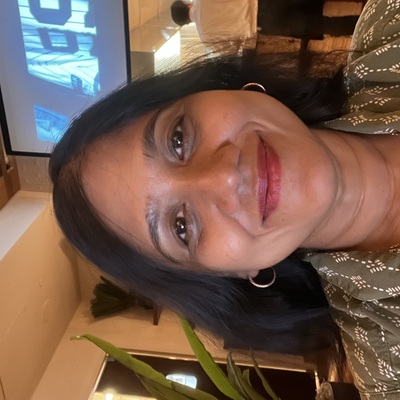
Mou Rakshit
Avanade, Intelligent Data Platform Data Engineering Thought leadership
Northville, Michigan, United States
Actions
Mou Rakshit is a Senior Manager of Data, AI & Analytics Engineering at Accenture/Avanade and a Principal Data & AI Solution Architect specializing in building modern, unified, AI-ready data platforms using Microsoft Fabric and Databricks. She leads enterprise-scale data strategy and platform architecture initiatives that enable organizations to move from fragmented analytics environments to governed, high-performance lakehouse ecosystems.
Her work focuses on designing scalable medallion architectures, implementing robust governance models, enabling real-time intelligence, and operationalizing AI and advanced analytics across the enterprise. Mou bridges executive strategy with hands-on technical execution, ensuring that modern data platforms are production-ready, resilient, and aligned to business outcomes.
She holds a Master of Science in Computer Science from Wayne State University and a Master’s in Health Services Administration from the University of Michigan.
A Databricks Champion and frequent industry speaker, Mou shares practical frameworks and real-world lessons on architecting unified data foundations that power AI at scale.
https://www.linkedin.com/in/mourakshit/
https://credentials.databricks.com/profile/mourakshit34507/wallet
Area of Expertise
Who Is the Agent Allowed to Be? Securing Data and AI Agents in Microsoft Fabric
An AI agent should not become more powerful than the person using it. Yet connecting agents to enterprise data can create authorization gaps when identity, permissions, retrieval, and downstream actions cross services. This session examines how to design secure agent experiences in Microsoft Fabric while preserving existing governance controls. We will follow a request from user authentication through OneLake and semantic-model access, data retrieval, agent reasoning, and tool or action execution, identifying where authorization context can be lost or broadened. We will cover least-privilege design, row- and column-level controls, governed semantic access, Purview integration, agent data boundaries, and approval gates. Attendees will leave with a security checklist and reference flow for building useful Fabric agents without bypassing enterprise permissions and accountability.
Who Is the Agent Allowed to Be? Identity, Data Permissions, and Least-Privilege AI Agents
AI agents are moving from answering questions to accessing enterprise data, calling tools, and taking actions. That makes identity and authorization part of the agent architecture, not an afterthought. In this demo-heavy session, we will trace an agent request from user identity through data retrieval, reasoning, tool selection, and action execution to show where permissions can be lost or unintentionally broadened. We will examine delegated identity, least-privilege access, data entitlements, policy enforcement, tool authorization, approval gates, and auditability. Live demonstrations will contrast unsafe patterns, such as broad service-account access, with architectures that preserve the user's authorization context throughout the workflow. Attendees will leave with a practical reference architecture and security checklist for building enterprise AI agents that can access sensitive data and take useful actions without becoming more powerful than the people they represent.
One Question, Many Data Shapes: Building Fabric Agents Across Tables, Events, Documents, and Graphs
Enterprise questions rarely fit into a single table. The evidence needed to answer one business question may span lakehouse data, governed metrics, real-time events, documents, and relationships between business entities. This session shows how to design AI experiences in Microsoft Fabric that can reason across these different data shapes without turning every question into one oversized prompt. Using a practical customer scenario, we will combine structured Fabric data, semantic context, Fabric IQ Ontology, event information, unstructured knowledge, and agent reasoning. We will examine how to route each part of a question to the right source, reduce ambiguity with business context, and assemble traceable evidence before returning an answer. Attendees will leave with a reusable architecture for moving beyond simple conversational BI toward contextual enterprise reasoning.
Who Is the Agent Allowed to Be? Identity, Data Permissions, and Least-Privilege AI Agents
AI agents are moving from answering questions to accessing enterprise data, calling tools, and taking actions. That makes identity and authorization part of the agent architecture, not an afterthought. In this demo-heavy session, we will trace an agent request from user identity through data retrieval, reasoning, tool selection, and action execution to show where permissions can be lost or unintentionally broadened. We will examine delegated identity, least-privilege access, data entitlements, policy enforcement, tool authorization, approval gates, and auditability. Live demonstrations will contrast unsafe patterns, such as broad service-account access, with architectures that preserve the user's authorization context throughout the workflow. Attendees will leave with a practical reference architecture and security checklist for building enterprise AI agents that can access sensitive data and take useful actions without becoming more powerful than the people they represent.
From Metrics to Agents: Building Trusted Decision Intelligence in Microsoft Fabric
Organizations have invested heavily in trusted KPIs and semantic models, but AI introduces a new risk: agents may reinterpret raw data instead of using approved business definitions. This session shows how to extend a governed analytics foundation into AI-powered decision intelligence with Microsoft Fabric. We will begin with trusted measures and semantic models, then add Fabric IQ business context, rules, and agents to investigate changes, explain relationships, and recommend next actions. Using a practical variance and operational-performance scenario, we will demonstrate how the same governed definitions can support Power BI analysis, natural-language exploration, and agent-assisted workflows. We will also examine common failure patterns such as recalculating established metrics or generating explanations without evidence. Attendees will leave with an architecture for connecting trusted metrics to AI while preserving consistency and traceability.
From Copilot to Agent: Building AI That Can Reason, Use Tools, and Act Safely
Moving from a Copilot-style assistant to an AI agent changes the architecture dramatically. The system no longer just generates an answer; it must understand context, choose tools, retrieve enterprise data, make decisions, execute actions, and recover when something goes wrong. In this demo-driven session, we will build an enterprise agent step by step and examine the architecture behind reasoning, grounding, tool calling, memory, state, permissions, and human approval. We will deliberately introduce failure scenarios such as incorrect tool selection, insufficient context, repeated actions, excessive permissions, and low-confidence decisions, then show patterns for controlling them. The session will also demonstrate where deterministic workflows should remain deterministic rather than being replaced by AI. Attendees will leave with a practical architecture for moving from conversational assistants to useful enterprise agents while keeping execution observable, bounded, and safe.
Beyond the Semantic Model: Using Fabric IQ Ontology as the Context Layer for AI Agents
Semantic models provide trusted measures and business definitions, but AI agents need more than metrics. They must understand how customers, products, locations, transactions, events, and business processes relate to one another. This session explores how Fabric IQ Ontology can complement semantic models and serve as a reusable business-context layer for analytics and AI. Using a practical scenario, we will model key entities and relationships, connect them to governed data and measures, apply business rules, and show how this context improves agent reasoning and natural-language exploration. We will also clarify when semantic models are the right abstraction, when ontology adds value, and how the two should work together. Attendees will leave with practical modeling patterns and a decision framework for designing enterprise context that can be reused by both people and AI.
Secure Databricks Automation with PowerShell: Identity, Jobs, CI/CD, and Guardrails
Many Databricks automation examples show how to call an API or trigger a job. Enterprise teams need more than that. They need secure identity, least privilege, environment separation, CI/CD integration, repeatable deployment, and operational guardrails that work across real teams and real production constraints.
This deep dive shows how to design a secure PowerShell-driven automation framework for Databricks. We will start with identity: user login for local development, service principals for unattended automation, OAuth-based authentication, and safe handling of configuration and secrets. Then we will move into job and workflow operations: triggering runs, checking status, handling failures, collecting outputs, and producing audit-friendly logs.
The second half focuses on CI/CD and platform governance. We will show how PowerShell can work alongside Databricks CLI, Declarative Automation Bundles, GitHub Actions, Azure DevOps, and REST APIs to validate environments, enforce naming standards, check workspace readiness, and support deployment promotion across dev, test, and production.
Attendees will leave with a practical pattern for secure Databricks automation that reduces manual work without turning every script into a security risk.
Postgres in the Lakehouse: Building Apps with Databricks Lakebase
PostgreSQL is familiar to SQL professionals, app developers, and data teams. Databricks Lakebase brings that Postgres experience into the Databricks Data Intelligence Platform as a fully managed Postgres database integrated with the Lakehouse. This opens a new pattern: building operational apps, AI agent workflows, and lightweight transactional experiences closer to governed analytical data.
In this session, we will explore where Lakebase fits, what problems it solves, and how it changes the conversation between OLTP, analytics, and AI applications. We will walk through a practical architecture for using Lakebase with Databricks Apps, Databricks SQL, Unity Catalog-governed data, and AI agent use cases. The session will also cover what SQL Server and PostgreSQL professionals should evaluate before adopting it: schema design, security, row-level security, connectivity, Data API usage, application patterns, and workload boundaries.
This is not a product tour. It is a practical guide for data professionals who want to understand how Postgres, Lakehouse, and AI application architecture are coming together.
Session Description for Reviewers
Lakebase is a fully managed Postgres database integrated into the Databricks platform, and Databricks documents it as supporting applications through Databricks Apps, external integrations, and the Data API. It also provides broad compatibility with standard PostgreSQL features and extensions. This session is designed for SQL Saturday attendees who understand relational databases and want a practical explanation of where Lakebase fits in a modern data platform.
The session will focus on real implementation questions: when to use Lakebase, when not to use it, how to connect application patterns to Lakehouse data, how to think about governed access, and how SQL professionals can apply their existing relational skills to Databricks Lakebase.
PowerShell to Data Platform Engineering: A Career Roadmap for Azure Databricks Automation
PowerShell skills can take someone much further than traditional administration. In many enterprises, the people who understand scripting, identity, deployment, monitoring, and support workflows are well positioned to move into data platform engineering. Azure Databricks is a good example of that shift: the platform needs people who can automate workspaces, jobs, access patterns, deployments, validation checks, reporting, and support runbooks.
This session gives PowerShell professionals a practical roadmap into Azure Databricks platform work. We will break down the responsibilities of a Databricks platform engineer, then map them to skills many PowerShell users already have: Azure resource automation, Microsoft Entra authentication, REST API calls, job monitoring, error handling, reporting, CI/CD support, and operational documentation.
The session includes a portfolio project blueprint attendees can build after the conference: authenticate to Azure Databricks, validate workspace access, trigger a job, capture the job result, produce a status report, and explain the architecture clearly in an interview or internal career conversation.
This session is especially useful for admins, analysts, support engineers, and early-career technologists who want to move toward cloud data platform engineering without starting from zero.
From Data to Action: Building Governed Enterprise AI Agents with Databricks, Microsoft Agent Framewo
Enterprise AI agents need more than prompts and model access. They need governed data, carefully designed tools, secure identity, reliable orchestration, validation, and production monitoring. In this session, attendees will see how to build an enterprise data agent using Azure Databricks, Microsoft Agent Framework, Azure AI Foundry, and Model Context Protocol. The demonstration follows a financial variance-analysis use case in which an agent retrieves authorized data, calls governed tools, validates structured responses, and escalates sensitive actions for approval. The session also covers MCP security boundaries, prompt-injection defenses, evaluation, tracing, and deployment patterns that developers can apply to production agent solutions.
From ClickOps to Runbooks: Automating Azure Databricks Operations with PowerShell
Azure Databricks often becomes business-critical very quickly, but many teams still operate it through a mix of portal clicks, one-off scripts, notebook handoffs, and manual checks. That works for small teams, but it breaks down when platform teams need repeatable workspace setup, secure authentication, job operations, environment validation, and support-ready runbooks.
This session shows how PowerShell can become the operational automation layer around Azure Databricks. We will walk through a practical runbook pattern that signs in securely, validates workspace access, checks required configuration, calls Databricks CLI or REST APIs, triggers jobs, monitors job status, captures failures, and produces a simple operational report that can be used by platform, DevOps, and support teams.
The focus is not “PowerShell versus Terraform” or “PowerShell versus Databricks CLI.” The focus is where PowerShell fits in the real enterprise workflow: orchestration, guardrails, validation, operational checks, handoffs, and repeatable support actions. Attendees will leave with a reusable blueprint for turning Databricks administration into clear, testable, supportable PowerShell automation.
AI-Powered Compliance Intelligence with Microsoft Fabric and Azure AI
Compliance teams often work with large volumes of narrative documents, historical responses, operational data, and reporting requirements. The challenge is not only extracting information from those documents, but turning that information into trusted insights, consistent responses, and timely action.
In this session, we will walk through a Microsoft-native architecture for building an AI-powered compliance intelligence solution using Microsoft Fabric, Azure AI Document Intelligence, Azure AI Search, Microsoft AI Foundry, Power BI, SharePoint, Teams, and Power Automate.
The session will show how structured data and unstructured documents can be brought together in OneLake, processed through Fabric pipelines, enriched with document extraction, indexed for grounded retrieval, and used by an AI Foundry agent to support natural language Q&A, trend analysis, root cause investigation, and draft response generation.
We will also discuss how to keep the solution practical and governed by using human review, source traceability, role-based access, audit history, and reusable data patterns that can extend to future compliance, finance, operations, and healthcare use cases.
Attendees will leave with a clear reference architecture and implementation pattern for moving from document-heavy processes to evidence-backed decisions using Microsoft’s AI and analytics platform.
Building an AI-Ready Finance Lakehouse with dbt, Governed Metrics, and Databricks
Finance teams are often asked to move faster, explain variance sooner, and support automation, but many organizations are still working from fragmented pipelines, inconsistent metric definitions, and dashboard-heavy reporting processes. Before finance can safely use AI or agentic workflows, the data foundation has to be trusted, governed, and explainable.
This session shows how to design an AI-ready finance lakehouse using Databricks, dbt, Unity Catalog, and governed metrics. We will walk through a practical architecture where finance data is transformed through dbt staging, intermediate, and mart layers, with reusable SQL models, macros, tests, documentation, and exposures creating a reliable path from raw source data to finance-ready outputs.
The session will also show how Unity Catalog strengthens governance through lineage, access control, classification, and auditability, while governed metric definitions help keep reporting, Power BI consumption, and AI-assisted analysis aligned to the same trusted business logic. We will discuss how this foundation can support future agentic finance use cases such as variance investigation, anomaly triage, and automated action without allowing AI to invent financial calculations.
Attendees will leave with a practical design pattern for building finance data products that are not only dashboard-ready, but AI-ready.
From Signal to Action: Building AI-Powered Fleet Operations with Microsoft Fabric Real-Time Intellig
Organizations do not just need dashboards. They need systems that can sense operational issues, reason over trusted data, and help people act before small problems become expensive disruptions.
This session demonstrates how to build an AI-powered fleet operations management solution using Microsoft Fabric Real-Time Intelligence and related Microsoft AI services. Using a practical fleet scenario, we will walk through how telemetry events can flow into Fabric, be queried in Eventhouse with KQL, visualized through real-time dashboards, and used to trigger alerts through Data Activator when operational thresholds are crossed.
The demo will show how real-time signals such as vehicle status, location, maintenance condition, route impact, and availability can be combined with operational context to support incident response. Attendees will see how AI can assist with questions like which replacement vehicle is available, which depot is closest, what risk should be prioritized, and what action should be recommended to an operations leader.
This is not a sales overview or a conceptual AI discussion. It is a practitioner-focused architecture session showing the design pattern, data flow, tradeoffs, and implementation considerations behind a real-time AI operations solution. We will also cover important lessons around latency, data quality, alert noise, governance, and human approval when applying AI to operational workflows.
Designing Conversational BI: How Azure Databricks AI/BI Genie Unlocks Self-Service Insights
Business users want faster answers from enterprise data, but most self-service analytics still depends on dashboards, SQL requests, or long back-and-forth cycles with data teams. Conversational BI changes that experience, but only if the answers are trusted, governed, and grounded in the right business context.
This session shows how to design a practical conversational BI experience using Azure Databricks AI/BI Genie. We will walk through how to prepare curated datasets, define business-friendly metadata, configure a Genie space, guide users toward reliable questions, and generate accurate answers, summaries, and visualizations from governed enterprise data.
The session will focus on what actually makes conversational BI work in the enterprise: trusted tables, clear metric definitions, helpful synonyms, documented assumptions, row-level security, user feedback loops, and well-designed example questions. Using a demo scenario, attendees will see how non-technical users can ask natural language questions, explore trends, compare performance, and drill into business drivers without writing SQL.
We will also cover common implementation mistakes, including connecting Genie to unclear datasets, skipping semantic preparation, expecting AI to fix poor data quality, and launching without user training or governance review. Attendees will leave with a practical design checklist for building conversational BI that is useful, safe, and adoption-ready.
Building an AI Ready Finance Lakehouse: dbt Models, Governed Metrics, and Agentic Operations on Data
Large finance organizations rely on dashboards and reports, but the harder challenge is enabling automation without breaking governance or auditability. This session shows how a global finance organization built agent-driven workflows on the Databricks Data Intelligence Platform using dbt for analytics engineering, Unity Catalog for governance, and certified metrics views.
We walk through a real implementation where transformations are standardized through dbt models across staging, intermediate, and marts layers using modular SQL, macros, and reusable patterns. dbt tests, documentation, and exposures enforce data quality, lineage, and traceability from source to finance-ready outputs. Metrics are defined once, protected with attribute-based access control and automated classification, and reused across reporting and analytics.
Power BI connects to governed lakehouse tables, while Iceberg-compatible engines access Delta tables through Uniform for reuse.
AI-Powered Real-Time Intelligence: Transforming Data-Driven Decisions with Microsoft Fabric & GenAI
In today’s fast-paced world, making smart, data-driven decisions in real time is essential for maintaining efficiency and quality in business operations. Join us to explore Microsoft Fabric Real-Time Intelligence and discover how to seamlessly ingest, analyze, and act on real-time data.
Learn how to:
1. Ingest real-time data from multiple sources into Fabric
2. Run lightning-fast queries for instant insights
3. Monitor key metrics with intuitive, real-time dashboards
4. Set up automated alerts and detect anomalies for proactive issue resolution
5. Leverage Copilot in Real-Time Intelligence to query data using natural language
Orchestrating Multi-Agent AI with Fabric RTI: From Alert to Action
Wire Fabric RTI end-to-end: Eventstream -> Eventhouse (KQL) flags anomalies; Activator (GA) fires; Copilot Studio agents + computer use (preview) consult a Digital Twin (preview) and execute safe remediations - governed on OneLake with Data Agents.
Oracle↔Lakehouse: Real-Time CDC to Databricks, Served Back to Oracle
Make Oracle the hero at both ends of your analytics pipeline. In this session, we start with Oracle Database as system of record and stream real-time CDC using Oracle GoldenGate Microservices into object storage/Kafka. Databricks ingests changes incrementally with Auto Loader, applies governed transformations (Unity Catalog permissions, lineage, quality checks), and merges safely into Delta Lake (bronze→silver→gold). Finally, we serve curated data back to Oracle so existing Oracle Analytics Cloud (OAC) dashboards and SQL tools consume near-real-time, trusted tables—no dashboard re-platforming required.
You’ll see resilient CDC patterns (late/duplicate events, PK updates), schema evolution and SCD handling, merge best practices, and observability/SLA tips. The live demo walks the full loop: Oracle DB → GoldenGate → object storage/Kafka → Databricks (Auto Loader, MERGE, lineage) → Oracle destination → OAC visualization. Leave with an architecture, checklists, and code snippets you can productionize.
From Signal to Action in Fabric RTI: Data Agents, Digital Twins, Activator & Copilot
Operations don’t improve because we see anomalies—they improve when we act on them safely and repeatably. This session shows how to design a closed-loop “sense → reason → act” system on Microsoft Fabric Real-Time Intelligence (RTI) where Data Agents convert raw telemetry into decisions and auditable actions.
We’ll stream events with Eventstream into Eventhouse (KQL), detect out-of-spec behavior, and trigger Activator reflexes that launch agent plans. Agents consult a Digital Twin (asset models, tolerances, topology) and leverage Copilot Studio (incl. computer use for UI automation) to implement safe remediations—under approvals/guardrails, with full OneLake lineage and audit.
The talk is vendor-neutral in patterns and shows interop with common enterprise sources (e.g., Kafka/Confluent, GoldenGate CDC into object storage, REST/DB adapters). You’ll leave with a blueprint—reference architecture, KQL examples, agent tool design, twin modeling tips, approval flows, and an end-to-end demo—that your team can adapt to manufacturing, retail ops, utilities, or SRE use cases to collapse MTTR while keeping humans in control.
Real-Time Intelligence: Turning Streaming Data into Smart Decisions
In today’s fast-paced world, making smart, data-driven decisions in real time is essential for maintaining efficiency and quality in business operations. Join us to explore Microsoft Fabric Real-Time Intelligence and discover how to seamlessly ingest, analyze, and act on real-time data.
Learn how to:
1. Ingest real-time data from multiple sources into Fabric
2. Run lightning-fast queries for instant insights
3. Monitor key metrics with intuitive, real-time dashboards
4. Set up automated alerts and detect anomalies for proactive issue resolution
5. Leverage Copilot in Real-Time Intelligence to query data using natural language
AI-Powered Real-Time Intelligence: Transforming Data-Driven Decisions with Microsoft Fabric & GenAI
In an era where timely, data-driven decisions define competitive success, Microsoft Fabric’s newest real-time intelligence capabilities are setting new standards. This presentation dives into how Fabric’s integrated AI and generative AI (GenAI) features are redefining real-time data analytics and automation. Attendees will explore Fabric’s Real-Time Hub, a streamlined platform enabling organizations to effortlessly bring together diverse data streams, and Event Streams, which seamlessly manage high-volume data capture and distribution from sources.
We’ll examine Eventhouse, Fabric’s optimized engine for high-precision, time-sensitive analytics, alongside Data Activator Integration, which automates alerts and actions triggered by AI-informed, real-time data patterns. With GenAI models embedded in these workflows, users can access predictive insights and dynamic recommendations, allowing for immediate responses to data events.
Additionally, KQL Queryset and Real-Time Dashboards will be featured, highlighting the creation of interactive visualizations, the execution of advanced queries, and the setup of live alerts—all within a single, cohesive framework. Through real-world scenarios and live demonstrations, this session showcases how the synergy of Microsoft Fabric’s AI-powered real-time intelligence and GenAI insights is empowering data teams to make fast, high-impact decisions. This talk will be valuable for data professionals and business leaders looking to leverage cutting-edge AI and real-time intelligence capabilities to drive strategic agility and precision in decision-making.
End-to-End Data Security in Microsoft Fabric: Deep Dive into OneLake Security
Attend this session to explore how Microsoft Fabric’s OneLake Security (preview) enables table- and folder-level security, row-level security (RLS) and column-level security (CLS) inside the OneLake Catalog. We’ll demo creating a security role, assigning access to specific folders/tables, defining filters on rows and columns, and verifying enforcement across Spark notebooks, the SQL analytics endpoint, and Power BI.
Agentic AI in Finance: Governed Metrics, Open Access, and Automated Action on Azure Databricks
Large finance organizations already rely on dashboards and reports, but the real challenge is enabling automation without breaking governance or auditability. This session shares how a global finance organization implemented agent-driven workflows on the Databricks Data Intelligence Platform using Unity Catalog, metrics views, and open lakehouse patterns.
The talk walks through a real implementation where finance metrics are defined once using metrics views, protected with attribute-based access control and automated classification, and reused consistently across reporting, analytics, and automation. Power BI connects directly to governed lakehouse tables and metrics for enterprise reporting, while Iceberg-compliant clients consume Delta tables through Uniform, enabling open access without duplicating data.
Agentic workflows observe certified metrics and events, assist with variance investigation, anomaly triage, and operational follow-ups, and propose actions that remain traceable and reviewable. Early results indicated several hours of manual investigation effort saved per reporting cycle and faster anomaly triage, without introducing additional governance or audit risk. The session includes an architecture walkthrough and demo using synthetic data, reflecting real finance constraints, trade-offs, and lessons learned when moving from reporting to governed, open, and action-oriented analytics.
Designing Conversational BI: How Azure Databricks AI/BI Genie Unlocks Self-Service Insights
In this session, we will explore how Databricks AI/BI Genie enables non-technical business users to interact directly with enterprise data using natural language. You will see how to build a governed data agent that delivers accurate answers, actionable insights, and automatic visualizations, thereby empowering business teams to make faster, data-driven decisions without relying on SQL or dashboards.
Agentic AI in Finance: Governed Metrics, Open Access, and Automated Action on Azure Databricks
Large finance organizations rely on dashboards and reports, but the harder challenge is enabling automation without breaking governance or auditability. This session shows how a global finance organization built agent-driven workflows on the Databricks Data Intelligence Platform using Unity Catalog and metrics views.
The talk covers a real implementation where finance metrics are defined once, protected with attribute-based access control and automated classification, and reused across reporting and analytics. Power BI connects directly to governed lakehouse tables, while Iceberg-compliant engines access Delta tables through Uniform.
Agentic workflows observe certified metrics to assist with variance investigation and anomaly triage. Early results showed several hours of manual investigation effort saved per reporting cycle. The session includes an architecture walkthrough and demo using synthetic data that reflects real finance workflows and design decisions.
From Tables to Agents: Building Enterprise AI Workflows with Azure Databricks Agent Bricks
AI agents are everywhere - but how do they actually work in a real data platform?
In this session, we’ll go beyond chatbots and build a practical, enterprise-ready multi-agent system using Databricks Agent Bricks. You’ll see how structured data (SQL tables, Delta Lake, Genie Space) and unstructured documents (PDFs, invoices, call logs, reviews) can be orchestrated through a supervisor agent to answer complex business questions.
Using a realistic enterprise demo, we’ll walk through:
Extracting invoice data from PDFs and images into structured tables
Grounding answers in product manuals and compliance documents
Analyzing customer sentiment from call transcripts and reviews
Routing tasks across specialized agents using a supervisor
Connecting everything back to SQL analytics and dashboards
This is not theory — this is a working architecture that connects your existing SQL data estate to modern AI workflows.
If you work with SQL, data engineering, or analytics and want to understand how agentic AI fits into the real enterprise stack, this session is for you.
From Data to Decisions: Building Agentic Construction Intel using Azure Databricks Agent Bricks
Construction companies generate massive amounts of operational and financial data across ERP systems, field reports, inspection logs, and project controls tools. Yet most organizations still rely on dashboards and manual investigation to understand project performance.
This session demonstrates how agentic workflows built with Databricks Agent Bricks transform construction data into automated operational intelligence. Using a synthetic construction services scenario, we show how multiple AI agents analyze project financials, field inspections, and operational data stored in the lakehouse.
Specialized agents interpret structured ERP data and unstructured inspection documents, while a supervisor agent orchestrates investigations across multiple sources to detect cost variance, identify recurring defects, and recommend operational actions. The demo illustrates how the Databricks Data Intelligence Platform enables governed, explainable automation while preserving enterprise data governance.
Attendees will learn practical design patterns for building agent-driven systems that move construction analytics beyond dashboards toward actionable intelligence.
This session will be the first public presentation of this demo. The demo uses synthetic construction industry data and does not contain any client or confidential information.
The session includes a live architecture walkthrough and demonstration built on the Databricks Data Intelligence Platform using Agent Bricks, Unity Catalog governance, and lakehouse data patterns.
Target Audience:
Data engineers, data architects, AI engineers, platform engineers, and analytics leaders interested in building enterprise agentic AI systems on governed data platforms.
The session focuses on architecture patterns, governance considerations, and practical design approaches for building multi-agent workflows using enterprise data.
Beyond RAG: Give Enterprise AI Agents a Business Brain with Metrics, Ontologies, and Governed Data
RAG works well when the answer lives in documents, but enterprise decisions rarely do. Business meaning is spread across tables, governed metrics, semantic models, ontologies, policies, and unstructured content, and an agent that sees only retrieved text can still give a confident but business-wrong answer. This session presents an architecture for grounding AI agents in a governed enterprise context layer instead of raw data alone. Using a realistic analytics-to-action scenario, I will show how to combine structured data, trusted metrics, ontology relationships, document retrieval, identity-aware access, and tool calling so the agent can understand what a business term means, retrieve the right evidence, and act within defined boundaries. We will examine routing patterns for different data types, semantic disambiguation, policy enforcement, lineage, and evaluation of grounded answers. Attendees will leave with a reference architecture and implementation checklist for building enterprise agents that can reason across data and documents while preserving business meaning, security, and auditability.
RAG retrieves text. Enterprise agents need business meaning.
That business meaning may live in:
metrics + tables + semantic models + ontology relationships + policies + documents + lineage + permissions
Who Is the Agent Allowed to Be? Identity, ABAC, and Least-Privilege AI
An enterprise AI agent should never become more powerful than the person or process it represents, yet many agent implementations authenticate once and then give the agent broad access to data and tools. That creates a new class of security and governance risk: the model may be well behaved while the surrounding architecture is overprivileged. This session shows how to design least-privilege agentic systems in which identity, attributes, data entitlements, and tool permissions remain enforceable throughout the workflow. I will walk through patterns for delegated identity, attribute-based access control, row- and column-level data protection, tool authorization, policy checks before actions, approval boundaries, and auditable execution. We will also examine common failure modes such as service-account overreach, permission loss during retrieval, and agents acting outside the user’s business context. Attendees will leave with a practical authorization model, control-point checklist, and reference flow for building enterprise agents that can access sensitive data and take useful actions without bypassing the controls already protecting the business.
Interests
AI Governance, Regulation, & Compliance
AI Infrastructure
AI Application Development
Data Architecture
Job Functions
Architecture/Design
AI Engineer
Security
IT Technology Leader
From Event to Action: Designing Real-Time AI Agents with Rules, Context, and Human Approval
Real-time platforms can detect an important event in seconds, while AI agents can interpret context and take action, but connecting the two carelessly can create expensive, unpredictable automation loops. This session presents an event-to-action architecture for deciding when deterministic rules are enough, when an AI agent should reason, and when a human must approve the next step. Using a representative operational scenario, I will trace the flow from streaming ingestion and event detection through semantic enrichment, agent reasoning, tool execution, and feedback. We will examine patterns for event correlation, ontology-driven context, rule-versus-agent routing, confidence thresholds, idempotent actions, approval gates, and audit trails, along with observability for latency, cost, failed actions, and model uncertainty. I will also show how to prevent duplicate or conflicting actions when multiple events arrive at once and how to preserve business context as the workflow crosses systems. Attendees will leave with a decision framework and reference pipeline for turning continuously arriving data into timely AI-assisted action while keeping automation bounded, explainable, and operationally safe.
Interests
AI Application Development
MLOps & AIOps
AI Transformation
Data Architecture
Job Functions
Architecture/Design
AI Engineer
Data Engineer
IT Operations
Michigan Technology Conference 2026 Sessionize Event Upcoming
SQLSaturday - Minnesota 2026 Sessionize Event Upcoming
Michigan .NET Users Group 2026 User group Sessionize Event Upcoming
Day of Data Orlando 2026 Sessionize Event Upcoming
SQLSaturday Pittsburgh 2026 Sessionize Event
Boston Data and AI Saturday 2026 Sessionize Event
AI Community Conference - New Jersey 2026 Sessionize Event
Day of Data SLC 2026 Sessionize Event
Day of Data Detroit 2026 Sessionize Event
AI Community Conference - DC 2026 Sessionize Event
Data Analytic Group Monthly Connect 2026 User group Sessionize Event
Microsoft Fabric User Group Pune User group Sessionize Event
Triangle Area SQL Server User Group (TriPASS) 2026 User group Sessionize Event
Day of Data Baton Rouge 2026 Sessionize Event
Data Platform Women in Technology Virtual Group 2026 User group Sessionize Event
SQL Saturday - Austin 2026 Sessionize Event
W4TT - Women For Tech Talks - USA Edition User group Sessionize Event
Day of Data Jacksonville 2026 Sessionize Event
AI-Lytics Saturday Sessionize Event
Cloud Data Driven User Group - 2026 Virtual Sessions User group Sessionize Event
Day of Data Richmond 2026 Sessionize Event
SQL Saturday Atlanta 2026 - AI & BI Sessionize Event
Fabric & Power BI Wales User Group User group Sessionize Event
Fabric Data Days Sessionize Event
Fabric Data Days by BIExpert Community User group Sessionize Event
Global Azure Bootcamp 2025 - Wellington NZ Sessionize Event
Microsoft Fabric Community Conference Sessionize Event
Please note that Sessionize is not responsible for the accuracy or validity of the data provided by speakers. If you suspect this profile to be fake or spam, please let us know.
Jump to top