
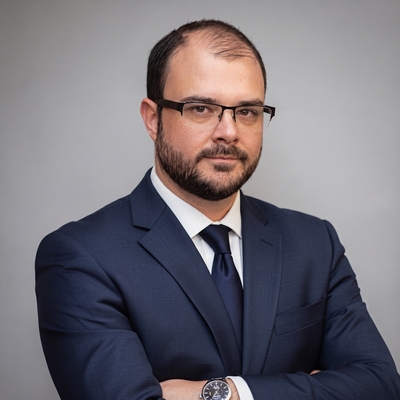
Nathan M. Thornhill
Complexity science researcher and author. Former nursing assistant. Works on how you tell whether a mind is still there.
Fort Wayne, Indiana, United States
Actions
Nathan M. Thornhill is a complexity science researcher working in information theory, pattern persistence, AI, and neuroscience. He is the author of Foundations of the Existence Threshold: The Scholarly Collection. He works without a university, a funding body, or a department.
His research addresses one question: how do you tell whether a mind is still there? He built a measure for it, then published the account of what it cannot do.
The question came from clinical work rather than philosophy. He spent years in healthcare, from nursing assistant to Long Term Care Administration and through ICU admissions, where families asked him whether their loved one was still in there. He never had a good answer for them.
The same question now applies to artificial intelligence, and that is where much of the work sits. He founded the Institute for Complexity Science and Advanced Computing (ICSAC), which publishes the research, and built CiteStamp, which catches the citations AI systems invent. His current work compares decision dynamics in rats, monkeys, and AI models, and measures where the scientific record leaks: his latest analysis traced citations to retracted papers across more than 2.5 billion citation links. He is a student member of the Association for the Scientific Study of Consciousness (ASSC). He has filed four provisional patent applications.
He is based in Fort Wayne, Indiana, and travels for speaking engagements.
Area of Expertise
Topics
Brain, or AI model? The Internal Dynamics of Decisions: From rats and primates to AI
I spent years in healthcare, from nurse assistant to admissions and administration. Families kept asking me whether their loved one was still in there. I never had a good answer. Now the same question gets asked about AI, usually with worse evidence.
A rat commits to a choice. A monkey commits to a choice. An AI model produces a token. Whether those are the same kind of event is an empirical question, and it's answerable, and I'll run it live on an AI model. No cloud, no API, no trust-me slides.
Most brain-versus-AI comparisons you've seen in headlines fail the same way: the obvious method manufactures a confound that looks like a finding. I'll show you the confound, how to spot it in the wild, and what has to be pinned down in advance before a cross-system claim means anything.
You leave able to read the next "AI thinks like a brain" story and know within a minute whether it holds up.
Intermediate. 30 min preferred. Live demo runs on my own hardware; needs HDMI and nothing else, no venue wifi. Related work: poster, The Science of Consciousness 2026, San Diego, October 2026.
Trust me, it's cited: catching AI's invented sources live
An AI won't tell you it doesn't know. It hands you a confident answer with a footnote, and the footnote is fake: plausible authors, a real journal, a DOI that goes nowhere. Lawyers have been sanctioned in open court for citing cases that never existed. A federal health report cited studies that were never written. Most people can't spot one, and we'll test that live, with an interactive audience game: AI-generated bibliographies go up on screen, you vote real or fake from your phone, and the room's tallies land on screen in real time before we check the answers.
Then the bigger problem. Citations are trust technology, a 350-year-old system for "don't take my word for it," and courts, medicine, policy, and science all run on it. Fabricating a source now costs nothing. Checking one still costs minutes. And the record was leaky before AI ever showed up: papers already retracted were cited at least 44,046 times in 2024 alone.
You leave knowing the tells that give a fake citation away, a 30-second check that works on any source, and what it would take to make "cited" mean something again.
All levels. 30 min preferred, flexes longer. Audience participation needs only a phone camera and a browser (QR link, no app, no signup, own cell data); anyone without a phone still gets the full show, and the talk degrades gracefully if connectivity is poor. Companion submission: "Brain, or AI model?" (separate material).
The Science of Consciousness 2026 Upcoming
Poster presentation - "The Internal Dynamics of Decisions: From rats and primates to AI" - Tuesday, 10/13/26, 7:30pm
Please note that Sessionize is not responsible for the accuracy or validity of the data provided by speakers. If you suspect this profile to be fake or spam, please let us know.
Jump to top