
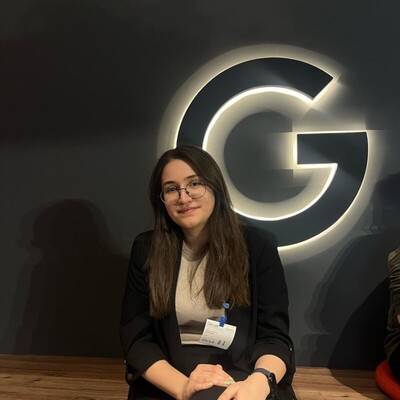
Nilsu Melis Sönmez
Cloud Engineer - Acedemand
Istanbul, Turkey
Actions
Nilsu Melis Sönmez is a Cloud Engineer at Acedemand, specializing in building scalable and production-ready systems on Google Cloud.
Her work focuses on Kubernetes, generative AI, and cloud-native architectures. She actively develops and deploys AI solutions, working with LLM serving, agent architectures, and Model Context Protocol (MCP).
She focuses on integrating AI with modern cloud infrastructure for real world applications and scalable production environments reliably worldwide.
Area of Expertise
Topics
Your Agents Are Asleep, Your Cluster Isn't: Suspending Idle Agents and Performance Analysis
AI agents spend most of their time idle, waiting on LLMs, tools, or humans, yet the one-sandbox-per-agent pattern on Kubernetes reserves CPU and memory around the clock. Agent Substrate (a CNCF Sandbox project) addresses this by separating stateful agent Actors from physical Worker pods, snapshotting idle Actors to object storage and restoring them on demand, with stated goals of 10x to 30x higher density and sub-500ms resume.
In this session, we put those claims to the test. Running kagent agents on Agent Substrate, we load test concurrent agent sessions at increasing scale against a pod-per-agent baseline. We measure how many Actors a single Worker can serve, CPU and node utilization under autoscaling, and suspend/resume latency at p50, p95, and p99 as load grows.
Your Agent Passed the Canary and Still Got It Wrong: Progressive Delivery for AI Agents
Shipping a new version of an AI agent is more than a new container image. A changed prompt, a different model, or an upgraded MCP server can alter behavior without touching code, and a bad version can return HTTP 200 while doing the wrong thing. Classic canary signals such as error rate and latency miss these failures.
In this session, we present a reference pipeline that treats every agent change as a versioned release. We use agentregistry as the single source of truth for agent, prompt, skill, and MCP server versions, and run each version of an ADK-based agent as a standard Kubernetes Deployment. Flagger shifts traffic between versions through agentgateway using Gateway API, while Prometheus collects agent-aware signals labeled by version, such as per-tool MCP call patterns, token usage, and evaluation scores.
Attendees will learn how to define an agent version, which signals reliably catch regressions, and when to roll back automatically.
Who Is This Agent Acting For? Hands-On Identity and Delegation for AI Agents
AI agents on Kubernetes increasingly call tools on behalf of users, yet most still rely on long-lived API keys and inherit broad permissions. When something goes wrong, teams struggle to answer a simple question: which agent did this, and for whom?
In this hands-on tutorial, we guide attendees through building a complete identity chain for AI agents. First, an agent built with the open source Agent Development Kit (ADK) authenticates to Keycloak with its Kubernetes service account token through federated client authentication, removing static secrets. Next, token exchange gives every tool call a downscoped token that preserves the user's identity. Then agentgateway enforces per-tool authorization for MCP servers. Finally, attendees trace each action back to both agent and user, and revoke access mid-session.
The patterns apply to any agent framework, and attendees leave with a working lab repository based on a local kind cluster.
Securing AI Agents on Kubernetes: Zero-Trust MCP Governance with AgentGateway
As AI agents increasingly interact with real-world infrastructure via the Model Context Protocol (MCP), a critical security gap emerges: MCP servers inherently lack built-in authorization logic. If an AI agent reaches the server, its actions are trusted blindly.
This session tackles AI agent governance at the Kubernetes infrastructure level. Instead of relying on application-level checks or trusting the AI model itself, we will demonstrate how to secure LLM tool calls using AgentGateway as a cloud-native proxy. By integrating Keycloak for JWT authentication and Common Expression Language (CEL) for dynamic Role-Based Access Control (RBAC), we can intercept, validate, and trace every single agent request at the gateway level.
KCD Istanbul 2026 Sessionize Event
Please note that Sessionize is not responsible for the accuracy or validity of the data provided by speakers. If you suspect this profile to be fake or spam, please let us know.
Jump to top