
Nolan S. Code
Founder & CEO, Atlanta AI & Robotics Initiative | Physical AI, Robotics & AI Infrastructure | Own the Stack
Atlanta, Georgia, United States
Actions
Nolan S. Code is the Founder and CEO of the Atlanta AI & Robotics Initiative (AARI), a nonprofit that trains underserved students to build and operate the infrastructure behind AI: robotics, edge systems, cloud, networking, and data centers. AARI has trained 40+ students, runs two live data center training environments, and placed its first graduate in a $115K infrastructure role.
Before AARI, Nolan founded IntelHP, which was acquired by AWS. At Microsoft he was a Senior Cloud Solution Architect and Azure Data & AI specialist, where he closed a $100M Azure renewal and finished at 174% of quota. He is a U.S. Army veteran, a Morehouse College graduate, and holds a Georgia Tech MBA and an MSc in Computer Science with an AI focus.
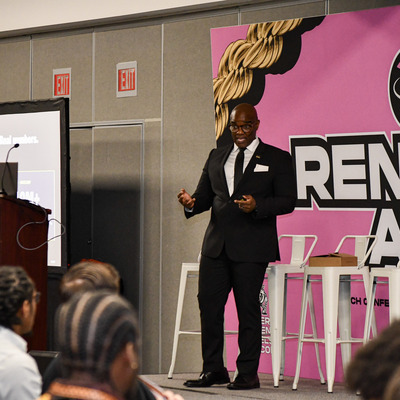
Nolan delivered the opening keynote at TAG //SHIFT: AI 2026, keynoted RenderATL 2026, and spoke on data center delivery at the Georgia AI Data Center Leadership Summit. His thesis is simple: communities should not just supply the land, power, and talent behind AI. They should own part of the stack. Operators, not observers.
Area of Expertise
Topics
From Demo to Production: The Infrastructure Gap (and Why You Must Own the Stack)
AI can write your functions now. It can build your UI. But it cannot architect the system that keeps your application alive in the real world.
We are witnessing a fundamental shift in what it means to be a Software Engineer. As the barrier to generating code drops to zero, our value shifts from "writing syntax" to "owning the stack." Yet, 90% of AI projects still die in the "Valley of Death" between a cool demo and a production system, not because the model failed, but because the infrastructure wasn't there to support it.
This talk is about that missing middle. It is a survival guide for the modern engineer who realizes that infrastructure is no longer someone else's problem.
We will break down:
The Identity Crisis: Why "It works on my laptop" is a career-ending phrase in the AI era.
The Silent Killers: The boring, unsexy layers (Networking, Identity, Cost Controls) that actually sink AI projects.
The New Stack: How to design systems that scale responsibly without bankrupting your company on inference costs.
Drawing from enterprise war stories and hands-on community labs from 80 years of combined experience, we will walk through the practical blueprints separating permanent shelf-ware from systems people trust. No hype. No vendor pitches. Just the architecture you need to survive the shift from "Coder" to "System Owner."
RenderATL is about the culture and future of tech. Right now, every engineer is asking: "If AI writes the code, what do I do?"
This session answers that question. It bridges the gap between the hype of GenAI and the reality of Engineering. We want to give the audience specifically the Senior+ crowd a roadmap for their own evolution. We're stripping away the "magic" of AI to show them the "metal" underneath, because that is where their future value lives.
Operators, Not Observers: Who Will Build the Physical AI Economy?
Most AI demos never reach production. In physical AI the gap is wider, because a model that works on a laptop still has to run on constrained hardware, in a noisy environment, on a power and network budget, with someone accountable when it fails.
This session covers what it actually takes to move robotics and edge AI from prototype to deployment. Nolan breaks down the decisions that determine whether a system ships: where inference runs, edge versus cloud tradeoffs, model optimization for local hardware, sensor data pipelines, data center capacity and power, and the operating model needed to support it all. He uses real examples from AARI's training environments and edge AI work, along with lessons from enterprise cloud deployments.
Attendees will leave with a deployment checklist for physical AI systems, a framework for deciding what to run locally versus in the cloud, and a clear view of the infrastructure and staffing that teams consistently underestimate
Format: Talk, 30–45 min. Level: Intermediate. Audience: engineers, architects, technical leaders.
Training the Operators: Building the Physical AI Workforce
Companies say they cannot find people who can run AI infrastructure. Meanwhile, capable students in their own cities never get near a server rack, a robot, or a GPU. The problem is not talent. It is the pathway.
This session shows how AARI built a hands-on pipeline that takes students from zero to job-ready across Linux, cloud, networking, GPUs, data centers, robotics, and edge deployment. Nolan covers what worked, what failed, and what it cost: how the curriculum is structured, why labs matter more than lectures, how industry partners plug in, and how the first graduate landed a $115K infrastructure role.
Attendees will leave with a replicable program model, a skills map tied to real infrastructure jobs, and specific ways employers, colleges, and community organizations can build or join a pipeline like this one.
Format: Talk or workshop, 45–90 min. Level: All levels. Audience: educators, workforce leaders, HR, hiring managers.
Operators, Not Observers: Who Will Build the Physical AI Economy?
AI is leaving the browser. It is moving into robots, vehicles, factories, and the data centers and power grids that run them. That shift creates a new economy, and right now most communities are positioned to watch it rather than build it.
This talk makes the case that physical AI is an infrastructure and workforce problem before it is a model problem. Nolan walks through the full stack behind physical AI, from compute and energy to edge devices and the people who keep it running, and shows where the real labor and ownership gaps are. He draws on his work at Microsoft,
building and selling IntelHP to AWS, and training students through AARI who now work inside live infrastructure environments.
Attendees will leave with a clear map of the physical AI stack, an understanding of which roles are hardest to fill and why, and a practical model for how companies, schools, and cities can grow operators instead of importing them. The goal is not AI optimism. It is a plan for who gets to participate.
Format: Keynote or talk, 30–45 min. Level: Introductory to intermediate.
Render (RenderATL) 2026 Sessionize Event
Please note that Sessionize is not responsible for the accuracy or validity of the data provided by speakers. If you suspect this profile to be fake or spam, please let us know.
Jump to top