
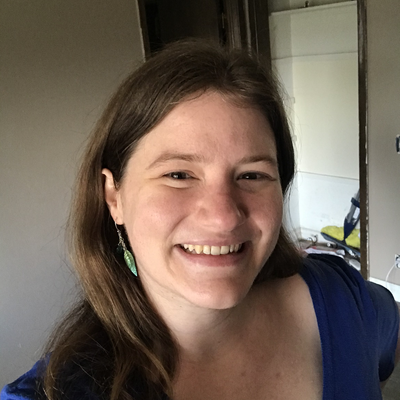
Olivia Buzek
Senior Staff AI Engineer
Boulder, Colorado, United States
Actions
Olivia has worked at the intersection of computers, language and intelligence for over 15 years. During her time working in machine learning and AI, she's worked as an MLOps Engineer, engineering manager, trustworthy AI architect, and developer advocate. Early on, she worked to scale NLP training processes to serve hundreds of classical ML models. She later led a team to share those models across the company via inner source, then took many of those concepts to work in the trustworthy and responsible AI space. Since generative AI has taken off, she's turned her focus towards innovating new patterns of AI and human interaction.
Her current focus is on building well-designed user experiences both for developers and consumers of AI applications. Olivia subscribes to neither AI hype nor AI doomerism: instead, she wants to build a world where human creativity and AI can coexist, and where builders of AI applications have a responsibility to their users to ensure that humans thrive when using AI tools. She is currently investigating how to build generative AI applications that use LLMs efficiently, effectively, and in ways that support the people whose creativity helped make AI happen.
Area of Expertise
Topics
Taming MCP Server Sprawl: Securing and Scaling the Model Context Protocol in Production
As AI agents transition from pilots to production systems, enterprises are rapidly adopting the open source Model Context Protocol (MCP) to connect models with tools, data, and services. But this flexibility introduces a new challenge: MCP server sprawl. Proliferating endpoints, inconsistent trust models, weak identity controls, and unclear governance can quickly create operational and security risk. This session explains what MCP is, why its adoption is accelerating, and where architectural pitfalls emerge at scale. Developers will learn key design principles for secure deployment, including authentication patterns, authorization boundaries, observability, lifecycle management, and policy enforcement. Attendees will leave with a practical mental model for building MCP integrations that remain composable, governable, and production-ready as ecosystems evolve.
Building Your (Local) LLM Second Brain
LLMs are hotter than ever, but most LLM-based solutions available to us require you to use models trained on data with unknown provenance, send your most important data off to corporate-controlled servers, and use prodigious amounts of energy every time you write an email.
What if you could design a “second brain” assistant with OSS technologies, that lives on your laptop?
We’ll walk through the OSS landscape, discussing the nuts and bolts of combining Ollama, LangChain, OpenWebUI, Autogen and Granite models to build a fully local LLM assistant. We’ll also discuss some of the particular complexities involved when your solution involves a local quantized model vs one that’s cloud-hosted.
In this talk, we'll build on the lightning talk to include complexities like:
* how much latency are you dealing with when you're running on a laptop?
* does degradation from working with a 7-8b model reduce effectiveness?
* how do reasoning + multimodal abilities help the assistant task?
Building Responsible AI Agents with Open Source
Agentic AI is the talk of the industry, but what does it actually mean, and how do you build an agent? In this workshop, we’ll walk you through spinning up your own simulated support agent for a physician's inbox, using easy-to-use OSS tools like LangGraph and Granite Guardian. In the process, you’ll get a basic understanding of agent architectures, understand how to protect critical data being served to an LLM, and get an introduction to responsible AI agent behavior. You’ll walk out with a first agent that can run on your laptop using open source AI technologies, and an understanding of what it looks like to build AI agents that behave responsibly. Designed for developers who are new to AI agents.
Attendees should be familiar with Python. The open source tools (LangGraph, ContextForge and the Granite Guardian models) will all be taught for users who have not previously used them.
Open Source Summit North America
Talk: Taming MCP Server Sprawl
As AI agents transition from pilots to production systems, enterprises are rapidly adopting the open source Model Context Protocol (MCP) to connect models with tools, data, and services. But this flexibility introduces a new challenge: MCP server sprawl. Proliferating endpoints, inconsistent trust models, weak identity controls, and unclear governance can quickly create operational and security risk. This session explains what MCP is, why its adoption is accelerating, and where architectural pitfalls emerge at scale. Developers will learn key design principles for secure deployment, including authentication patterns, authorization boundaries, observability, lifecycle management, and policy enforcement. Attendees will leave with a practical mental model for building MCP integrations that remain composable, governable, and production-ready as ecosystems evolve.
ODSC AI East 2026
Workshop: Building Responsible AI Agents with Open Source
InnerSource Summit
IBM has been in AI for decades, but our early AI technology was built in silos, making it hard to gain market relevance. When generative AI exploded, the company faced a choice: learn to collaborate or become irrelevant. We'll talk about how we rebuilt our collaboration infrastructure using InnerSource as a bridge to open source, making our best strategic technology available to all our developers. And in the end, we'll answer the question: will human collaboration survive the age of AI?
Women in Data Science - San Jose
Co-led workshops on the Granite family of models and the Docling open source project
Open Source Summit North America 2025 Sessionize Event
DevOpsDays Austin
(Lightning talk edition)
LLMs are hotter than ever, but most LLM-based solutions available to us require you to use models trained on data with unknown provenance, send your most important data off to corporate-controlled servers, and use prodigious amounts of energy every time you write an email.
What if you could design a “second brain” assistant with OSS technologies, that lives on your own laptop?
We’ll take a whirlwind tour through our second brain implementation, combining Ollama, LangChain, OpenWebUI, Autogen and Granite models to build a fully local LLM assistant.
FOSDEM
(Lightning talk edition)
LLMs are hotter than ever, but most LLM-based solutions available to us require you to use models trained on data with unknown provenance, send your most important data off to corporate-controlled servers, and use prodigious amounts of energy every time you write an email.
What if you could design a “second brain” assistant with OSS technologies, that lives on your own laptop?
We’ll walk through the OSS landscape, discussing the nuts and bolts of combining Ollama, LlamaIndex, OpenWebUI, Autogen and Granite models to build a fully local LLM assistant. We’ll also discuss some of the particular complexities involved when your solution involves a local quantized model versus one that’s cloud-hosted.
Please note that Sessionize is not responsible for the accuracy or validity of the data provided by speakers. If you suspect this profile to be fake or spam, please let us know.
Jump to top