
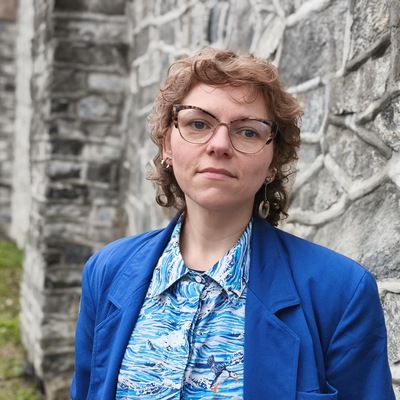
Marta Paciorkowska
Senior Software Engineer @ Entur.no
Oslo, Norway
Actions
Marta transitioned from NGOs to a career in programming. She is a self-taught practitioner with over 10 years of experience in DevOps, orchestration, and cloud technologies. As a senior software engineer at Entur, a state-owned company that makes it easier to choose public transport, she and her teammates deliver an internal development platform. Marta values the complexity of computer systems and the serenity of camping in the woods. She is committed to addressing the climate crisis and wants to improve how engineers collaborate. As an experienced speaker, she encourages audiences to consider the various human aspects of IT engineering at events such as Devops Days, Velocity, eurucamp, RubyConf, and most recently, Cloud Native Bergen.
Area of Expertise
Topics
Exploring best practices for a greener Kubernetes
Did you know that, on average, 37% of CPUs provisioned for cloud-native applications are never used, and the gap between resources allocated and resources used is widening? This inefficiency is causing cloud waste, and is negatively impacting the environment.
Sustainability of cloud infrastructure is a growing concern, not just for people inside the IT sector. Knowledge around what is environmentally sustainable within IT is still somehow limited, with persisting misconceptions, such as the belief that running cheap automatically equals running green. With factors like committed spend discounts and cloud regions running on cheap but dirty energy, that is often not correct.
Kubernetes has become the orchestration platform of choice. While its capabilities have been increasing with each passing year, a system can only be as efficient as its users let it, and Kubernetes on its own is not a silver bullet for solving environmental sustainability challenges.
In this talk, I want to highlight areas of running workloads on Kubernetes that organizations can improve on. We'll take a starting point in the "reuse, reduce, recycle" principle of environmental protection, and see how we can apply it to our applications running on Kubernetes. We'll also look at the shared responsibility model and spotlight a few projects and organizations that are dedicated both to sustainability in the cloud in general, and Kubernetes in particular.
Attendees will leave with actionable insights on how to directly improve the sustainability and efficiency of the Kubernetes clusters they manage. Join me to learn how to employ Kubernetes for a greener cloud future.
Making our applications greener
We live - and work - in an environmentally unbalanced system. In this talk, I'm hoping to make the audience more aware of the impact IT has on the environment, and leave them with tools that help positively lower this impact.
Did you know that the IT sector is estimated to consume approximately 3.6% - 7% of global electricity, and according to Cisco’s Network Traffic Forecast, we’re anticipating a significant increase in global Internet traffic in the next two years? And that the estimated global energy consumption for data centers and enterprise networks alone was equivalent to about 245 TWh in 2016? That’s more electricity than Spain, Australia or Iran use in a year.
We’ll go through more data on the environmental impact of our IT sector. We’ll use The Green Web Foundation’s “Platforms, Packets, Process” mental model to try to put that data into perspective. Finally, we’ll look at what we can do in our everyday work to make our services environmentally sustainable.
Let’s contribute together towards bringing the balance back.
Cloud Native Day Oslo 2025 Sessionize Event
DevOpsDays Oslo 2019 Sessionize Event
Please note that Sessionize is not responsible for the accuracy or validity of the data provided by speakers. If you suspect this profile to be fake or spam, please let us know.
Jump to top