

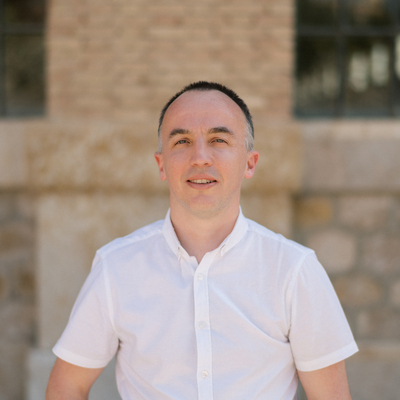
Patrick Stephens
Founder, Software Engineer, Devops, Infra
Manchester, United Kingdom
Actions
Over 20 years experience in software engineering, mostly in the defence domain at Thales. The last few years of this were focused on transformation first to containers then Kubernetes.
After Thales I worked on the cloud native team at Couchbase, working on their Golang-based Kubernetes operator. This included producing a custom Fluent Bit deployment for observability needs.
Calyptia (founded by the Fluent maintainers) then approached me to come work with them building out observability products before we were successfully acquired by Chronosphere. I then led the migration of all our infrastructure and SOC2 compliance before Chronosphere was again successfully acquired by Palo Alto. During this period I also became a core maintainer of the CNCF graduated Fluent project, primarily working on Fluent Bit.
I am now running an OSS consultancy for observability called Telemetry Forge leveraging our knowledge as well as working with customers in the defence domain again.
Area of Expertise
Topics
Fluent Bit & OpenSearch: The Power Couple of Open Source Observability
In the world of cloud-native observability, the "Golden Signal" is only as valuable as the pipeline that carries it. To build a truly vendor-neutral, scalable observability stack, look to Fluent Bit for high-performance telemetry routing and OpenSearch for robust search and analytics. This session dives into why these two projects form the "Power Couple" of the open-source ecosystem. One excels at being a lightweight, sub-millisecond processor at the edge, the other providing the distributed backend required to make sense of that data.
What we will cover:
- The "Why" Behind the Pairing: An exploration of how Fluent Bit’s low-resource footprint perfectly complements OpenSearch’s high-performance indexing.
- Streamlined Integration: Practical demonstrations of configuring the Fluent Bit OpenSearch output plugin.
- Zero to Dashboard: A walkthrough of the developer workflow—from containerized deployment using Podman to visualizing live telemetry in OpenSearch Dashboards.
Attendees will walk away with an understanding of the advantages to this couple and access to a free online hands-on workshop: https://o11y-workshops.gitlab.io/workshop-fluentbit
Making a Fluent Bit plugin
Fluent Bit is a CNCF graduated and wildly used (>1 billion downloads) telemetry pipelines tool - if you run on a cloud or use one of the public providers then you will be using it somewhere.
Fluent Bit provides vendor agnostic telemetry pipelines including custom filtering and sampling but there is always something more that you want or needs doing!
This talk will show you how to write your own custom plugin for Fluent Bit in both Golang and C, depending on your preference.
Encouraging OSS contribution
Encouraging anyone who wants to contribute to OSS with some concrete examples and suggestions as to how to do that.
Highlighting how contribution is typically handled by the Fluent organisation to give people an insight into what happens with their issues, pull requests and other types of contribution. Real world examples of specific contributions of not just code changes, but CICD and docs too. It should show you how best to document an issue or provide a pull request plus also a call to action for areas we need help with. It will also present a little of how I got into the OSS maintainer role starting from an atypical Defence background through initial community engagement into the maintainer role.
Taking cloud-native offline
Designing a cloud-native solution so that it can also be run in air-gapped or on-prem environments can be difficult. This presentation will take you through some of the requirements you will have to meet along with approaches and tooling to help you meet them.
It will be based on my experiences of deploying various products across multiple air-gapped environments with differing level of restriction available - from simple caching registries and self-signed certificates all the way up to full blown Faraday cages. Examples of use cases from different environments will be shown along with the tooling or technique used to resolve that problem. This will help those both attempting to deploy existing products and those designing new products to do it in a way that is easily portable.
Finally we will look at some of the upcoming work in the cloud-native ecosystem that may help in this area.
WASM On, WASM Off for Telemetry with Fluent Bit
Much like the Karate Kid, this will be a journey of learning how to use a powerful new technique (namely WASM) to solve your problems without "sweeping the leg".
As a dubious engineer looking at the perennial "it'll be useful next year" WASM, I will cover my journey starting from a new starter in the world of WASM up to deployment along with all the trials and tribulations along the way.
I will go over my successes and failures when attempting to use WASM to solve some of the problems I come up against in the observability space - in this case with the Fluent Bit project but they can be generalised hopefully to a lot of other scenarios.
I will try to weave this narrative together with some Karate Kid references and hopefully keep it entertaining.
Power Up with Podman
Curious about containers beyond Docker? There’s a new generation of containers on the scene, Podman! Supporting secure, rootless containers for Kubernetes microservices, it was designed and built with the cloud in mind. Benefitting from the lessons learned out in the open from Docker, this next generation of containers will quickly become a trusted daily driver in your dev workflow.
Covering what you need to know as an end-user from the UI to the backend, sharing a real world use case leveraging Podman for open source observability workshops https://o11y-workshops.gitlab.io. I will share how Podman and the adorable seal mascots Caitlín, Maighréad and Róisín have transformed local development!
Fluent Bit, the engine to power Chat Ops
The key to successful Chat Ops is to be able to identify the important information in a timely manner using the best comms channel for a team (e.g., Slack or a bespoke App) & enable the ops to act.
Fluent Bit has a number of core characteristics (event-driven & stream processing) that allow us to recognize critical events as they occur and support typical log analytics and observability tools. Using Fluent Bit’s features allows us to spot critical events and immediately communicate with the right ops staff using social channels in a flexible and versatile manner and return actions to trigger suitable remediation, creating the chance to react more quickly & even become proactive/preventative.
In this session, we’ll see the capabilities of Fluent Bit that can not just get data to the mainstream observability tools but also help us to respond faster & may be pre-emptively using a thought-provoking demo. So that we care for our ‘pets’ or avoid the ‘cattle’ stampeding.
KCD UK Edinburgh 2025 Sessionize Event
Please note that Sessionize is not responsible for the accuracy or validity of the data provided by speakers. If you suspect this profile to be fake or spam, please let us know.
Jump to top