
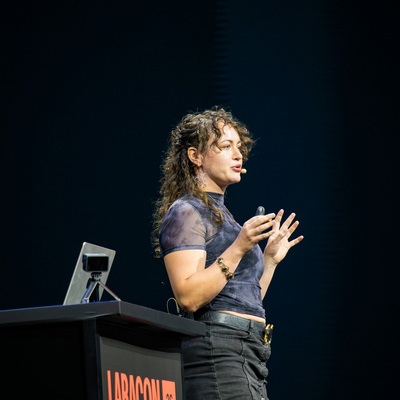
Pauline Vos
Software engineer & consultant
Amsterdam, The Netherlands
Actions
Pauline is senior software engineer at MongoDB, where she maintains and writes open-source software for the PHP ecosystem. She likes good, clean software design and being as efficient (lazy) as possible.
Building an Image Matcher: A (Literal) Deep Dive Into Multimodal Vector Search
A common use of AI is similarity search. This technique uses an embedding model to take data and turn it into a vector embedding—a multi-dimensional array that records many different dimensions of said data. This can be any type of data, including visual data!
In this talk, I'll show you how to build a multimodal similarity search tool that accepts your own photos, text, or a combination of both as a search query. The result will be an app that matches objects around you to real-world archaeological finds.
Git, But Better: An Introduction to Jujutsu (jj)
Tired of fighting with Git? Jujutsu (`jj`) is a next-generation version control system that fixes many of Git’s pain points, all without forcing your team to switch tools. You can use it right inside any existing Git repository.
This session will introduce you to `jj` and show how it makes everyday version control tasks dramatically simpler; from changing commits to resolving conflicts and undoing mistakes.
If you’ve ever wished Git were easier, more intuitive, and just a little more human, this talk will show you the future of version control — and how to start using it today.
No OSS, No Users: Why Investing in Open Source Matters
At MongoDB, I help maintain the open-source tools that help PHP developers use our product. Without active, stable OSS, we shrimply wouldn’t have any users.
In this session, I’ll share why open source is essential to your product’s success, and how to get involved in the ecosystems that support it. Through real-world examples, you’ll learn strategies for contributing effectively, the value of community trust, and getting leadership buy-in to invest engineering time in OSS.
You’ll leave with practical ways to strengthen your product by strengthening its open-source foundations.
Git Legit
Many Git users tend to use Git as a save point, like in a video game; chronologically making checkpoint commits as they go. This spreads out changes to the same areas in the code over several commits, necessitates merging and resolving conflicts, and generally just making an incomprehensible jumble of your history. This workshop makes a case for atomic commits and how to use them while only minimally affecting your workflow.
During hands-on exercises, you’ll learn how to properly interactively rebase, fix up, reset, bisect, and more. By the end of the workshop, you’ll have seen how this Git workflow will make your life easier and how it will affect your ability to cherry pick, drop unwanted commits, and most importantly: not spend hours resolving conflicts in rebase hell. A little change in habits can go a very long way!
Advanced Git Magic
You know your local from your origin, your push from your pull, your merge from your rebase. But Git is still a mystery sometimes. Making mistakes is scary. What the $^@#! is a detached HEAD state? How do you get out of it? This and more mythical Git beasts will be discovered and tamed in this tutorial.
Even advanced Git users will leave this talk with new skills. You’ll be force pushing, hard resetting, and auto-bisecting like nobody’s business. What’s more: you’ll be confident, comfortable, and love doing it!
The Business of Bisecting
I've been teaching Git for years, and everywhere I go `git bisect` seems to be a bit of a mythical beast. Some people have heard of it, very few know what it is, and almost nobody knows how powerful it can really be.
In this short talk, you'll find out not only what bisect is and how it works, but also all the ways in which it can work for you. From finding a specific point in your history lightning fast, to making it debug for you using a combination of bisect and regression testing.
The bright and exciting future of the decentralized web
Reader, be aware: this is not a blockchain talk!
The web we knew and loved has become a massive machine led by a small number of tech giants, controlling your data, hogging money, and burning the planet.
Tech thought leaders and pioneers recognize the state of the current web for what it is: unsustainable. Find out in this talk which inspiring technologies lie ahead for us, that will help us take back control of our beloved web.
Never Stop Learning, or how curiosity and cross-pollination drives innovation
Software developers all know: continual learning is part of the job. And that’s what so many of us love about it. Innovation is constant, and it’s an exciting challenge to keep up with so many new technologies.
But where do all these new concepts, frameworks, and patterns come from? Let’s take a journey through the history of innovation to explore how different worlds collided to inspire new, radical ideas. Let’s discover how cross-pollination has helped our community grow into what it is now, and can help us think of new ways to solve complex problems.
Join us for a session of inspirational stories that illustrate how cross-pollination has helped form some of history’s most profound innovations, and will hopefully inspire you to conjure up your own radical new ideas.
Pauline Vos
Software engineer & consultant
Amsterdam, The Netherlands
Actions
Please note that Sessionize is not responsible for the accuracy or validity of the data provided by speakers. If you suspect this profile to be fake or spam, please let us know.
Jump to top