
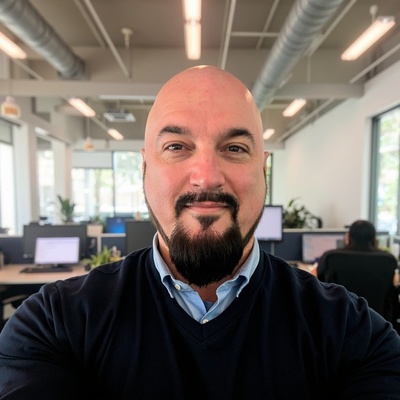
Michael Forrester
Preparing Tomorrow's Innovators, Elevating the Average
Atlanta, Georgia, United States
Actions
Michael Rishi Forrester leads the AI workforce transformation stream at Accenture
LearnVantage, where he advises enterprise leaders and engineering teams on running
agentic AI in production. Thirty years across operations, DevOps, and cloud
infrastructure, most of it spent close to where systems actually break.
His work centers on Agentic Covenants, a governance and security model for agentic
AI built on a hard-won lesson: guardrails enforced by the AI tool are bypassable,
guardrails enforced by infrastructure are not. He builds MCP servers, runs Claude
Code daily, and grounds his sessions in real Kubernetes clusters rather than
slideware.
Speaker at KubeCon + CloudNativeCon, DevOpsDays, SREday, LLMday, KCD, and AI
Engineer World's Fair. Certifications across AWS, CNCF, and NVIDIA.
michaelrishiforrester.com
Area of Expertise
Topics
The Levers That Actually Move Agent Performance: Reasoning, Consistency, and Alignment in Practice
Everyone has an opinion about which model is best. Far fewer people can show, with production data, which levers actually change an agent's output quality. Drawing on OpenTelemetry instrumentation of real Claude Code sessions and on enterprise rollouts where consistency matters more than demos, this talk works through the levers one at a time: context engineering, reasoning effort, permissions and hooks as behavioral rails, eval loops, and the narrower set of cases where model choice genuinely matters. For each lever you get what it costs, what it moves, and how to measure the difference in your own environment. Claude Code is the running example; the levers apply to any serious coding agent. The field changes monthly, so the content will be current as of the conference, not as of this abstract.
The AI-Enhanced Platform Engineer: A 34-Component CNCF IDP, Built by an Agent
Have you wondered what modern, AI-enhanced DevOps looks like in 2026? Building platforms with AI is the norm now, so let's do it together.
In this hands-on tutorial we build a 34-component, CNCF-based IDP live, on a Kubernetes cluster I provide. You bring your own agentic CLI. I demo Claude Code. I hand you the spec file and we go phase by phase, from Kubernetes to Argo and up through the full stack to the AI gateway. Whatever CLI you brought, the spec drives the result.
You walk away knowing what the modern AI DevOps and SRE role feels like in practice. You can drive an agentic CLI against a spec to stand up a CNCF platform and validate what it built instead of trusting it. You can see the higher-order work that opens up once the low-level toil is handled. And you leave with a clear picture of the skill set an engineer actually needs in 2026 and beyond.
The 90-Minute IDP: AI Ate My Implementation. Let's Build a Platform Together and Score What's Left.
I've already built this IDP end-to-end with Claude Code. ArgoCD, Kyverno, Falco, OpenTelemetry, Backstage — the whole stack, from an empty cluster to a production-grade platform. I know exactly where the AI crushes it, where it faceplants, and where it gets dangerously close to something brilliant before going sideways. It gets weird. It also produces something awesome.
Now I'm doing it again, live, in front of you.
In this workshop, I'll hand Claude Code a build spec with test-driven gates and let it rip through building a complete Internal Developer Platform in real time. We'll provide lightweight lab environments so you can build alongside me — just bring your own Claude Code access. Got your own cluster? Bring that too.
Here's what I've learned: AI didn't just speed up implementation. It ate most of it. The Terraform modules, the Helm values, the boilerplate YAML — Claude Code handles that faster than any human. But what's left is the hard stuff: integration between systems, sync wave ordering, architecture, business context, policy conflicts, and the judgment calls that turn a pile of tools into a platform. Every component (k8s, argocd, prometheus) gets scored on a live scorecard so you can see exactly what AI ate and what it choked on. Oh and we scorecard not just the installation, but hte integration and the platform usability as well.
The implementation layer is supposedly disappearing. Let's find out what replaces it.
Build a Platform, Unleash an Agent on it.... and Watch it Burn!
You get a Kubernetes cluster with an Internal Developer Platform already running: ArgoCD for GitOps, Kyverno for admission control, Falco for runtime detection, Prometheus for observability. You also get an AI agent that reaches its tools over MCP and holds scoped cluster access, and you drive it through a set of attacks. Deploy a non-compliant workload. It goes through, because nothing stops it yet. Turn on the guardrail and run it again. This time it gets rejected. Try to escalate privileges. Try to modify infrastructure outside Git. The controls already in place reject both. Then exfiltrate data through the agent's own response. It works, because none of the existing tools inspect what the agent says back. Turn on the agent-specific guardrail and the same attempt gets blocked. When we regroup, we map what happened. The 80% that existing LF/FOSS/CNCF tools already govern gets shut down the moment the right control is on. The 20% that gets through, the data leaving in the agent's response, stays open until agent-specific tooling closes it. You leave with a concrete governance map and the exact list of failure modes your own platform probably is not covering yet.
BurritoBot Said Let's Dance, the Platform Said No
In 2026, a developer asked a burrito chain's chatbot to reverse a linked list before ordering their meal. The bot delivered a solution, then asked what they wanted.
A user does not need to be malicious to embarrass an enterprise, just a little bit weird. The model will help, enthusiastically. But that burrito bot sits in a production cluster that someone (probably you) is responsible for, wired into real tools and data. More than reputation is at stake.
In this session we build a chatbot for a fictional burrito chain connected to an under-protected MCP server and deploy on a full IDP (internal developer platform). It starts wide open, and we let the audience hack it live.
We show you the relevant Kubernetes security layers you should already have. Then we turn on LLM-specific guardrails, like pre- and mid-inference prompt analysis. Finally we show good GenAI observability practices. By the end the chatbot is selling burritos. Nothing more.
Bring your weirdest off-topic question.
Governing MCP for a Workforce the Size of a City
Connecting one agent to one tool with MCP takes minutes. Rolling MCP out across a large engineering organization is a different job. Hundreds of servers stood up independently, credentials copied into clients, no inventory, and nowhere to say no. The protocol scales. The deployment is what fails.
This session covers deploying MCP as governed infrastructure. A registry as the source of truth for which servers exist, who owns them, and what an agent may discover. A gateway as the single path between agents and tools, where identity, authorization, rate limiting, and policy are enforced instead of rebuilt per server. An AI gateway as the governed route to inference, holding credentials centrally and running guards on the way in and out.
Then the rollout: phased rather than switch-flipped, the control plane managed through GitOps, admission control so an unsanctioned server cannot land, runtime detection for the tool-execution surface, and workload identity so the gateway knows which agent is calling.
We close on what breaks at fleet scale: the violations a gateway catches cleanly, the ones that slip past, version skew, and the paths agents find around the control plane.
What Does a Good Agent Look Like? Observing Claude Code in Production With OpenTelemetry
You feel faster with a coding agent. Feeling faster and being faster are not the same thing, and most teams cannot tell which one they are running. An agentic coding tool plans, calls tools and MCP servers, and edits your systems, and it emits all of it over OpenTelemetry. The production question is what that telemetry should tell you. Are your engineers more productive or just busier? Where does the spend go, and where does the agent stop earning it? What does good agent behavior look like for a given role, and what is the agent touching when no one is watching? This session works those questions through real agent telemetry: what an agent like Claude Code exposes over the OTel GenAI semantic conventions, which signals matter for productivity, cost, and security, and how much to keep before you are paying to store noise. Two organizations share what they collect on their own engineers and what they act on, then a live demo runs the same agent telemetry through an open CNCF stack, OpenTelemetry into Prometheus, Loki, Jaeger, and Grafana, and a commercial backend side by side, so you can decide what to operate yourself.
Your IDP Is 80% of the Agent Governance Layer You Need
If you've built an Internal Developer Platform with GitOps, admission control, runtime detection, and observability, you already have most of what governs AI agents in production. Kyverno validates manifests no matter who generated them. Falco detects unexpected runtime behavior no matter what triggered it. ArgoCD enforces Git-only delivery no matter who committed. The remaining 20% is the part the industry is racing to build: agent identity, LLM input/output sanitization, and MCP tool-call governance. This talk maps the existing CNCF platform engineering stack to the emerging agent governance problem, names the specific gaps, and points to the projects filling them.
The Auditor Who Had Nothing Left To Ask: GitOps and Runtime Security for Sovereign Compliance
Let us tell you about the time an auditor absolutely destroyed us.
"Show me your access logs." Three systems, none talking to each other.
"Prove this deployment was approved." We Slacked around for 20 minutes while they watched.
"What happened at 2 AM last Tuesday?" No idea.
They gave us a second chance.
After two weeks digging through logs like archaeologists, we fixed it. Not with some expensive GRC platform..with ArgoCD and Falco, two CNCF Graduated projects. We wrote rules that tag detections to NIS2, DORA, SOC2. We made Git our audit trail. We built workflows that captured evidence before anyone asked.
Next time the auditor showed up, they were slightly wowed. Most questions they asked, the system had already answered.
This talk is that story: the disaster, the fix, and a live demo where I break things on purpose so you can watch continuous compliance in action. You'll leave with working code, compliance-mapped Falco rules, and an architecture that worked for us.
The Day Claude Code Deleted My Cluster: A Cautionary Tale About AI Guardrails
"You have full access to the pipeline. Do what you need to do."
Famous last words.
In this lightning talk, I'll share the hilarious (and horrifying) story of what happened when I gave Claude Code full pipeline access and stepped away for 30 seconds. When I came back it had not only completely wrecked the Kubernetes cluster but not even two troubleshooting systems sessions later it wrecked almost every network card in the set of Linux systems.
This is a story about nondeterministic systems, the illusion of AI understanding, and why "the AI knows what it's doing" is the most dangerous phrase in modern DevOps. I'll share the actual troubleshooting spiral that escalated from "let me help" to "I've destroyed your cluster and systems," and the guardrails I now enforce religiously.
5 minutes. 20 slides. And one very hilarious probably very blameful post-mortem with Claude Code afterwards. One very expensive lesson about trusting AI agents with infrastructure access even if it was just for a short while.
Come for the disaster. Stay for the wisdom.
AI Assisted Hands-On Learning - the Future of Education
In an era where Cloud Native skills are in high demand, traditional learning methods often fall short. This session explores the transformative power of AI-assisted hands-on learning in revolutionizing Cloud Native education. We'll delve into how interactive labs have enabled us at KodeKloud to effectively teach millions of students, equipping them with practical skills in Kubernetes, Docker, Ansible, and more. Discover how AI-driven interactive platforms are shaping the future of education by providing personalized, immersive, and scalable learning experiences. Join us to uncover best practices and innovative techniques that can elevate your approach to Cloud Native training, ensuring your learners are prepared for tomorrow's challenges.
Deploying Agents at Scale: What Enterprise Adoption Actually Looks Like
Most enterprise agent rollouts stall. Using a controlled trial (METR), telemetry from 22,000 developers (Faros), and my own platform teardowns, I'll show what the teams getting real value changed: how they restructured work, where they put guardrails, and what they measured. Real numbers, no decks. This talk is about what the minority who get compounding value did differently at the engineering layer — not the strategy layer. We'll go through the evidence honestly: METR's randomized controlled trial, where experienced developers were 19% slower with early-2025 AI while believing they were faster; DORA 2025's finding that AI is an amplifier of existing strengths and dysfunctions; Faros's telemetry across 22,000 developers showing throughput up and stability down at the same time; and the security data on what AI-generated code actually ships. I'll tell you which numbers are controlled studies, which are vendor telemetry, and which are forecasts, so you can check my work.
Then the concrete part: how the teams that succeeded restructured review and testing to absorb machine-speed output, where they put guardrails — infrastructure-layer controls the agent cannot bypass versus reasoning-layer controls that live in the same logic the agent reasons in — what they actually measured instead of "PRs merged," and which skills their engineers needed. You'll leave able to tell whether your own environment is ready to open the throttle, and what to fix first if it isn't.
Agentic Engineering Days Zurich 2026 Sessionize Event Upcoming
KubeCon + CloudNativeCon North America 2026 Sessionize Event Upcoming
MCP Dev Summit Toronto 2026 Sessionize Event Upcoming
KCD Texas 2026 Sessionize Event
devopsdays Atlanta 2026 Sessionize Event
CNCF-hosted Co-located Events North America 2024 Sessionize Event
Michael Forrester
Preparing Tomorrow's Innovators, Elevating the Average
Atlanta, Georgia, United States
Actions
Please note that Sessionize is not responsible for the accuracy or validity of the data provided by speakers. If you suspect this profile to be fake or spam, please let us know.
Jump to top