
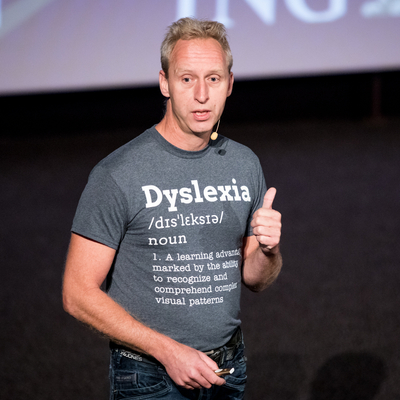
Pieter van der Meer
Engineer @ Dataworkz
Amsterdam, The Netherlands
Actions
Engineer at Dataworkz and a proud dyslexic, passionate about turning raw data into real-world value. I blend deep technical know-how (data pipelines, streaming, cloud, algorithms) with a pragmatist’s mindset, creativity, and a dash of humor — because good ideas come quicker when people enjoy the journey. I make complex topics approachable, whether exploring legacy space‑tech algorithms or building modern AI systems. Outside of coding, I’m an avid sailor, photography enthusiast, and hands-on tinkerer, always curious and experimenting. For me, code is more than logic — it’s a tool to shape ideas, solve problems, and inspire collaboration, while my personal style keeps talks lively and relatable.
Area of Expertise
Topics
Agentic AI: From the Trenches — What Most Talks Skip
Large language models (LLMs) increasingly power sophisticated agents that extract information, orchestrate tools, and solve tasks autonomously. Most AI talks focus on LLM reasoning or tool use, skipping the crucial orchestration layer that actually makes agentic systems reliable.
In this session, we dive into the trenches. We’ll introduce the MCP Protocol (Model-Context-Protocol), the orchestration engine driving agentic solutions, then walk through the architecture and key code patterns of a lightweight MCP Server implementation. You’ll see how the server routes reasoning, triggers tools, handles errors, and enforces guardrails. Along the way, we’ll cover real-world engineering trade-offs, common pitfalls, and best practices. By the end, you will not only understand why agentic AI works, but also how to implement it yourself, bridging the gap that most talks skip. If you’re responsible for creating autonomous assistants, orchestrated pipelines, or next-gen AI agents, this session gives you both the concept and the code to get started.
Decoding the Cosmos: Voyager's 1970s Algorithms Meet Today's Cutting-Edge Tech
In the 1970s, disco ruled, slide rules guided engineers, and pocket calculators were cutting-edge. Amid this, NASA built Voyager’s data systems—designed to transmit signals across billions of miles and survive deep space noise.
Today, we’re still decoding those signals. This talk dives into how Voyager’s 1970s-era coding—crafted without modern tools—intersects with today’s tech. We’ll explore the Viterbi algorithm, a marvel of its time, and contrast it with modern machine learning.
This isn’t just history—it’s a journey into the evolution of algorithms. Expect real examples and live demos of encoding and decoding using both vintage and cutting-edge methods. Whether you’re a developer, data scientist, or space tech fan, you’ll leave with new insights, big “wow” moments, and a deeper appreciation for the fusion of retro engineering and next-gen innovation.
Certificates and encryption; All you need to know, but...
Certificates are everywhere: in between; on the server; and even on your own devices. Even the people who don't know what a certificate is, still look for the lock in the address bar. And if they don't, they should. For people working with certificates daily, "Zero Trust" is something that is a standard that has been around since TLS 1.0, not a new buzzword.
When explaining to someone what that lock in the address bar actually means is something you probably need to be working with certificates daily, just to know what that lock actually portrays. For getting from a simple unsecured http connection to a https connections using a certificate that is not self signed used to be a lot harder than it is now. Or is it?
Do you know the difference between TLS and SSL, http and https or even mTLS. Not to mention async vs sync encryption with RSA, DES? If yes no need to join this talk, all others are invited to explore the wonderful world of security and encryption.
Rethinking Dyslexia: Is It Really a Superpower?
Dyslexia is usually talked about in terms of what it makes difficult: reading, spelling, writing, and sometimes learning in a traditional classroom.
But that's only one side of the story.
I'm dyslexic myself, so this is something I've experienced first-hand. I've spent plenty of time struggling with things that seem ridiculously easy to other people, while at the same time finding that I often approach problems, ideas, and situations in ways that seem quite different from those around me.
People with dyslexia often experience the world a little differently. Some of the same things that can make reading difficult can also show up as strengths in areas like seeing the bigger picture, making unexpected connections, solving problems, and coming up with ideas.
In this talk, I'll take a closer look at what dyslexia actually is, what we know about the science behind it, and what it can feel like to experience the world with a dyslexic brain. I'll also challenge some of the assumptions we tend to make about dyslexia—and share a few things that might surprise you.
This isn't about pretending that dyslexia is a superpower. It can be frustrating, exhausting, and genuinely difficult, especially in environments that are built around one particular way of learning and working. I've experienced plenty of that myself.
But it can also come with a different way of looking at things. And when that difference is understood and supported, it can become a real strength.
We'll look at what that can mean in practice, whether you're dyslexic yourself, work with someone who is, teach students, or simply want to understand dyslexia a little better.
My hope is that you'll leave with a more complete picture of dyslexia—not just as something that makes certain things harder, but as a different way of processing and making sense of the world. And, hopefully, you'll understand a little more about the way people like me see it.
We've Seen This Before
Everyone wants to work with the latest and greatest technology. New frameworks show up every week, AI is going to change everything, and every conference seems to be announcing the future.
As one of the older engineers on many of the teams I’ve worked with, I sometimes find myself smiling at all of this. Not because the technology isn’t exciting—it is—but because quite a lot of it feels strangely familiar.
Underneath the new frameworks, shiny interfaces, and impressive AI demos are ideas that have been around for decades. Algorithms, networking, databases, distributed systems, compilers, operating systems… most of the fundamentals aren’t new at all. The names change. The tools change. The problems we run into often don’t.
And knowing a little bit about where these ideas came from is surprisingly useful. It helps you understand why things work the way they do, where they're likely to break, and what might actually be going on when the dashboards turn red and everyone starts staring at logs.
This isn't meant to be a history lesson. It's more about looking at some of the technology we think of as cutting edge and discovering that we've been here before—sometimes 10, 20, 30, or even 50 years ago.
We'll look at some of the older ideas hiding inside today's newest technologies, and why those ideas are still relevant. Because sometimes the best way to understand what's coming next is to take a quick look at what came before.
And maybe the most useful upgrade isn't a new framework at all. Maybe it's knowing a little more about how the old ones worked.
TEQnation 2023 Sessionize Event
Please note that Sessionize is not responsible for the accuracy or validity of the data provided by speakers. If you suspect this profile to be fake or spam, please let us know.
Jump to top