

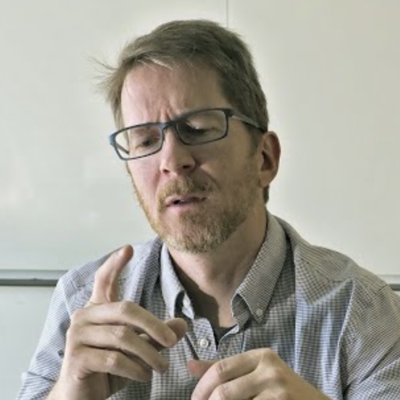
Rob Koch
Senior Principal, Data + AI @ Slalom
Seattle, Washington, United States
Actions
A tech enthusiast who thrives on steering projects from their initial spark to successful fruition, Rob Koch is Principal at Slalom Build, AWS Hero, and Co-chair of the CNCF Deaf and Hard of Hearing Working Group. His expertise in architecting event-driven systems is firmly rooted in the belief that data should be harnessed in real time. Rob relishes the challenge of examining existing systems and mapping the journey towards an event-driven architecture. With a versatile skill set encompassing software development, database management, Kubernetes orchestration, security protocols, data analytics, and enterprise architecture, Rob has worked across various industries, including energy, healthcare, finance, insurance, marketing, telecommunications, and the nonprofit sector.
Area of Expertise
Topics
Empowering Accessibility Through Kubernetes: The Future of Real-Time Sign Language Interpretation
Communication barriers exclude millions of people from fully participating in everyday interactions. For the deaf and hard-of-hearing community, the absence of scalable, real-time sign language interpretation remains a persistent challenge. In this session, we will demonstrate a forward-looking AI-powered application that translates sign language into spoken language, deployed and orchestrated on Kubernetes. This application leverages generative AI (LxMs) to scale for multiple users, representing a step toward a future where communication is accessible to all.
Using the sign language translation use case, the session will demonstrate how Kubernetes is well positioned to support AI workloads, how it optimizes cluster resources for video and language processing, and how it integrates seamlessly with generative AI use-cases.
Empowering Accessibility Through Kubernetes: The Future of Real-Time Sign Language Interpretation
Communication barriers exclude millions of people from fully participating in everyday interactions. For the deaf and hard-of-hearing community, the absence of scalable, real-time sign language interpretation remains a persistent challenge. In this session, we will demonstrate a forward-looking AI-powered application that translates sign language into spoken language, deployed and orchestrated on Kubernetes. This application leverages generative AI (LxMs) to scale for multiple users, representing a step toward a future where communication is accessible to all.
Using the sign language translation use case, the session will demonstrate how Kubernetes is well-positioned to support AI workloads, how it optimizes cluster resources for video and language processing, and how it integrates seamlessly with generative AI use-cases.
Sign language recognition Improvements since the London keynote
Before we were identifying static signs, but since sign language is dynamic and has spatial properties, there is a need to capture motions and create inferences from there.
Why Allyship Matters and Your Role in Creating a More Diverse Cloud Native Community
Despite many DEI initiatives, diversity in open source is still lacking. That's not only bad for underrepresented groups, it's also bad for OSS (studies have shown time and again that diverse teams produce better outcomes). While there isn't much you can do about the industry's hiring practices, you can help make a difference!
As companies scale back on DEI efforts, community-driven change becomes essential—and that’s where allies come in. Minorities are, by definition, in the minority, and their advocacy alone has limits. Allies have the power to amplify underrepresented voices, raise awareness among peers, and advocate for change. When allies take a stand for inclusivity, accessibility, and ethical responsibility, they hold the power to influence the industry's values and priorities.
Join this panel with CNCF Deaf and Hard of Hearing WG members to learn how you can drive meaningful change and contribute to a more diverse, inclusive, and innovative open-source community.
Building the Composable AI Platform: From Hype to Production Reality
The promise of a composable AI platform is powerful: assemble best-of-breed tools to empower data scientists and AI engineers. The reality is often a path filled with hidden complexities, integration friction, and operational nightmares that pit innovation against stability.
This panel moves beyond the hype to share real-world lessons from the trenches. We will tackle the central conflict: How do you provide flexibility for ML experimentation without sacrificing the security, governance, and reliability required for production?
Join us to explore the successful patterns—and painful anti-patterns—for building these platforms. You'll leave with practical, unfiltered advice on what it truly takes to bridge the gap from an architectural dream to a production reality that works for everyone.
Bringing Teams Together: Empowering AI with Kubernetes (and Vice Versa)
AI is at the forefront of the tech industry. It's a field that encapsulates so many techniques and technologies across the entire tech stack. From the compute, storage, security, and networking layers to the data, visualization and application layer.
As a platform for infrastructure automation, Kubernetes plays a vital role in the AI space. Many companies use it to power their AI applications.
Yet it might sometimes feel that there is a disconnect between those operating kubernetes and those building AI apps on top of it.
In this talk we will try to demystify key terms in both worlds. We are aiming to educate both audiences on the other side's jargon. Audience will come out of this talk with a good understanding of what the other side means when they talk about their layer.
AI and ML: Let’s Talk about the Boring (Yet Critical!) Operational Side
As AI and ML become increasingly prevalent, it’s worth looking harder at the operational side of running these applications. We need a lot of compute and access to GPU workloads. We also need to be reliable, while providing rock-solid separation between datasets and training processes. And we need great observability in case things go wrong and must be simple to operate.
Let's build our ML applications on top of a service mesh instead of spending resources reimplementing the wheel – or, worse, the flat tire.
Join us for a lively, informative, and entertaining look at how a service mesh can solve real-world issues with ML applications while making it simpler and faster to actually get things done in the world of ML. Rob Koch, Principal at Slalom Build, will demonstrate how you can use Linkerd together with multiple clusters to develop, debug, and deploy an ML application in Kubernetes (including IPv6 and GPUs), with special attention to multitenancy and scaling.
Accessibility at KubeCon: Deaf Voices in Cloud Native
Never met a deaf person at a conference? That is not surprising. While there are lots of deaf engineers, until recently, most conferences — and virtually any other community activity — haven't been accessible to deaf community members. But for KubeCon, that all changed exactly a year ago!
During this discussion, deaf panelists from various countries will shed light on their unique experiences being deaf in tech and the impact that making KubeCon accessible has had on their lives and hopes for the future. Attendees will learn why the technology space is a great fit for deaf individuals, the benefits and opportunities deaf professionals bring to the table, and what it takes to be an accessible and welcoming community. Panelists will also debunk common misconceptions and empower *you* to take steps toward a more inclusive cloud native ecosystem.
Databases aren't a good store these days
This session will introduce real-time streaming patterns by introducing the concepts of static databases; and make the conference-goer think and dream in streams.
Introducing event-driven architectural patterns
This session would help you understand what the rage is all about with event-based patterns and help transform your thinking to better integrate your systems.
partcipation & discussion is encouraged
Please note that Sessionize is not responsible for the accuracy or validity of the data provided by speakers. If you suspect this profile to be fake or spam, please let us know.
Jump to top