
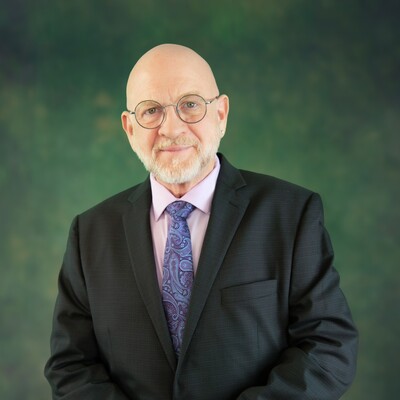
Dr. Roderick Logan, DPTh, FAAETS
Making Space to Heal, Founder, CEO
Phoenix, Arizona, United States
Actions
Dr. Roderick Logan is the founder of Making Space to Heal. He guides individuals and leaders who are living between worlds, especially those navigating religious trauma, identity disruption, and the long work of rebuilding trust and coherence after spiritual harm. His work is grounded in a salutogenic orientation that focuses on the origins of health and resilience, and it is shaped by a companion stance: he does not rush people toward false arrival. He dwells in the third space with them and helps them name what others have missed or dismissed.
Dr. Logan holds a Doctorate in Practical Theology and a Master’s in Counseling. He is a Fellow with the American Academy of Experts in Traumatic Stress. With more than four decades of experience in trauma-informed care and resilience building, he has been recognized with the Arizona Aging Services Star Award for Innovation by the Arizona Department of Economic Security.
He is the author of three powerful works, "I Was Loved: 10 Statements I Hope My Child Can Say About Their Childhood,” “Finding Everland: When Religion Wounds: A Psalm Journey to Healing and Wholeness,” and “The Coherent Rhythm of Care: Wellness and Wholeness for Those Who Serve Others.” Dr. Logan and his wife, Melody, have been married for 47 years. They share a family legacy of three children and eight grandchildren, alongside a professional legacy of helping others restore dignity, agency, and a sustainable path forward.
Area of Expertise
Topics
Emotional Intelligence in Parenting
This interactive workshop empowers parents to develop and apply emotional intelligence skills in their daily parenting journey. Participants will learn practical strategies for understanding and managing emotions within their family dynamics using the innovative Logan PEER Model (Perception, Expression, Emulation, Regulation).
The workshop combines theoretical knowledge with hands-on exercises, role-playing scenarios, and group discussions to ensure participants can immediately implement these techniques at home. Designed for parents of children of all ages, this course provides a supportive environment for learning and sharing experiences with other parents.
Participants will leave with a comprehensive toolkit of emotional intelligence strategies, personalized action plans, and ongoing resources to support their family's emotional development journey.
This workshop is designed for:
- Parents and caregivers of children aged 2-18
- Guardians seeking to improve their emotional connection with their children
- Family members interested in developing better emotional communication skills
- Professionals working with families who want to understand the PEER model
You don't need prior experience with emotional intelligence concepts. Participants should be willing to engage in interactive exercises and group discussions.
Note: While the workshop content is adaptable to various parenting situations, it is most beneficial for those who can commit to consistently implementing the strategies in their daily interactions.
Fathering the Traumatized Child
The workshop is focused on fathers and those in the role of the father figure. In a world where more than 16% of adults report having four or more adverse experiences in their childhood, it is incumbent on fathers to expand their awareness and skills for preventing these experiences and being empathetic witnesses when adversity does occur. For children in at-risk populations, that percentage can climb upwards beyond 40%.
Fathering the Traumatized Child takes an asset-focused approach to fathering. It presents three basic principles of trauma-informed fathering and fifteen targets on which fathers can focus their attention for meaningful and purposeful actions. In this presentation, fathers and father figures will come away with a renewed sense of wellness and wholeness, the incremental increase of their child’s capacities and competencies to live resiliently.
Foster Parenting Through a Trauma-Informed Lens: The Expectations You Were Not Told About
This comprehensive course explores the complex realities of foster parenting through a trauma-informed perspective, offering essential insights often overlooked in standard training. Designed for both new and experienced foster parents, this resource bridges the gap between traditional foster care preparation and the neurobiological, emotional, and practical challenges of caring for children who have experienced trauma. Learn evidence-based strategies, understand the science behind trauma responses, and discover how to create healing environments that promote resilience. Written with compassion and scientific rigor, this guide will help you transform your fostering approach while supporting your growth and emotional well-being.
This course is designed for:
- New and experienced foster parents seeking a deeper understanding of trauma-informed care
- Foster care professionals and agencies looking to enhance their trauma-informed training programs
- Support workers, social workers, and therapists who work with foster families
- Prospective foster parents wanting to build a strong foundation before beginning their journey
The content is particularly valuable for those who:
- Feel overwhelmed by unexpected challenges in foster parenting
- Want to understand the science behind trauma responses
- Seek practical, evidence-based strategies for supporting traumatized children
- Are committed to personal growth and developing trauma-informed parenting skills
From Stolen Joy to Sacred Legacy (keynote address)
This keynote equips participants to break generational trauma patterns by reclaiming authentic joy stolen through religious abuse. Attendees learn practical frameworks for rebuilding capacity for delight, transforming personal recovery into a family legacy. Religious trauma systematically suppresses genuine emotion, leaving people unable to model joy for their children. This session addresses that wound directly, offering people permission to reclaim their laughter and evolve from victims of spiritual abuse into agents of generational healing. Attendees gain a salutogenic framework—comprehensibility, manageability, meaningfulness—for understanding how joy was stolen and how to rebuild it. They discover that reclaimed laughter becomes sacred resistance, testimony that abuse does not determine destiny. Men and women alike learn that their authentic delight gives children permission for theirs. Participants leave with concrete practices: identifying personal sources of genuine joy, distinguishing past danger from present safety, building daily experiences of delight, and creating family cultures where laughter flows freely. The session transforms abstract recovery concepts into actionable steps that shift family legacy from inherited trauma to authentic connection. Attendees gain confidence that capacity for joy survives trauma, that healing is possible, and that their children can experience the freedom they are learning to reclaim.
I Was Loved and Other Things I Hope My Child Can Say About Their Father
This is a thoughtful workshop for fathers seeking to nurture a close, loving, and flourishing relationship with their children and family. The workshop introduces ten statements that serve as practical actions for children in their adult years to be optimally resilient and reflect fondly on their father. From these specific insights, fathers will find direction for raising children who feel safe and secure, encouraged to explore potential and learn, who feel heard and seen, and whose emotional struggles have an empathetic witness.
I Was Loved directly responds to the question, “How can I help my child be ready to face challenges and adversity with confident resiliency?” Fathers will be given a practical starting point for raising their young children or rebuilding relationships in the aftermath of conflict. This workshop is asset-focused, relationship-building, and easily digestible. Those implementing these strategies will experience an increase in their nurturing capabilities.
Drawing from his deep understanding of salutogenics, Dr. Roderick Logan underscores that parental love is more than a feeling, it is a series of intentional actions that shape a child's self-perception and worldview. His message is clear: well-loved children are likelier to grow into emotionally healthy adults. This workshop offers fathers profound emotional support and understanding in their child-rearing journey, helping them feel less alone and more understood.
In addition to the lecture, the workshop offers a 10-chapter book as a resource that includes worksheets to help fathers begin implementing the salutogenic concepts. Whether a new father or one seasoned from experience, I Was Loved is a guide toward creating a loving and supportive environment for children.
I Was Loved: Nurturing Resilience Through Positive Parenting
This workshop centers on the day’s theme “This One Moment,” emphasizing mindful presence and intentional connection in our caregiving relationships. Designed for parents, professional caregivers, and family service providers, this session delivers evidence-based strategies to reduce adverse childhood experiences while building resilience through the transformative power of being fully present with children. The "I Was Loved" framework equips participants—whether biological parents, foster caregivers, social workers, or childcare professionals—with practical tools to communicate love and build secure attachments in the present moments that matter most. Professional caregivers will discover how to apply these principles within their specific practice settings, recognizing that healing and resilience emerge not from grand gestures but from the accumulation of attentive, loving moments. Attendees will gain a comprehensive understanding of the connection between feeling genuinely loved and childhood resilience, along with methods for demonstrating love effectively in both routine interactions and challenging caregiving moments. Participants will leave with personalized action plans that honor their unique caregiving contexts—whether parenting their own children or serving children professionally—receiving concrete strategies to create environments where children experience the consistent, present love necessary to become resilient adults.
Reclaiming Faith, Hope, & Love: Finding Everland After Religious Trauma
This workshop aligns with the “Embrace & Evolve” theme by guiding participants to **embrace what has been stolen by religious trauma** and **evolve toward sustainable healing** through a salutogenic, health-building framework. Drawing from the core arc of *Finding Everland*, the session follows four movements that mirror recovery: **foundations (orientation), crisis and lament (disorientation), trust rebuilt (new orientation), and integration (thriving and service)**.
Designed for mental health professionals, social workers, counselors, faith leaders, family program providers, childcare professionals, and parents, this workshop equips participants to recognize how spiritual language and authority can be weaponized, and to respond with practices that restore dignity, agency, and relational safety. Participants will learn to interpret recovery through a **Hebraic lens of path, teaching, and life**: *derekh* (path), *torah* (teaching as life-giving instruction), and the ongoing choice toward *chayyim* (life). The goal is not escapism, but “Everland”: a grounded way of being that is authentic, resilient, and sustainable in the world as it actually is.
Participants will:
- Identify common patterns of religious harm that steal voice, choice, and trust.
- Use salutogenesis to map movement from depletion toward health, coherence, and capacity.
- Practice a structured approach for supporting lament without rushing to resolution.
- Build a practical resource map that strengthens comprehensibility, manageability, and meaningfulness for diverse clients and families.
- Develop language for helping people reclaim a life-giving spirituality, or set a healthy distance from faith practices that remain unsafe.
Attendees will leave with a clear stage-based framework, trauma-informed and salutogenic interventions they can apply immediately, and a strengthened ability to support others in rebuilding a stable path forward after religious trauma.
27th International Families and Fathers Conference - Next Generation Sessionize Event
26th International Families and Fathers Conference Sessionize Event
Please note that Sessionize is not responsible for the accuracy or validity of the data provided by speakers. If you suspect this profile to be fake or spam, please let us know.
Jump to top