
Session
Radicalisation Has Entered the Chat: Can a Bot Talk Someone Out of the Manosphere?
The manosphere is more than a collection of misogynistic online content. It’s a network of subcultures with their own language, hierarchies, identities and explanations for why the world is the way it is.
In incel communities, grievance, fatalism and hostility towards women can become embedded in a shared worldview, with consequences that reach far beyond the screen: isolation, depression, violence and suicide.
Understanding how people get drawn into these communities means looking beyond the words they use to the social dynamics and beliefs that give those words meaning. A list of offensive words only gets you so far.
Now consider what happens when these conversations move into AI. Companions designed to be endlessly available, patient and engaging raise difficult questions about what happens when someone brings increasingly hostile beliefs into a conversation with a system that may struggle to understand the social context behind their words. Meanwhile, platforms try to moderate harmful content, and communities develop new vocabulary to express ideas that automated systems may fail to recognise.
That presents two related challenges for AI safety: how do you recognise harmful ideological patterns without mistaking unfamiliar language for harmful intent? And could conversational AI do more than detect the problem? Could it help interrupt the trajectory towards increasingly harmful beliefs?
To investigate, I built a multi-agent AI safety system combining coded-language detection with conversational interventions. Across 180 simulated conversations, I tested different approaches to challenging entrenched beliefs and evaluated how those beliefs appeared to shift over time.
In this talk, I’ll take you from the language and culture of incel communities to the engineering of an agentic system designed to do more than block a message. We’ll explore the trade-offs involved in deciding when and how a system should intervene, what the simulations showed, and what they couldn’t tell us. Because a change in someone’s words isn’t necessarily a change in what they believe.
Building AI that tries to influence human behaviour means understanding that behaviour first. And even if we can build a bot to argue with someone, we still have to ask: should we?
We spend a lot of time teaching AI to spot harmful content. But what happens when the problem isn't just what's being said, but the worldview behind it? Digital anthropologist and technologist Lianne Potter built a multi-agent AI system to investigate whether conversational interventions could interrupt harmful ideological trajectories. The results raise some awkward questions about language, belief, persuasion and whether we should be asking machines to change people's minds at all.
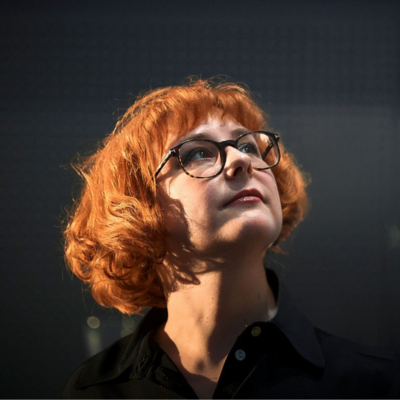
Lianne Potter
AI Security, Safety & Ethics Leader | Technologist & Digital Anthropologist | Co-Founder, NorthStar Intelligence
Leeds, United Kingdom
Links
Please note that Sessionize is not responsible for the accuracy or validity of the data provided by speakers. If you suspect this profile to be fake or spam, please let us know.
Jump to top