
Session
Escaping the Cloud Complexity Tax with Software Ideas from the 1970s
Your application started simple. Now you're implementing distributed locks in Postgres so your Kinesis consumer doesn't conflict with your Step Function, which is coordinating with your Azure Container App, while your GCP Pub/Sub messages pile up because the Kubernetes CronJob that processes them is fighting with an HTTP request over the same customer record. You've added three caching layers, two message queues, and a prayer.
Sound familiar?
Modern cloud applications demand more than ever - real-time updates, multi-device experiences, snappy APIs - and we've pushed that complexity onto infrastructure that wasn't built for it. Gall's Law tells us complicated systems grow from simple ones. That's how we got here. But there's a way out.
In this talk, I'll show you how the actor model - a programming paradigm from 1973 - solves problems you're still fighting today. You'll learn:
- Why "no one owns anything" is the root cause of your distributed system chaos
- How actors establish single ownership, eliminating distributed locks entirely
- Why state machines become trivial when actors process messages one at a time
- How entities interact through messaging instead of shared databases
- Why actors deliver single-digit millisecond latencies while running millions in parallel
The actor model isn't bleeding-edge tech - it's a battle-tested pattern used by WhatsApp, Discord, and countless financial systems to handle the complexity tax so you don't have to.
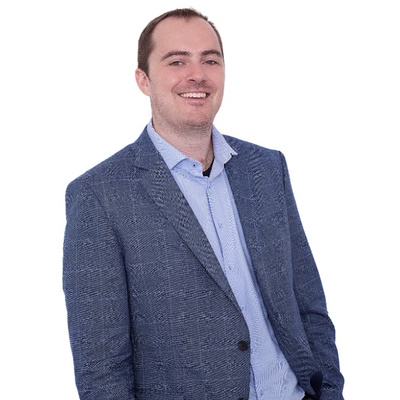
Aaron Stannard
Petabridge CEO, Akka.NET Founder, and .NET Contrarian
Houston, Texas, United States
Links
Please note that Sessionize is not responsible for the accuracy or validity of the data provided by speakers. If you suspect this profile to be fake or spam, please let us know.
Jump to top