
Session
How Does the User Experience This? A Front-End Journey from ARPANET to the Cloud
From text-only terminals, IBM-era spellcheckers, and Lynx browsers to complex, cloud-hosted web applications, the tools we use to build for the internet have radically transformed. Yet across three decades of evolving standards—table layouts, CSS resets, JavaScript frameworks, and mobile-first responsive design—one foundational engineering question has remained constant: How does the user actually experience this?
Drawing from over a decade of hands-on front-end development, remote engineering, and enterprise architecture, this talk takes a practical, reflective look at the history of web technology. We will trace how early constraints shaped modern web practices, explore the balance between design and developer workflows, and examine why accessibility, globalization, and user-centered thinking matter just as much when architecting back-end APIs as they do when building the UI.
Key Takeaways:
From ARPANET to the Modern Cloud: Tracing the evolution of markup, styling, and client-side execution from raw documents to interactive web apps.
Lessons from the Trenches: How developers historically solved layout hurdles (tables, transparent pixels, CSS box models) and what modern tooling can learn from those constraints.
Accessibility as a First Principle: Practical accessibility insights, from using text browsers like Lynx for screen-reader audits to designing inclusive interfaces for a global audience.
Bridging Design and Engineering: Integrating design thinking early into the software development lifecycle (SDLC) to reduce friction between design labs and production code.
The Core North Star: Applying a user-first mindset across the entire stack—from UI layout down to database schemas and API design.
Presented at Seattle Central Community College
Format: Standard Presentation / Breakout Session (30–45 min) Track: Front-End
Architecture / Web Development History / User Experience & Accessibility
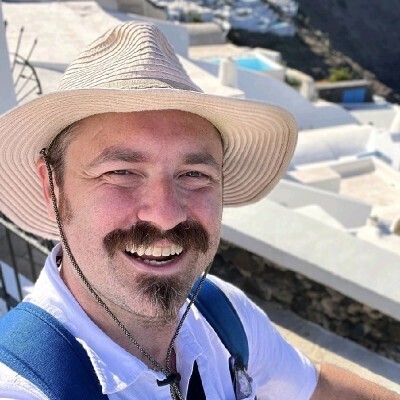
Aaron Bronow
Building robust software, resilient teams, and zero-nonsense architecture.
Seattle, Washington, United States
Links
Please note that Sessionize is not responsible for the accuracy or validity of the data provided by speakers. If you suspect this profile to be fake or spam, please let us know.
Jump to top