
Session
From Copilot to Colleague: Designing Human-Agent Teams That Survive Production
The move from copilots to agentic AI is not an incremental move, but a structural one. Agentic systems plot their own paths, act over long time horizons and are adaptive over time – meaning they become less like software and more like non-human teammates within what the report calls a Hybrid Multi-Agent System. That reframing is the whole talk. Once you see agents as teammates, the hard problems are no longer model-quality problems but coordination, trust, oversight, and accountability problems.
It’s genuinely hard for three reasons. First, a “jagged frontier” of capability means that agents are superhuman at some tasks and unreliable at adjacent ones, so you can’t just hand off whole functions. Second, three structural uncertainties—an agent’s path is unpredictable, its fluent output is not easily verifiable, and you cannot assume that it behaves the same way over time—mean that a human’s mental model of an agent is permanently provisional. Third, in multi-agent settings, these uncertainties compound into emergent failures (cascading errors, coordination loops, privilege chaining), which is why fully autonomous agent swarms routinely fail and must be human-orchestrated.
The evidence base is real but patchy, and the talk is upfront about it: field experiments such as Pairit show real productivity gains (+50% per worker) as well as real costs (a verification-overhead tax, a de-skilling risk), while vendor case studies are cherry-picked success stories. The sobering base rate is Gartner’s 40%+ cancellation forecast, and the differentiator between survivors and casualties is organisational discipline: define success before you write code, fix the data foundation first, instrument everything, gate autonomy by blast radius and treat the workforce transition as seriously as the technical one. The now-binding reality of regulation overlays this: the EU AI Act classifies most enterprise agents as high-risk, the deployer carries the liability, and the same technical controls that enable agents to function are also compliance proof. The bottom line is that the deployment playbook isn’t best-practice advice. It’s risk mitigation and it’s how you address the 40%.
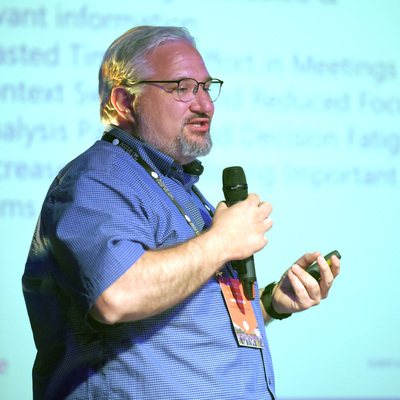
Christopher May
Global Agile & DevOps Coaching CoP Lead - Avanade Deutschland GmbH
Berlin, Germany
Links
Please note that Sessionize is not responsible for the accuracy or validity of the data provided by speakers. If you suspect this profile to be fake or spam, please let us know.
Jump to top