
Session
Stop Predicting, Start Preparing: The Antifragile Agile Playbook
The Agile movement was formed to free software development from the rigidity of Waterfall methodologies. Now it is itself in a paradoxical crisis. After 20 years of popularization many organizations are suffering from “Agile Hangover,” a ritualistic commitment to processes that yield marginal velocity gains but do little to address systemic fragility. Management orthodoxy still prizes ‘efficiency’ (reducing waste and variance) above all else. But the recent volatility in global markets and increasing complexity of distributed technical systems has exposed a critical flaw in this worldview: systems optimized for stability and maximum utilization are brittle. These efficient systems do not collapse in the face of the disorder of the real world, ‘Black Swan’ events, sudden market shifts or infrastructure outages.
In her talk “Stop Predicting, Start Preparing: The Antifragile Agile Playbook”, she argues that the future of Agile needs to be beyond resilience (surviving under stress) and towards antifragility (getting stronger under stress). This session radically reorders the organization's priorities, using risk engineering frameworks from Nassim Nicholas Taleb, "Slack" management theories from Tom DeMarco and "Chaos Engineering" practices from Netflix. We argue that the Agile leader’s goal is not to eliminate volatility but to domesticate it. Forget the defensive “fault tolerance.” Embrace the aggressive “learning from chaos.” Unpredictability becomes an organizational competitive advantage.
In this session, we will explore three critical pillars of the Antifragile organization. We first discuss the need for “Slack” (the intentional holding of unused capacity) as the mathematical prerequisite for responsiveness and innovation. Secondly, we consider “Chaos Engineering” to be both a technical practice for SREs, and a cultural management approach. We also employ “Process Game Days” to stress-test decision-making hierarchies. Third, we prefer “Mission Command” (Auftragstaktik), a decentralized leadership style that prevents the freezing of top-down control in crises. Attendees will leave with a full toolbox of ways to introduce controlled stressors into their teams and build a culture where systems, processes and people grow stronger with every shock they endure.
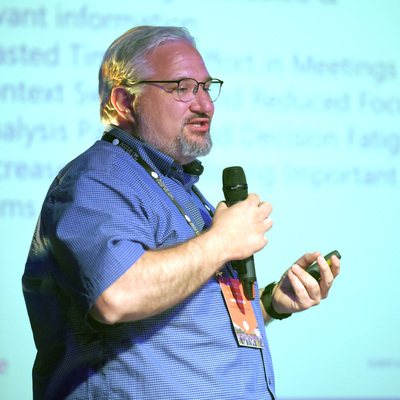
Christopher May
Global Agile & DevOps Coaching CoP Lead - Avanade Deutschland GmbH
Berlin, Germany
Links
Please note that Sessionize is not responsible for the accuracy or validity of the data provided by speakers. If you suspect this profile to be fake or spam, please let us know.
Jump to top