
Session
Deploying Medical AI on a Budget: What We Got Wrong
Here's the truth about deploying deep learning in healthcare: everything costs more and works less than you expect.
We built a system to generate radiology reports automatically because Africa has 1 radiologist per 1 million people. The model worked great in the lab: 0.347 BLEU-4, sub-60-second inference, published research. Then came deployment.
The actual challenges weren't the ones in papers. How do you collect 10,000 medical images when hospitals can barely afford IT? How do you handle bias when your dataset is 90% one condition? How do you deploy when the budget is $1,500 total? How do you convince doctors to trust predictions they can't explain?
This talk covers what actually worked: single GPU consumer hardware (no fancy cloud infrastructure), Streamlit for the prototype interface (because we needed something fast and simple), PyTorch with aggressive optimization (cutting everything that wasn't essential), and building attention visualisations doctors could actually interpret (not fancy academic stuff).
I'll share the uncomfortable decisions: shipping a Streamlit prototype because building a "proper" web app would take months we didn't have. Using a single model instead of an ensemble because inference time mattered more than 2% accuracy gains. Training on whatever data we could find rather than waiting for the "perfect" dataset that would never exist.
You'll see real architectures, actual costs, and honest trade-offs. No enterprise platforms, no vendor solutions, just what you can build with PyTorch, a GPU, and determination to ship something that works.
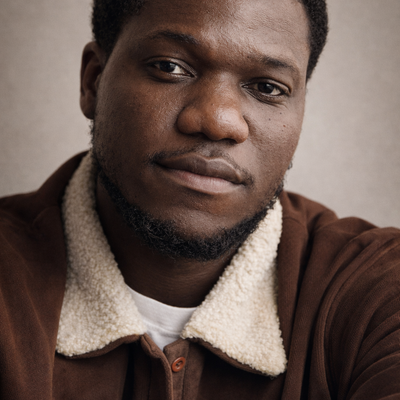
David Agbolade
Senior Data Scientist, | AI Researcher | SheerFit Founder
Birmingham, United Kingdom
Links
Please note that Sessionize is not responsible for the accuracy or validity of the data provided by speakers. If you suspect this profile to be fake or spam, please let us know.
Jump to top