
Session
The Leadership We Forgot - leading without authority
My father runs a farm in India. You might expect him to lead through hierarchy: he owns the farm, makes decisions and can tell others what to do. He certainly has that authority. Yet the farm does not succeed because people simply follow his instructions.
A farm is not a machine. Conditions change, knowledge is distributed and the people closest to the work often notice things first. My father cannot command the weather, centralize every decision or prescribe a response to every situation. He depends on trust, experience, relationships and the ability to create coordinated action. His authority may give him the final word, but it does not automatically give him the best answer.
Modern organizations often overlook this distinction. We have come to equate leadership with position, mandate and control. This can coordinate work when tasks and outcomes are sufficiently predictable. In complex environments, however, results also depend on learning, creativity and the willingness of people to contribute what they know.
Consider computer games. How can someone remain absorbed in a difficult game for an entire evening, yet struggle to focus during a one-hour meeting? Games do not engage us by removing difficulty. They combine challenge with agency, visible progress, rapid feedback and opportunities to develop mastery. When engagement at work is missing, organizations frequently respond by adding more control, thereby removing the very conditions that make engagement possible.
This talk explores two leadership logics: leadership through position and leadership through movement. It does not argue that authority is always wrong. It asks what becomes possible when leadership no longer depends on authority as its primary mechanism.
The Scrum Master embodies this second logic. A Scrum Master cannot command commitment, prescribe learning or order a team to become self-managing. The role creates impact by shaping conditions, revealing patterns and enabling others to exercise leadership. The future of leadership may therefore not be new. It may be a form of leadership we need to remember.
• Format: Interactive 60-minute session
• Level: Intermediate to advanced
• Character: Conceptual and reflective, grounded in a personal story and recognizable workplace situations
• Focus: Leadership, complexity, intrinsic motivation and the deliberately non-hierarchical position of the Scrum Master
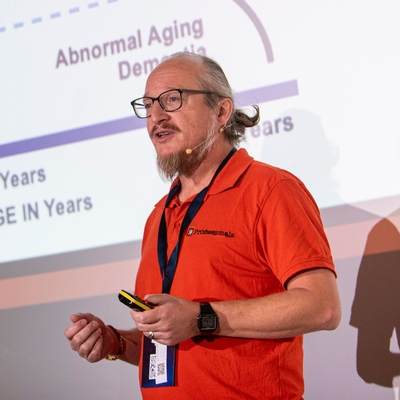
Erik de Bos
Agile Leader at Alliander
Amersfoort, The Netherlands
Links
Please note that Sessionize is not responsible for the accuracy or validity of the data provided by speakers. If you suspect this profile to be fake or spam, please let us know.
Jump to top