
Session
Fabric Artifacts as Code: Engineering Governed, Agentic Fabric Automation for SaaS Analytics
In a single-tenant shop, a clumsy semantic model is an annoyance. In a SaaS ISV with thousands of customers on shared Fabric capacity, it's a defect replicated thousands of times — opaque field names degrading Copilot, missing lineage breaking trust, a silent DAX bug shipping wrong numbers to every tenant, one runaway Spark job throttling them all. At ISV scale, manual data engineering doesn't add up — it multiplies.
This is the data-platform architecture that breaks that curve. We treat Fabric artifacts as source code — TMDL/TMSL/PBIR (the same tabular semantics as SQL Server Analysis Services) round-tripped through deterministic, testable cores — and automate the lifecycle end to end: Discover → Author → Audit → Modify → Publish → Govern, across a Lakehouse/Warehouse estate fed by Dataflows Gen2 and Data Factory.
Two pillars carry it. MCP: one server, ~35 typed tools mirroring a single service layer 1:1, so agents and humans share one capability set. Skills: versioned, governed capability packs (modeling, DAX, accessibility/BPA audits, domain-grounded metadata) that encode expert practice as reusable units — your best practices in tooling, not in three people's heads.
Then the parts that matter at scale: lineage and cataloging beyond basic Purview, data-quality gates, capacity governance, multi-tenant isolation, secret less identity, and "deterministic by default, agentic by preference" so a write to a customer's model is always safe.
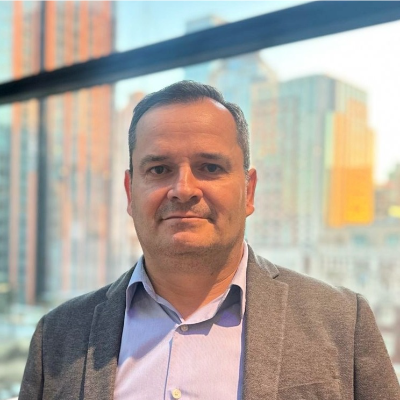
Harry Arce
Apps, Data & AI, Senior Digital Technical Specialist
San José, Costa Rica
Links
Please note that Sessionize is not responsible for the accuracy or validity of the data provided by speakers. If you suspect this profile to be fake or spam, please let us know.
Jump to top