
Session
Beyond Frameworks: Building Runtime-Agnostic AI Agents
AI agent frameworks are proliferating - Google ADK, LangGraph, OpenAI Agents SDK, CrewAI - each with distinct paradigms, tool interfaces, and deployment models. Meanwhile, tool integration standards like MCP (Model Context Protocol), memory solutions like mem0 and Supermemory, and observability platforms like LangFuse and Opik are emerging to solve interoperability, but adoption remains fragmented. Teams invest months building agents on one framework with tightly coupled memory, observability, and tooling systems, only to discover they need capabilities from another. The result? Rewrites, lock-in, and production delays.
This talk introduces a different approach: runtime-agnostic agent architecture. Instead of coupling agent logic to a specific framework, we separate what the agent does from how it executes. Write your agent once, run it on any engine and integrate tools and memory through standardized abstractions.
Drawing from AgentShip an open-source production layer for AI agents, we'll explore:
- **The Pluggable Engine Pattern**: An `AgentEngine` abstraction that enables swapping ADK for LangGraph (or future runtimes) without touching agent code
- **MCP Integration Layer**: Standardized tool discovery and invocation using Model Context Protocol, making tools portable across frameworks
- **Pluggable Memory Systems**: Abstracted short-term and long-term memory with support for custom implementations, mem0, Supermemory, or simple in-memory stores
- **Pluggable Observability**: Framework-agnostic tracing and monitoring with support for LangFuse, Opik, or custom observability backends
- **Declarative Agent Configuration**: YAML-driven definitions that eliminate framework-specific boilerplate
- **Unified Streaming & Sessions**: Consistent behavior across engines with three streaming modes and pluggable session storage
- **Agent-to-Agent Orchestration**: Hierarchical multi-agent workflows where sub-agents become tools
We'll demonstrate these patterns through an health AI assistant where a primary agent orchestrates five specialized sub-agents for conversation analysis, medical reports, and action tracking all running on interchangeable backends.
Attendees will leave with architectural patterns they can apply immediately, whether building new agent systems or refactoring existing ones away from framework lock-in.
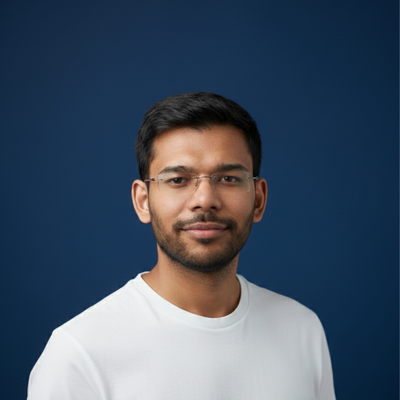
Harshul Jain
Audible, Senior Software Engineer
Newark, New Jersey, United States
Links
Please note that Sessionize is not responsible for the accuracy or validity of the data provided by speakers. If you suspect this profile to be fake or spam, please let us know.
Jump to top