
Session
How to quickly find memory bugs using [K]ASAN and Interpreting it's Shadow Memory report
Even today, memory bugs plague C/C++ developers, as these aren't managed languages and thus aren't memory-safe. For both user and kernel space developers, learning to, and actually using dynamic analysis tooling is critical in catching these defects. The Address Sanitizer (ASAN) Compile Time Instrumentation (CTI) approach proved so successful in userspace that it was ported to the Linux kernel as KASAN. However, interpreting its 'shadow memory' report is quite often ignored! Don't, as it's very useful! A quick tutorial - with a demo - on how exactly to do this is presented here.
As well, it's well known that the closer a defect's found to the developer's desk, the cheaper it is to fix; with [K]ASAN tooling, the chances of catching these deadly and insiduous bugs goes up. Make using them a part of your workflow!
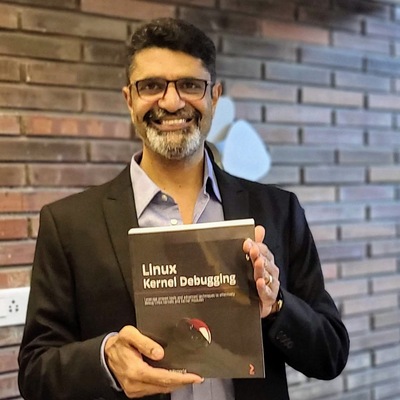
Kaiwan Billimoria
Linux Author, Trainer, Consultant
Bengaluru, India
Links
Please note that Sessionize is not responsible for the accuracy or validity of the data provided by speakers. If you suspect this profile to be fake or spam, please let us know.
Jump to top