
Session
Automate the Process, Not the Problem
Automation promises to save time, reduce costs, eliminate repetitive work, and help organizations operate more efficiently.
But there's a catch: automating an inefficient process doesn't necessarily make it a good process. Sometimes it just makes the same mistakes happen faster.
Organizations frequently invest in automation before examining why a workflow exists, how information moves between people and systems, or whether the process itself still makes sense.
The result can be a complicated collection of integrations, workarounds, and automated tasks that preserve the very inefficiencies they were supposed to eliminate.
In this practical session, Katerina Ford explores how organizations can approach automation as an opportunity to improve how work gets done—not simply replace manual steps with software.
Drawing on experience in business consulting, software development, systems integration, and workflow automation, Katerina demonstrates how understanding and improving processes creates the foundation for successful automation.
Participants will explore:
- How to identify repetitive work, bottlenecks, and unnecessary complexity.
- Why understanding the current process is essential before automating it.
- How to distinguish between tasks that should be automated, redesigned, or eliminated.
- The importance of clear ownership, accountability, and exception handling.
- How disconnected systems and manual handoffs create hidden operational costs.
- When simple workflow improvements outperform expensive technology solutions.
- How to evaluate automation opportunities based on business impact rather than technical novelty.
Through relatable business scenarios, attendees will examine how information moves through an organization, where work gets stuck, and how thoughtful process redesign can improve consistency, visibility, and efficiency.
The session emphasizes that successful automation isn't about removing people from the equation. It's about reducing unnecessary friction so people can focus on the work that actually requires their expertise.
**Before asking how to automate a process, ask whether it's the right process in the first place.**
**Target Audience:** Business owners, operations managers, department leaders, entrepreneurs, process improvement professionals, and technology decision-makers.
**Experience Level:** Introductory to intermediate. No programming experience required.
**Preferred Duration:** 45–60 minutes, including audience participation and Q&A. Adaptable to a 30-minute presentation or a 90-minute interactive workshop.
**Format:** Practical presentation with business workflow examples, process mapping concepts, and audience exercises.
**Technical Requirements:** Projector or screen for presentation slides, microphone for larger audiences, and optional whiteboard or collaborative workspace for workshop formats.
**Participant Takeaways:** A practical approach to identifying automation opportunities, evaluating existing workflows, improving processes before implementation, and measuring operational results.
**Customization:** Suitable for business associations, operations teams, entrepreneurship groups, technology conferences, and organizations exploring workflow automation or digital transformation.
**Focus:** Business process improvement and operational effectiveness rather than training on a specific automation product.
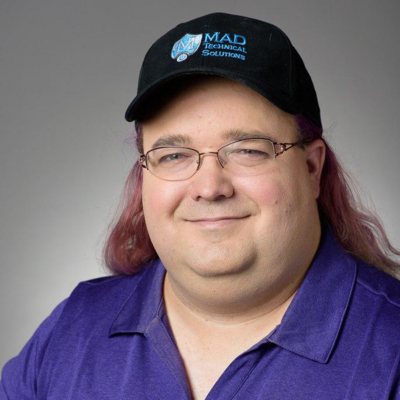
Katerina Ford
Business & Technology Leader | Helping Organizations Solve Real Problems Through Technology, Leadership, and Inclusive Collaboration
Las Vegas, Nevada, United States
Links
Please note that Sessionize is not responsible for the accuracy or validity of the data provided by speakers. If you suspect this profile to be fake or spam, please let us know.
Jump to top