
Session
When Every Architecture Decision Was Right — Why the System Still Suffers
Modern software architecture is better documented than ever.
We write Architecture Decision Records (ADRs), define quality goals, and follow established documentation frameworks — yet many systems still suffer from growing complexity, declining maintainability, and slowing delivery over time.
This talk challenges a common assumption with an uncomfortable thesis:
Most architectural problems are not caused by bad decisions,
but by the accumulation of many good ones.
Individual decisions are well reasoned.
They follow the rules.
They explicitly acknowledge trade-offs.
And still, over time, systems drift away from the very qualities they were designed to protect.
Why does this happen?
The talk argues that many architecture problems are emergent rather than local:
ADRs document decisions in isolation, while architectural quality is a global property.
Consequences are described, but rarely considered across multiple decisions.
Quality goals are stated explicitly, yet their gradual erosion often remains invisible.
Using realistic examples, the session shows how:
repeated, justified increases in complexity can lead to structural loss of maintainability,
architectures remain rule-compliant while silently degrading,
responsibility does not disappear, but becomes diluted over time.
This is not a tool talk and not a methodology pitch. Instead, it offers a way of thinking about architecture as a system of cumulative effects — and a language for discussing problems that cannot be traced back to a single wrong decision.
The talk is aimed at architects, senior engineers, and technical decision-makers who want to understand why “doing everything right” is sometimes not enough — and how to recognize architectural risk earlier without pretending to automate judgment or eliminate human responsibility.
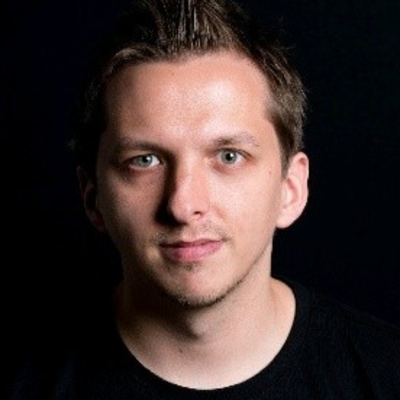
Maik Schöneich
Software Architect / Cloud Engineer
Herten, Germany
Links
Please note that Sessionize is not responsible for the accuracy or validity of the data provided by speakers. If you suspect this profile to be fake or spam, please let us know.
Jump to top