

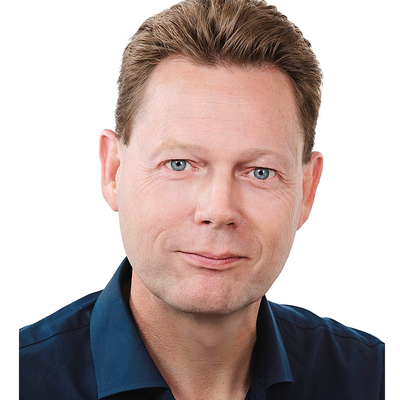
Marcel de Vries
Global MD & CTO Xebia Microsoft Services
Zutphen, The Netherlands
Actions
Marcel is the co-founder and Global MD & CTO Xebia Microsoft Services. Xebia Microsoft Services started as an individual company under the Xebia group in 2014 and provides high-end consulting services to companies on Microsoft Azure, DevOps, Cloud Native Software Development, and Managed Services.
Marcel spends most of his time working with organizations to deliver software to production multiple times a day in a secure and compliant way! He helps organizations and leadership teams move to become high-speed, innovative, and productive while still being secure and compliant.
Marcel loves to learn new technologies and use this to advance his customers. He shares his learnings at conferences and training. Marcel has the conviction the CEO title in technology companies should have a second meaning: Coding Executive Officer. This is driven by his strong belief that great leaders in tech need to be technical! Only by staying on top of technology, you can lead the way going forward.
Marcel is a frequently asked public speaker at well-known industry events like Microsoft //Build, Microsoft Ignite, Azure Lowlands, Visual Studio Live!, Techorama, and KCDC, to name a few.
Marcel is part of the Techorama board and helps organize this event in Europe. In his spare time, he also builds online courses for Pluralsight. You can find his courses here: https://app.pluralsight.com/profile/author/marcel-devries
Marcel has been awarded by Microsoft the Microsoft MVP award for more than 22 consecutive years and has been a Microsoft Regional Director since 2008. You can always contact him to talk about subjects like Cloud Adoption Strategies, Business Development, DevOps, Cloud Computing, Microservices, Containers, IaaS, PaaS, and SaaS.
Badges

Area of Expertise
Topics
Integrating AI into your existing applications using semantic kernel & C#
Semantic Kernel is an open-source SDK by Microsoft that helps you build AI-infused applications and agents. It enables developers to seamlessly integrate existing code with AI models from OpenAI, Azure OpenAI, and Hugging Face.
In this session, we explore how Semantic Kernel can help you in AI orchestration and give you the capabilities to create copilot-like experiences in your application.
We will go through some of the fundamental concepts needed to understand how to use Semantic Kernel and where it helps you with the automation of complex tasks by combining AI-generated responses with diverse programming languages. With Semantic Kernel, you can even allow an LLM to create a complex plan that can be executed locally, going far beyond what you might think LLMs can do.
The talk also highlights Semantic Kernel's extensibility, allowing the integration of memories, AI models, and plugins, making it a key player in the landscape of AI development.
Building cloud-native microservices with Dapr
Modern distributed applications require much more than just application logic. Features such as state management for services, communication using publish/subscribe messaging and event-driven binding to cloud resources might be needed. Dapr introduces a runtime to offer such building blocks, and is less invasive in your application, allowing you to pick and choose what you need. In this workshop, we will look at the approach that the Dapr runtime takes with a sidecar architecture, separating application logic from the Dapr runtime components. You learn to develop distributed applications in .NET using Dapr's features and, how to bind to messaging infrastructure and cloud resources.
Simplify Microservices development with Dapr
Dapr is a vendor and language-neutral Distributed Application Runtime build in open source, supported by the CNCF, that you can use to build Microservices solutions. In this session, I will show you what Dapr is, How it works, and how you can use it to build your microservices that are completely agnostic of vendor implementations for state management, pub/sub communication, secret management, observability, and secure and resilient communications.
Legacy Lift-off: Bringing your legacy .NET application into the modern cloud and AI age
In today's fast-paced digital landscape, legacy software can be a bottleneck to innovation and growth. Yet, a green field rebuild is hardly ever your best way to success. There is so much value in your existing system that can be salvaged and modernized.
Join us for a hands-on exploration as we delve into modernizing a legacy .NET Framework 4.8 / WinForms application for the cloud and AI age. Through a series of interactive modules, participants will learn essential skills such as deciphering legacy code using AI, transitioning to modern technology stacks, and implementing best practices for refactoring, performance, security, and quality assurance. To finish it off, we will infuse the application with some AI to make it smart and ready for the new era.
By the end of the workshop, we will have transitioned from a legacy .NET / WinForms application to a cloud-ready, AI infused web application with Blazor.
Hands-On Lab: Code to Cloud with GitHub
Join us for a full-day hands-on workshop exploring the exciting world of GitHub and Azure.
This day will cover DevOps Engineering, Site Reliability Engineering, and Platform Engineering. During this day, we will mix a lot of hands-on with the practical, theoretical background and real-life anecdotes we encounter as consultants every day when empowering DevOps teams.
In Module 1, participants will learn how to ensure a fast first-time commit by introducing themselves through a markdown file in their own GitHub repo. They will also experience the automation process that generates prerequisites for each attendee, including a GitHub Pages website, Azure resource group, web apps, an app service plan, and a repository with issues.
Module 2 focuses on getting up to speed with legacy code using CodeSpaces and Co-Pilot. Participants will familiarize themselves with a provided microservices e-commerce website and set up their IDEs to make changes to the code.
In Module 3, we dive into fearless refactoring, discussing the benefits of breaking up applications into a microservices architecture. Participants will build two features with the help of Co-Pilot and run the application locally in their CodeSpaces.
Module 4 delves into securing legacy code, covering secure development practices and introducing GitHub Advanced Security (GHAS). Participants will learn how to visualize, stop leaks, and fix vulnerabilities using branch protection, secret protection, CodeQL, and automated workflows.
In Module 5, we take the application to the cloud and beyond. Participants will deploy the application to an Azure resource group, incorporating OpenID Connect, secrets in GitHub Actions and creating a continuous deployment workflow. We will also explore observability, load testing, and deployment strategies for zero-downtime deployments.
Join us for this immersive workshop to enhance your coding skills and learn how to integrate GitHub and Azure for efficient code-to-cloud workflows seamlessly.
Github Actions in Action
So, you know the basics of GitHub actions, but how do I organize the Action Workflows so they are maintainable, use as few minutes as possible, save cost, and match the GitFlow branching strategy? This session will answer all these questions by showing a full end-to-end solution with multiple microservices in a mono repo while deploying individual services to a kubernetes cluster. We will go through cost and performance optimizations and ways to separate Continuous Integration from Deployments and Deployments from releases. This way, you will be able to release any moment of the day without interrupting your users.
Hands-on workshop GitHub Code to Cloud
In this Hands-on workshop we will teach you how to use all the great features GitHub has to offer. We will start with an overview how to come from Idea to Code by using GitHub Discussions, Issues, Pages and Wiki. Next we will move the idea's to code and start using the Git features. From here we dive in to the use of Branch Protection Rules, Code Owners, Actions for CI, CD and Deployments to the Azure Cloud. We will also have a look at how GitHub can help you in your Secure Development Lifecycle with Credential scanning, Package Vulnerability Scanning and Code Scanning to expose programming mistakes that might lead to vulnerabilities in the future. After this Hands-on workshop, you know what GitHub has to offer to you and your organization to implement Secure and Compliant DevOps with ease.
Microservices made easy with DAPR
In this session you’ll learn why you want to use the Dapr to simplify the development of a microservices application. I will discuss common challenges when building microservices and how Dapr can simplify many of these challenges by providing building blocks that implement industry best practices to the problems without any hassle and how dapr makes this all possible.
After this session, you’ll have the knowledge to decide if you want to use dapr to build your next microservices application, and how dapr works. You can then use this to incorporate dapr into an existing microservices application, or to use it for a brand new solution.
Workshop: Dapr for Building Distributed .NET Applications
Modern distributed applications require much more than just application logic. Features such as state management for services, communication using publish/subscribe messaging and event-driven binding to cloud resources might be needed. Dapr introduces a runtime to offer such building blocks, and is less invasive in your application, allowing you to pick and choose what you need. In this workshop, we will look at the approach that the Dapr runtime takes with a sidecar architecture, separating application logic from the Dapr runtime components. You learn to develop distributed applications in .NET using Dapr's features and, how to bind to messaging infrastructure and cloud resources.
DAPR the big picture
You might have heard of DAPR a microservices application framework. In this session, I will give you insights into what DAPR is, why you would like to use it and why it is smart to keep an eye on this technology and start applying it in your solutions now.
The Future of IT
Marc Andreessen described in his article in The Wall Street Journal in 2011: “Software is eating the world”. We have witnessed how software has become a core element that drives our economy and even our daily lives! Seeing that change, What is the future of IT? That is a fascinating question to ask but extremely hard to answer. Confucius said, “You need to study the past to define the future.” So, let's ask ourselves the following question: What has changed our society and industry in the past decades?
Let us take some historical events that changed our society and industry in ways we would never have expected.
If you look at the waves of change, what can we learn from them, and what are the implications for the way we can expect the future to unfold? How do these things impact us as human beings, and how do we deal with this constant rate of innovation and change?
By looking at all these changes and how we dealt with them, we might be able to see what is ahead of us.
Interestingly enough, patterns can be discovered that tap into human and organizational behavior, from which we can derive what, for example, the new wave of AI might bring us. In this session, I will share the patterns you can see when a new change surfaces and how we adopt this in our work. If there is one thing you will learn from this session, the future is nearer to your heart than you think.
This inspirational session will guide you through the waves of change in our industry and help you see and think beyond what you hear and see on all the information channels you tap into every day!
The knight of NIH ... a developer tale
Once upon a time, our industry was based upon innovation and renewal. Where brave developer knights built upon the ideas and dreams of others. But as it goes in every tale, we were struck by a curse. The curse of stubbornness... in this session, I will take a look at the history of our industry and how we have evolved in the field of software development. I show based on historic examples where we as an industry could have been and where we have chosen to be the knights of Not Invented Here making us build software over and over again while we could have advanced instead. This lightweight talk gives a perspective on our profession and hopefully will make you think twice next time when you think you need to build something yourself instead of looking at what is already out there and build on the shoulder of giants instead.
Secure and Compliant cloud delivery embracing DevOps
One of the most common challenges, when organizations move to the cloud, is getting an answer on how to do this in a secure and compliant way. This involves ensuring you set up your azure landing zones in such a way that you enable teams to deliver their solutions secure and compliant by default.
The cloud requires a completely different security model than what we are used to in the on-prem world. One important concept here is ensuring we build our cloud using a zero-trust model.
If it comes to compliance, there are many things to discuss. What does it mean to be compliant? In my work as a CTO, this is often covered by smoke curtains and vague use of terminology. But what are the fundamental concepts behind compliance and how do you achieve this in such a way you can still ensure maximum performance of your teams in delivery? This involved a high degree of automation and empowerment of your teams.
I will share what we learned over the years ensuring secure and compliant delivery for our customers. Many of those customers work in highly regulated environments like government, banks, and pharma.
Implementing Zero Downtime Application Deployments on Azure PaaS
How can I deploy my applications to Azure PaaS like Azure Web Apps and AKS without having any downtime? How can I automate this and how can I ensure my customers won't notice changes are happening, even when you need to update your database schema? In this session I will show you how to use Azure DevOps Build and Deployment pipelines to deliver your application to production many times a day while not interrupting your users.
From one release per quarter to 30 times a day
In this session I will take you along a journey where we have an existing legacy application that we will enable to be released multiple times a day.
I will teach you how to apply modern release techniques that enable you to move from long and tiresome release cycles to releasing multiple times a day. I will cover the fundamental concepts of DevOps that will enable multiple releases
a day. think of concepts like: Feature Toggles, Red/Green Deployments, Telemetry, Cloud technologies, deployment automation, etc. This session will learn you how
to release quality software any moment you want.
Writing Maintainable Test Automation
How well do you test your application or Web site? Are you still testing your applications or sites manually and does that take a lot of time? Do you find it hard to create and maintain automated tests for your applications? Have you created automated tests but do you find them hard to maintain? This session will teach you how to build maintainable automated test suites using various technologies like Selenium or Appium and integrate it with Microsoft Azure DevOps to give you a holistic view of your current sprint in terms of test completion and coverage.
In this session you'll learn to build test suites in such a way that they are maintainable by default. This session will introduce the concepts like: Page Objects, DRY and DAMP tests.
An Introduction to Service Meshes on Kubernetes
A service mesh is an infrastructure layer that allows you to manage communication between your application's micro services. As more developers work with micro services, service meshes have evolved to make that work easier and more effective by consolidating common management and administrative tasks in a distributed setup.
In this session I will show you how you can set up a Service Mesh on Kubernetes and run a Micro Services application written in .NET and C#. You will discover how we can utilize the service mesh to have different deployment strategies and ways to secure your communication between micro services.
Maintainable and Scalable End-to-End Test Automation with Playwright and Playwright Workspaces
Do you find it hard to create and maintain automated tests for your applications? Have you created automated tests but find them hard to maintain? Are you looking for ways to speed up and scale your test runs so you have faster results? This session will teach you how to build maintainable automated test suites using Microsoft Playwright Workspaces on Azure integrated into your CI/CD workflows. In this session, you'll learn to build maintainable test suites by default. It will introduce concepts like Page Objects, DRY, and DAMP tests. You will also learn how to apply these patterns to Playwright and use cloud services to scale up and speed up your tests.
how to use the patterns Page objects, DRY, DAMP and how to deploy this to Azure Playwright services on azure
Unlock the Potential of AI in Your Applications with Semantic Kernel
Semantic Kernel is an open-source SDK by Microsoft that helps you build AI-infused applications and agents in C#. It enables developers to seamlessly integrate existing code and applications with AI models from OpenAI, Azure OpenAI, and Hugging Face.
Enterprises use Semantic Kernel for its flexibility, modularity, and observability. It offers security features like telemetry support, hooks, and filters, ensuring responsible AI at scale. Designed to be future-proof, it allows easy integration with the latest AI models without rewriting the entire codebase when new models emerge.
In this workshop, you will explore how the Semantic Kernel can help you integrate AI capabilities into your applications. The workshop also highlights Semantic Kernel's extensibility, allowing the integration of memories, AI models, and plugins, making it a key player in AI development. The workshop is created so you can start with no experience and end the day with all the knowledge you need to embrace LLMs in your applications and even build full-fledged Agents that help you change the way your customers and users have ever interacted with your systems before.
Semantic Kernel is an open-source SDK by Microsoft that enables developers to integrate AI models into C# applications. This workshop covers how to use Semantic Kernel's features for extensibility and responsible AI. By the end, participants will have the knowledge to implement AI capabilities and build Agents.
Rethinking the Possible - Breaking Free with AI
When we look at AI, it seems it is not just another productivity boost; it’s a turning point. For developers, data professionals, and IT pros, the challenge is not how to do the same work faster, but how to rethink the work itself. In this keynote, we will look at where AI stands today, what it means for your role, and how embracing new ways of thinking can unlock real business impact. Don’t retrofit old habits, reimagine them! The future belongs to those who transform, not just automate.
Keynote session, used to inspire the audience to go out of their comfort zone and learn about how AI can transform their work
KCDC 2023 Sessionize Event
Live! 360 Orlando 2021 Sessionize Event
Visual Studio Live! Las Vegas & Austin 2020 Sessionize Event
Visual Studio Live! New Orleans, Boston & Microsoft HQ 2019 Sessionize Event
KCDC 2019 Sessionize Event
NDC Minnesota 2019 Sessionize Event
Please note that Sessionize is not responsible for the accuracy or validity of the data provided by speakers. If you suspect this profile to be fake or spam, please let us know.
Jump to top