
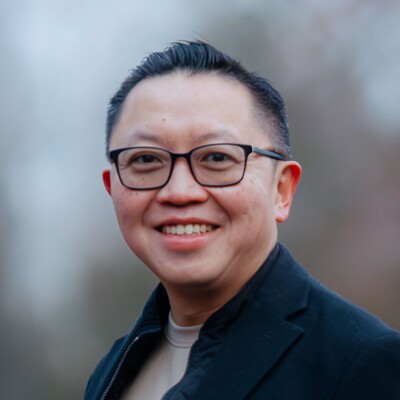
Dux Raymond Sy
Chief Transformation Officer, AvePoint | Closing the AI Trust Gap through Frontier Leadership | Microsoft RD & MVP
Arlington, Virginia, United States
Actions
Dux Raymond Sy helps organizations close the AI Trust Gap through Frontier Leadership: turning AI ambition into measurable business outcomes with trusted data, clear ownership, practical governance, and people ready to adopt new ways of working. As Chief Transformation Officer at AvePoint (Nasdaq: AVPT), he works with business leaders and partners to move AI beyond pilots and build the confidence to scale it responsibly.
A Microsoft Regional Director and Most Valuable Professional (MVP), Dux brings more than 20 years of experience across the cloud and AI ecosystem. His keynotes and interactive sessions connect business leadership with practical approaches to AI agents, Microsoft 365 Copilot, data governance, and sustainable adoption. He has spoken at Microsoft Ignite, Gartner Digital Workplace Summit, and industry conferences across North America, EMEA, and APAC.
Dux hosts the #shifthappens podcast, is the author of SharePoint for Project Management (O'Reilly Media), and created the LinkedIn Learning course How to Build Your Personal Brand. He writes for Fast Company and Reworked on AI leadership, digital transformation, and the future of work.
Born and raised in the Philippines and based in the Washington, DC area, Dux brings a people-centered perspective to technology and organizational change.
Area of Expertise
Topics
Systematic Evaluation of Enterprise AI Agents: From QA to Safety & Verification
As AI Agents increasingly participate in real-world enterprise workflows, traditional testing approaches — such as simple QA or manual validation — are no longer sufficient. Modern AI Agents contain autonomous capabilities: interpreting user intent, invoking external tools, and synthesizing multi-step actions. These characteristics require a systematic, quantifiable evaluation framework that not only measures correctness, but also robustness, safety, and trustworthiness.
In this session, we will explore how Microsoft’s Azure AI Foundry evaluation ecosystem helps developers build and validate reliable enterprise AI Agents. We cover practical patterns for designing evaluation pipelines that go beyond surface-level QA:
* Defining critical evaluation dimensions such as task success criteria, tool-calling correctness, reasoning validity, and security boundaries.
* Leveraging automated evaluators and benchmark frameworks to run large-scale tests across agent versions and configurations.
* Introducing red-teaming workflows where agents are adversarially challenged to uncover safety failures, injection vectors, and unexpected behaviors.
* Demonstrating how evaluation results can feed into governance processes, enabling better model and agent version decisions before production deployment.
Attendees will leave with concrete insights into engineering repeatable, measurable, and defensible testing strategies for AI Agents — bridging the gap from experimental prototypes to enterprise-grade solutions.
Takeaways:
1. How to structure agent evaluation beyond simple QA tests.
2. How to apply automated and adversarial evaluation to uncover hidden failure modes.
3. How to operationalize agent validation within an enterprise AI lifecycle using Azure tools.
How Frontier Leaders Scale AI Beyond Pilots: 5 Moves to Build Trust
Your AI pilot works. What needs to be true before you scale it?
Learn five practical moves to close the AI Trust Gap: measure business outcomes, name an accountable business owner, establish trusted data, put guardrails into the workflow, and model adoption through everyday leadership.
We’ll walk through practical examples of AI adoption, from promising pilots to decisions about scaling. Explore what happens when information becomes outdated, access is too broad, or decisions require human judgment. Learn how to assign ownership, define escalation, and evaluate business value and safeguards before expanding deployment.
Leave with a leadership checklist and a 90-day Decide–Build–Prove roadmap to choose one valuable workflow, establish ownership and safeguards, and evaluate results. Make a defensible decision to scale, change, or stop based on evidence.
The AI Trust Gap: Who Answers When Agents Act?
When an AI agent acts on our behalf, who answers for the outcome?
A working agent demonstrates capability. Trust requires something more: clarity about what it may do, who owns its decisions, and what evidence justifies giving it greater autonomy. The gap between those two is where developers and business leaders need to work together.
In this keynote, Dux Raymond Sy explores how to close the AI Trust Gap without losing the opportunity agents create. Through practical examples, he connects the engineering choices behind permissions, data, oversight, and recovery to the leadership decisions that make adoption possible.
His Frontier Leadership approach brings five moves together: measure outcomes, make ownership explicit, establish trusted data, set guardrails, and model adoption. Attendees will leave with three questions for their next agent launch: What are we trusting it to do? Who owns the consequences? What evidence earns it more autonomy?
The central idea: delegating work to AI makes human accountability more important.
Trust, But Verify: 3 Steps to Keep AI Agents in Bounds
Most organizations are confident in their AI strategy. Few can prove their AI agents are operating within intended boundaries. AI trust isn't about policies or approved tools. It's about continuously verifying that agents, copilots, and AI systems are governed, monitored, and controlled. Join Microsoft RD and MVP Dux Raymond Sy to learn a practical 3-step framework to discover, control, and monitor AI agents so you can reduce risk, strengthen trust, and scale AI with confidence.
KEYNOTE: Future Proof Your Data: A Blueprint for Microsoft 365 Copilot Success
The promise of Microsoft 365 Copilot offers tantalizing benefits, but realizing its full potential requires a robust data foundation to make sure that data quality and data security is in place avoiding irrelevant nor unsecured responses.
Don't miss this interactive keynote session where you will walk away with an actionable blueprint for a robust data foundation needed to drive Microsoft 365 Copilot success, both today and in the future.
Learn how to build AI trust through transparency and control, and accelerate ROI on AI investments, gaining confidence to get ready and adopt Microsoft 365 Copilot.
Agents Gone Wild: Governance Challenges Every AI Builder Must Anticipate
Agentic AI is changing how software behaves — agents don’t just respond, they act, decide, and operate autonomously across systems and data. That shift introduces a new class of risks that traditional security, compliance, and governance models were never designed to handle.
This session focuses on the real-world challenges that emerge when AI agents become active participants in the enterprise — from data overexposure and hallucinations to agent sprawl, unclear accountability, and governance blind spots. Rather than diving into code or promoting a specific platform, we’ll examine common failure patterns, lessons learned from early deployments, and the guardrails agent builders need to think about from day one.
Attendees will leave with a clearer understanding of:
Why every AI agent is effectively a new endpoint
Where governance breaks down as agents scale
What responsible agent design looks like in practice
How builders can balance autonomy, trust, and control without slowing innovation
This session is designed for AI builders, architects, and platform teams who want to move fast — without breaking trust.
How To Ensure Microsoft 365 Operational Governance & Sustainable Adoption
As we embrace the new normal and leaders tackle making hybrid work, big questions loom: What is the role of the office? How do we ensure remote meeting participants feel included? How can we maximize Microsoft 365 to collaborate confidently?
Join this interactive session and learn how you can establish a deliberate, thoughtful approach for ensuring operational governance and facilitating sustainable adoption of Microsoft 365 tools such as Microsoft Teams, SharePoint and Viva.
Gain insights on how you can activate your organization to embrace new cultural norms and leverage technologies designed for hybrid work – ensuring every employee can engage and contribute, regardless of where, when or how they’re working.
How to Ensure Operational Governance for Microsoft Teams
Microsoft Teams is revolutionizing the way companies across the globe are doing business. With simple one-step provisioning and built-in integration with the full Office 365 stack, it is easier than ever for end-users to create a Team and start collaborating.
But how can you prevent content sprawl, and ensure the right permissions and privacy settings are in place when most admin controls are out of your hands?
Join this interactive session and learn practical strategies for Microsoft Teams provisioning, establishing operational governance and ensuring information lifecycle management.
Drive Microsoft Teams Adoption: How to Make It Easy To Do The Right Thing
So you’ve made the decision to turn on Microsoft Teams – congratulations! Teams is one of the fastest growing business applications designed to boost collaboration and productivity. Get ready to revolutionize the way your organization is doing business!
But before you light up Teams for your entire organization, it’s critical to ensure to you have a solid governance strategy in place to ensure you’re striking the balance between effective collaboration and control. A well-governed Office 365 instance ensures security, managed information lifecycle and also lays the groundwork for a long-term sustainable adoption strategy. You want to make it easy for people to do the right thing – good governance precedes great adoption!
This interactive workshop will cover:
- How to leverage Microsoft Teams to streamline collaboration and realize the full value from your Office 365 investment
- How to address common management and governance concerns for Office 365 and Microsoft Teams – from provisioning to information lifecycle management
- How to assess whether native Office 365 governance and backup capabilities are meeting your organizations SLAs and any external regulations
- How to achieve rapid sustainable adoption of Microsoft Teams and ensure that you’re meeting relevant business needs – from pilot to full rollout
WRK402 -Beyond Microsoft Teams Deployment: How to Roll Out A Sustainable Adoption Program in 90 Days
Learn how to inspire, motivate, and drive sustainable Microsoft Teams user adoption across your organization while proactively enforcing operational governance.
With built-in integration with the full Office 365 stack, it is easier than ever for end-users to create a team and start collaborating.
But if that’s the case, why is your organization’s user adoption rate for Microsoft Teams so much lower than it is for Outlook?
The truth is email is ingrained and changing user habits is difficult. Studies show that only about 34% of users are willing to use new technology rollouts within the enterprise. To make the most of your Office 365 investment, it is critical that your users take advantage of Microsoft Teams' full capabilities to address their day-to-day business needs. The key to drive excitement, organizational buy-in and adoption is being able to provide relevant, business-contextual applications that drive consistent, sustainable usage.
Join this interactive workshop to learn how to roll out a sustainable adoption program in 90 days and positively impact organizational culture.
This interactive workshop will cover:
- What is Microsoft Teams and its role in today’s digital workplace?
- How Microsoft Teams can excite and inspire users by supporting their daily business activities.
- How to make it easy for everyone to maximize Microsoft Teams while ensuring organizational governance and policies are enforced.
- Strategies for preventing information overload, data sprawl, shadow IT and more.
- How to establish a holistic learning, knowledge sharing and support structure.
- How to create and deliver a 90-day sustainable adoption program that facilitates change, empowers users and enables knowledge sharing within the organization.
AgentCon London Sessionize Event
AgentCon Seoul Sessionize Event
AgentCon - Hong Kong Sessionize Event
SharePoint Fest Seattle 2019 Sessionize Event
SharePoint Fest DC 2019 Sessionize Event
SharePoint Fest Chicago 2018 Sessionize Event
Microsoft TechDays 2018 Sessionize Event
Please note that Sessionize is not responsible for the accuracy or validity of the data provided by speakers. If you suspect this profile to be fake or spam, please let us know.
Jump to top