
Session
Shipping Faster Isn’t the Advantage. Learning Faster Is
Organizations have always designed their processes around protecting their most expensive resources. In software companies, that resource used to be engineering time.
Before developers began implementing a change, product managers, designers, architects, and other stakeholders worked to reduce uncertainty. Experimentation was limited because building two alternatives could add weeks of engineering effort.
AI changes that economic constraint. Code is becoming cheaper to produce, alternatives are easier to build, and teams can run far more experiments.
But running more experiments does not automatically create more learning.
As implementation accelerates, teams must form better hypotheses, produce specifications faster, collect useful evidence, and interpret results without becoming the next bottleneck.
In this session, I’ll share how we redesign the loop from assumption to experiment to evidence to decision. We’ll compare traditional analytics with LLM-assisted methods for analyzing qualitative and quantitative results, identifying patterns, and deciding what to test next.
The advantage is not producing more software. It is reducing uncertainty faster.
Target audience: Product leaders, engineering leaders, founders, product managers, and teams using AI to accelerate product development.
Level: Intermediate.
Preferred duration: 30–45 minutes.
Format: Field report and practical framework with experimentation examples.
Prerequisites: No deep AI knowledge required; familiarity with product experimentation is helpful.
Source: Lessons from running AI-native engineering workflows and helping teams rethink experimentation and learning speed.
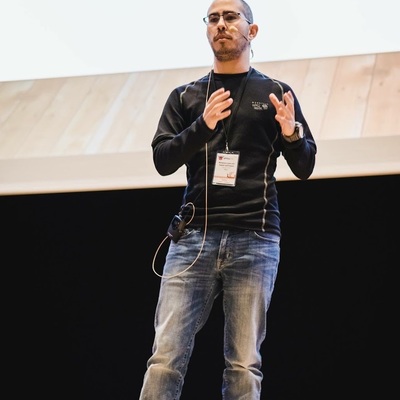
Haberman Michael
3× Founder & CTO | Building Reliable Software in the AI Era
Tel Aviv, Israel
Links
Please note that Sessionize is not responsible for the accuracy or validity of the data provided by speakers. If you suspect this profile to be fake or spam, please let us know.
Jump to top