
Session
Your AI Workflow Will Change. Context, Specs, and Artifacts Won’t.
Software teams are redesigning how work moves between humans and AI. Some are adding lightweight automation. Others are introducing agents throughout the development lifecycle or moving toward much greater autonomy.
The workflows differ, but across the teams I have worked with, three requirements remain constant: context, specifications, and artifacts.
Context tells each human or agent what matters in the current situation. A specification defines what the current step must accomplish. An artifact captures its output so the next step does not begin by reconstructing what happened before.
Artifacts also make organizational learning possible. A customer complaint cannot improve the original product specification unless the team can trace it backward through the implementation, architecture, design, and product decisions that produced the experience.
In this session, we’ll follow the chain from product intent through implementation, testing, deployment, production behavior, incidents, and customer feedback and examine why context, specs, and artifacts must survive every transition.
Target audience: CTOs, engineering leaders, architects, product leaders, platform teams, and engineers redesigning their SDLC around AI.
Level: Intermediate–advanced.
Preferred duration: 35–45 minutes.
Format: Field report and workflow framework based on work with engineering and product teams.
Prerequisites: Familiarity with the software-development lifecycle and AI-assisted development.
Source: Lessons from helping teams introduce automation and autonomy across software-development workflows.
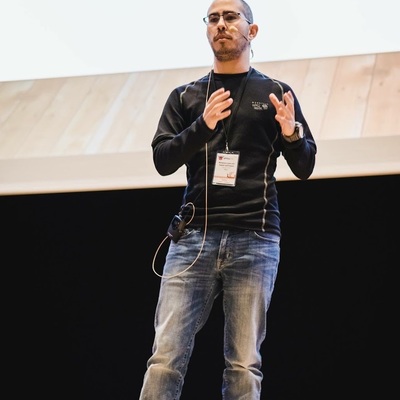
Haberman Michael
3× Founder & CTO | Building Reliable Software in the AI Era
Tel Aviv, Israel
Links
Please note that Sessionize is not responsible for the accuracy or validity of the data provided by speakers. If you suspect this profile to be fake or spam, please let us know.
Jump to top