
Session
Coral, Weeds, Skin, Smartphones: Confronting Techno-Resilience in the Wake of Environmental War
This panel considers human/nonhuman entanglements of ecocide, debilitation, and resilience. Whether praising the resilience of minoritized peoples such as immigrants or refugees, or attending to the promise of innovation emerging out of debilitated environments, the language of resilience can reproduce asymmetrical access to futurity within moments of unevenly experienced environmental catastrophe. In Palestine, 38-48% of the tree cover and farmland of Gaza was destroyed between October 7 and March 21, as estimated by geographer He Yin’s research using remote sensing land-use imagery. Soil, water, and air have been rendered toxic by munitions, waste, and pollution from constant war. According to The Lancet, even counting the number dead is infrastructurally untenable, as the Gaza Health Ministry struggles to account for direct and indirect deaths, for bodies buried under rubble for weeks or months, or for those who succumb to death from starvation or disease from lack of access to basic human needs. Some understand Israel’s approach to its assault on Gaza as paving a path of no viable return to the land without expensive remediation efforts and reliance on the science and technology industries (e.g., telecommunications, biomedicine, military weaponry) that Israel and the U.S. have to offer. It is thus the very same technologies developed in the wake of war’s ruin that represent the state’s promise toward settler futures of innovation predicated on minoritized elimination.
Jasbir Puar’s analysis of debilitation, which “foregrounds the slow wearing down of populations instead of the event of becoming disabled” and Ruth Wilson Gilmore’s formulation of racism as “state-sanctioned or extralegal production and exploitation of group-differentiated vulnerability to premature death” call our attention to how war not only wreaks havoc on human and nonhuman environment but also sets up the occasions for rebuilding, often under the guise of humanitarian aid or environmental remediation. Rather than promoting resilience and its associated characteristics of adaptation, flexibility, and persistence as unqualifiedly good, the papers in this panel interrogate how resilience is used to naturalize eugenic thinking, promote amnesiac approaches to history, and villainize minoritarian life. Who benefits from resilience, and what structures does it serve? If eugenicist thought is at the core of state logics for securing better settler futures, how might unsettling the promise of resilience undermine projects of state sovereignty? The papers in this panel reveal state and capital investments in more-than-human entanglements, and how these intimacies are used to shape the securitization of minoritized bodies, environments, and futures.
The panel will open with Aimee Bahng’s paper challenging the deployment of resilience discourse in coral restoration projects in Hawaiʻi and Florida. Next, Keva X. Bui’s paper tracks the eugenicist logic of the herbicide across the United States, Vietnam, and Palestine to demonstrate how ecocide represents a promise of settler futures made possible through the eradication of racialized more-than-human life. Michelle N. Huang examines recent beauty horror novels to show how cosmeceutical skincare’s promise of protective and restorative enclosure emerges from race’s entanglements with aesthetics, imperialism, and biocapitalism. Then, Min Song calls our attention to the contradictions intrinsic to the smartphone, as exemplified in contemporary refugee narratives, where the lines between extravagance and necessity meet and blur. The panel will conclude with a response by Lisa Fink, weaving together the biological, chemical, and technological deployments of resilience measures that keep precarious laboring environments primed for continued extraction.
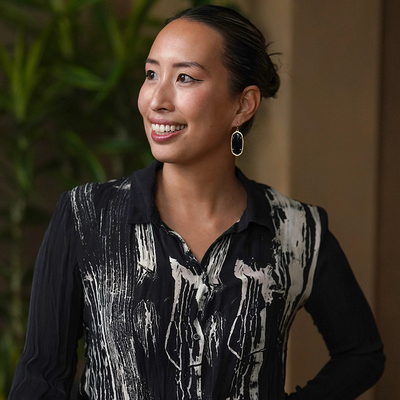
Michelle Huang
Assistant Professor of English and Asian American Studies at Northwestern University
Please note that Sessionize is not responsible for the accuracy or validity of the data provided by speakers. If you suspect this profile to be fake or spam, please let us know.
Jump to top