
Session
Beyond Vibe Coding: How Agentic AI Becomes a Real Member of Your Scrum Team
AI coding tools can produce an astonishing amount of code in very little time. But speed alone does not make software development better.
As AI agents become more autonomous, many experienced developers are facing a new problem: they feel they are losing control over their own codebase. Tasks happen across multiple files, agents make architectural decisions, documentation becomes outdated, and "vibe coding" can quickly turn into an unstructured development process.
There is another way.
In this session, I will show how we integrate an AI development agent into a real Scrum-based development workflow using GitHub, VS Code and Pi.dev.
The key idea is simple: the AI agent is not replacing the developer. It becomes another development team member working inside clearly defined engineering boundaries.
We will look at how backlog items, project goals, architecture documentation, GitHub issues, branches, pull requests, coding standards and Definition of Done can become the operating framework for an autonomous AI agent.
Instead of prompting an AI with "build this feature", we give it the same structured context and responsibilities we would expect from a professional developer.
The session includes a live demonstration of an agent working on a real software project:
nVibes — a social media platform made in Germany for Europe.
You will see how a development task moves from a Scrum backlog through GitHub into an autonomous AI development workflow, while the experienced developer remains responsible for architecture, review, governance and final approval.
We will also discuss where agentic development currently fails, what should never be delegated blindly, and why experienced software engineers may become even more important in AI-driven development.
What you will learn
How to integrate AI coding agents into an existing Scrum workflow instead of creating a parallel "AI workflow"
How GitHub issues, project boards, branches and pull requests can provide governance for autonomous development
How project documentation and architecture decisions can become persistent context for AI agents
How to define boundaries between human engineering responsibility and autonomous agent execution
How to avoid the loss of control often associated with vibe coding
How an AI agent can practically operate as a development team member
Why code review, architecture and engineering experience remain critical in an agentic development environment
Live Demo
During the session I will demonstrate a real development task using:
Scrum
GitHub
GitHub Projects
VS Code
Pi.dev
AI coding agents
Pull Requests
Architecture and project documentation
The demonstration will use nVibes, a real European social-media platform developed in Germany, as the example codebase.
The goal is not to show how much code an AI can generate.
The goal is to show how professional developers can let AI agents work autonomously without giving up control of the software engineering process.
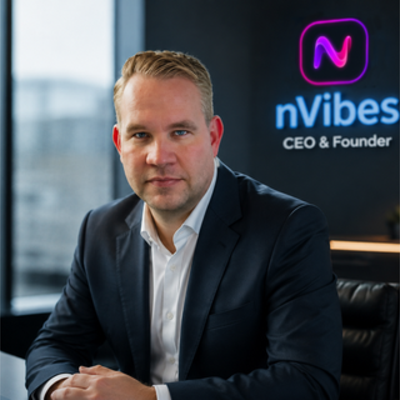
Christian Alexander Schreiber
Founder & Lead Architect of nVibes | Speaker on Responsible AI, Azure Architecture & Digital Sovereignty
Dresden, Germany
Links
Please note that Sessionize is not responsible for the accuracy or validity of the data provided by speakers. If you suspect this profile to be fake or spam, please let us know.
Jump to top